
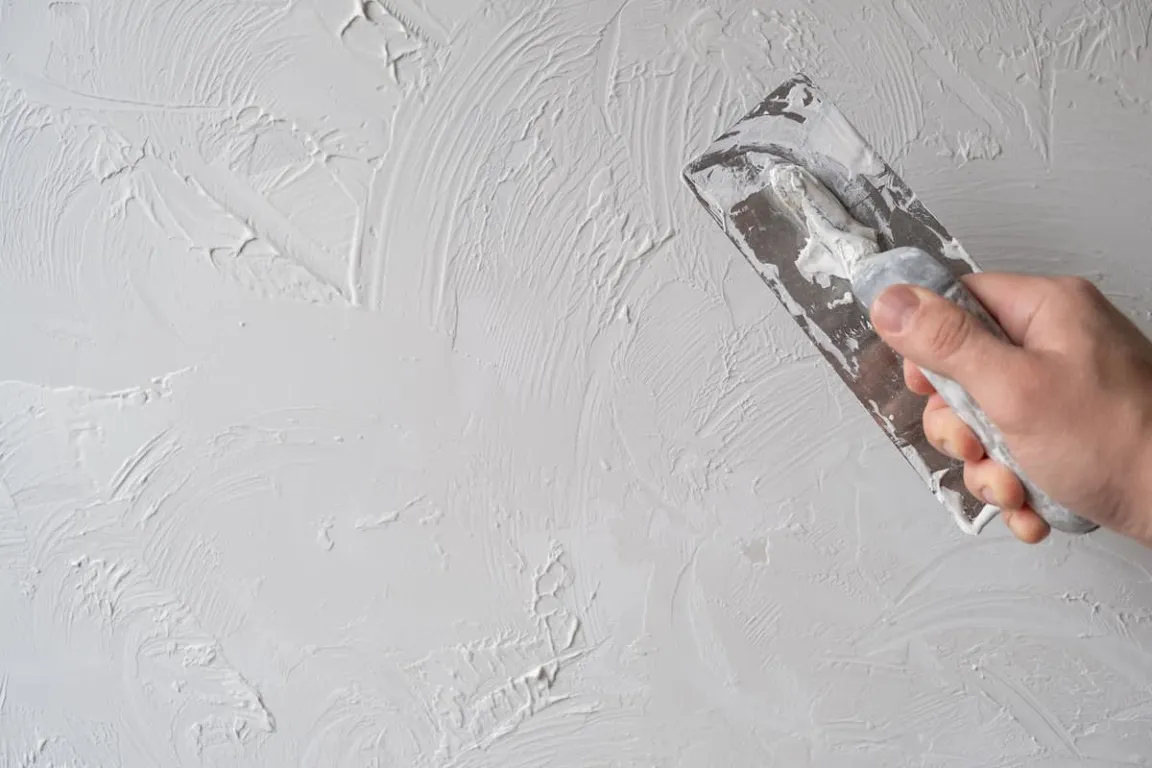
Skim coat and cement finishing are materials used to finish a building’s walls, typically applied after the brickwork is complete.
The purpose of applying skim coat and cement finishing is to give the wall a smoother texture so that when painted, it will not have a rough finish. So, what are the differences between skim coat and cement finishing? Read the full explanation in this article!
Differences Between Skim Coat and Cement Finishing
Before learning the differences between skim coat and cement finishing, you must first understand the meaning of each material.
Cement finishing is a mixture of cement, fine sand, and additives such as polymers or fibers, applied to walls or ceilings. The purpose of plaster is to smooth the wall surface and fill in any cracks or uneven areas.
On the other hand, a skim coat is a mixture of cement, fine sand, and additives with a thinner texture than plaster. A skim coat is typically used for wall finishing to achieve a smoother surface.
Here are the differences between skim coat and plaster based on several factors:
1. Composition
The main difference between skim coat and cement finishing is their composition. Skim coat has a softer texture than cement finishing because it is made from a mixture of cement, fine sand, and other additives that enhance its flexibility and softness.
This mixture will produce a thin, even layer, creating a smooth base before painting and providing additional strength to the wall.
Unlike a skim coat, cement finishing comprises a mixture of cement, fine sand, and additives such as fibers or polymers to enhance strength and durability. Cement finishing is typically used as a primer layer on walls to ensure a more durable paint finish.
2. Application
Both skim coat and cement finishing have distinct application methods. These methods are crucial for achieving ease of application and the desired texture.
Skim coat, which has a softer, thinner texture, can be applied with a brush or roller. It is also more flexible and easier to work with since it is commonly used for interior and exterior wall coatings.
Applying cement finishing is generally slightly more challenging than skim coat because it requires a trowel and putty knife to achieve varying thicknesses as needed. Cement finishing can also be shaped to create unique designs or intentionally crafted to feature specific patterns or textures.
Read also: Porous Concrete: Characteristics, Causes, & How to Fix It
3. Final Texture
The final texture of a structural wall in a building is important to consider. Therefore, a combination of cement finishing and skim coat is needed to achieve a smooth wall texture.
The final texture of a skim coat varies with the application technique and can be smooth or rough, depending on preference.
Ultimately, the final texture is flat and very smooth. Walls leveled with a skim coat will have a neater and cleaner appearance, making them ideal for walls that will be painted or wallpapered.
4. Strength
One of the most significant differences between a skim coat and cement finishing lies in the layer's strength and durability. A cement finishing mixture makes walls more robust because this layer is more resistant to impact and physical pressure.
A plaster mixture is better suited for buildings in public areas or outdoor spaces because it has a stronger layer and is less prone to damage. On the other hand, a skim coat has a more fragile layer and is less able to withstand impacts.
Therefore, a skim coat is best applied to interior walls to create a smooth, neat texture.
5. Drying Time
Given their different compositions, the drying times required for plaster and skim coat mixtures will also differ. The thinner skim coat layer and its lighter composition require a shorter drying time, specifically less than 24 hours.
Using a skim coat can speed up the project’s progress. Once dry, the surface can be used immediately, or the next step can be carried out.
Unlike cement finishing, which requires around 2 to 3 days to achieve optimal drying. The drying process takes longer because the cement finishing layer is thicker and stronger.
When Should a Skim Coat Be Used?
Now that you understand the characteristics of a skim coat and how it differs from cement finishing, you likely have a good idea of when to use this mixture. The following are suitable conditions for applying a skim coat:
- The wall surface to be finished is already sufficiently smooth and only requires a thin layer to perfect it.
- You do not want to create a textured or patterned finish on the wall.
- The wall has only minor scratches, but the surface is already smooth and even.
- Suitable for interior walls and home interiors.
- You want a quick, time-saving, and labor-efficient application.
- Creating a smooth base for perfect paint and wallpaper application.
Read also: The Concept of Growing House: Building a House Step by Step
When Should Cement Finishing Be Used?
Based on the differences between skim coat and cement finishing discussed above, you can apply cement finishing under the following conditions:
- The wall surface is still rough and requires a thick layer to level it.
- There are cracks, damage, or uneven surfaces.
- An additional protective layer is needed on walls to withstand extreme weather.
- A layer that is more resistant to pressure and damage is required.
- Suitable for outdoor areas or public buildings.
- Creates a realistic, unique texture on wall surfaces and a variety of 3D effects.
- Allows sufficient time for construction without rushing.
That concludes the explanation of the differences between skim coat and cement finishing. Although they differ, both are essential for achieving a building finish that meets your expectations.
Therefore, selecting high-quality cement is crucial for ensuring effective finishing results. One excellent choice is Semen Merah Putih Watershield. Its Watershield technology protects against water seepage from the outside, the inside, and the ground (capillary water), while also enhancing the building’s durability.
Contact us today to learn more about Semen Merah Putih products and get the best solutions for your construction project!
Read also: GRC Wall Materials: Advantages, Disadvantages, and Types