
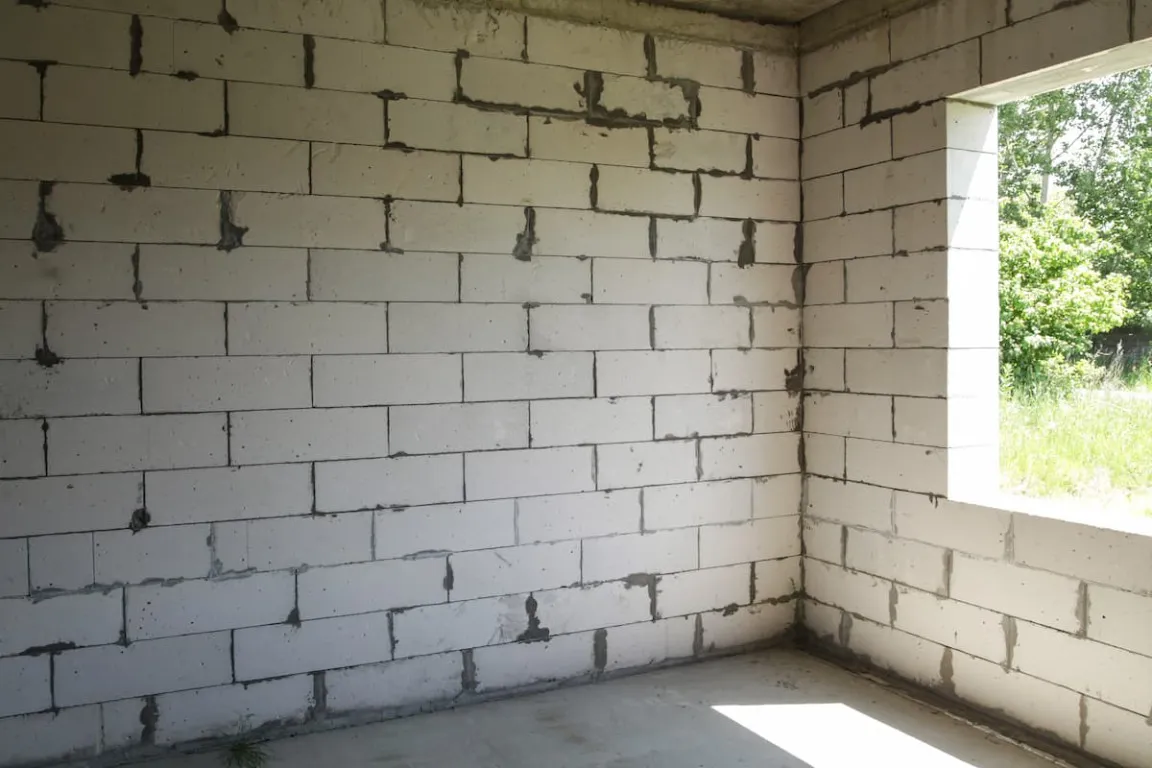
In the architecture and construction field, structural walls are a fundamental concept that must be understood. Structural walls play a crucial role in supporting and maintaining a building's stability.
Are you curious about what structural walls are, their functions, types, and differences from non-structural walls? Let's dive into it in the following explanation!
What Is a Structural Wall?
In construction, a structural wall, or load-bearing wall, is an element that supports the weight of a building. This wall safely distributes loads, both vertically and horizontally, from the roof, building levels, or floors to the foundation below.
Load-bearing walls are essential in the structural systems of houses and other commercial buildings. These walls are designed to ensure that buildings stand stably, strongly, and withstand various pressures from gravity, wind, and rain.
Given their crucial role in buildings, the materials used to construct structural walls also possess special characteristics, including high durability, such as bricks, concrete, natural stone, reinforced concrete blocks, or structural wood.
Load-bearing walls are typically strategically positioned, such as on the exterior of the building, in the center of multi-story buildings, or placed perpendicular to the floor.
Changes to structural walls can cause imbalance and stability issues in buildings. Therefore, if you plan to make modifications or renovations, you must have accurate calculations and hire construction experts.
The Difference Between Structural and Non-Structural Walls
In addition to load-bearing walls, there are non-structural walls that separate rooms or define room layouts. Non-structural walls are commonly known as interior dividing walls or partition walls.
Unlike load-bearing walls, non-structural walls do not support the roof, ceiling, or loads in multi-story buildings, so they can be altered and modified without affecting the building’s integrity.
Non-structural walls are generally made of lighter materials, including plasterboard (gyprock) with iron or wooden frames, plywood, glass, bricks, or lightweight concrete. These walls are typically located inside the house, such as between bedrooms, bathrooms, kitchens, corridors, or open-plan areas to create enclosed spaces.
Although they do not bear the load of the building, non-structural walls still play a crucial role in insulation, defining room functions, and layout. The primary difference between these two types of walls is their primary function.
The primary function of load-bearing walls is to support the building’s load, while non-structural walls only serve to separate and divide spaces.
Read also: Tips for Choosing Building Material for a Minimalist House
Function of Structural Walls
Load-bearing walls are a mandatory part of any construction plan. Without proper structural walls, a building's stability and safety can be compromised. The main functions of load-bearing walls are as follows:
1. Strength and Stability
In a building, various loads in each area must be supported, including the roof, the second floor, and the floors. Load-bearing walls can help safely distribute these loads to the foundation.
Therefore, the entire building can be more stable and safer in the long term. Without proper structural walls, the risk of collapse and structural deformation will increase.
2. Flexibility
The materials used in load-bearing walls, such as wood, brick, iron, or concrete, can be tailored to the residence's construction and design needs. The materials' flexibility can be tailored to the building's architectural style, while facilitating expansion or room layout.
3. Soundproofing
In addition to their primary function as supports, load-bearing walls can also be modified with special insulating materials to serve as soundproofing.
The space between the wall frames can be modified by adding materials such as fiberglass, gypsum panels, acoustic foam, or mineral wool to block noise between rooms.
Read also: 4 Common Renovation Mistakes to Avoid
Types and Materials of Structural Walls
Several types and materials commonly used to make load-bearing walls are as follows:
1. Precast Concrete Load-Bearing Wall
Precast concrete load-bearing walls are walls manufactured in a factory. This makes them easy to assemble at the construction site. This type of wall is usually used in tall, large buildings.
2. Retaining Wall
Next, retaining walls are commonly found in buildings located on mountain slopes or hillsides. Retaining walls are specifically designed to hold soil or building materials in place, preventing landslides, especially in areas with elevation differences, such as slopes, cliffs, or hillsides.
Retaining walls are generally made of reinforced concrete, precast concrete, or gabions, which are arranged according to calculations of soil load, water load, and building safety. These walls also typically have a drainage system to reduce water pressure behind them.
3. Masonry Wall
A masonry wall is a type of wall built by arranging units of other materials, such as bricks or concrete blocks, and joining them with a layer of mortar. Masonry walls can help transfer loads from the structure above to the foundation below.
4. Stone Wall
Stone walls are structural elements that have been used since ancient times. This type of wall is very strong and resistant to various weather conditions because it is made of solid stone or broken stone.
Some types of stone materials commonly used to make stone walls are natural stones such as andesite, limestone, or river stones, arranged and glued together with cement.
5. Panelled Load-Bearing Wall
Unlike other types of structural walls, panelled load-bearing walls are pre-assembled and simply installed at the construction site. This type of wall has been widely used in modern buildings overseas, with materials such as metal or lightweight steel.
Although made of metal or lightweight steel, panelled load-bearing walls are specially designed to support heavy building loads.
Panelled load-bearing walls are also a breakthrough in construction and architecture because they speed up construction, increase efficiency, and produce walls that are just as sturdy.
This concludes the comprehensive information on the types of walls, both structural and non-structural. Both types of walls play equally important roles, so the materials used must be high-quality and durable.
During construction, selecting high-quality cement for foundation materials is an essential step. In this case, Semen Merah Putih offers the latest innovations in cement products, powered by cutting-edge technology.
With water-repellent technology, Semen Merah Putih Watershield provides triple protection against water seepage from the outside, inside, and ground, as well as capillary water, making it ideal for applications on concrete slabs, foundations, castings, and plastering. It also offers many advantages over regular cement.
So, build your dream house with high-quality materials like Semen Merah Putih Watershield. Contact us and discuss your construction needs with Semen Merah Putih!
Read also: How to Apply Natural Stones on Cement Wall