
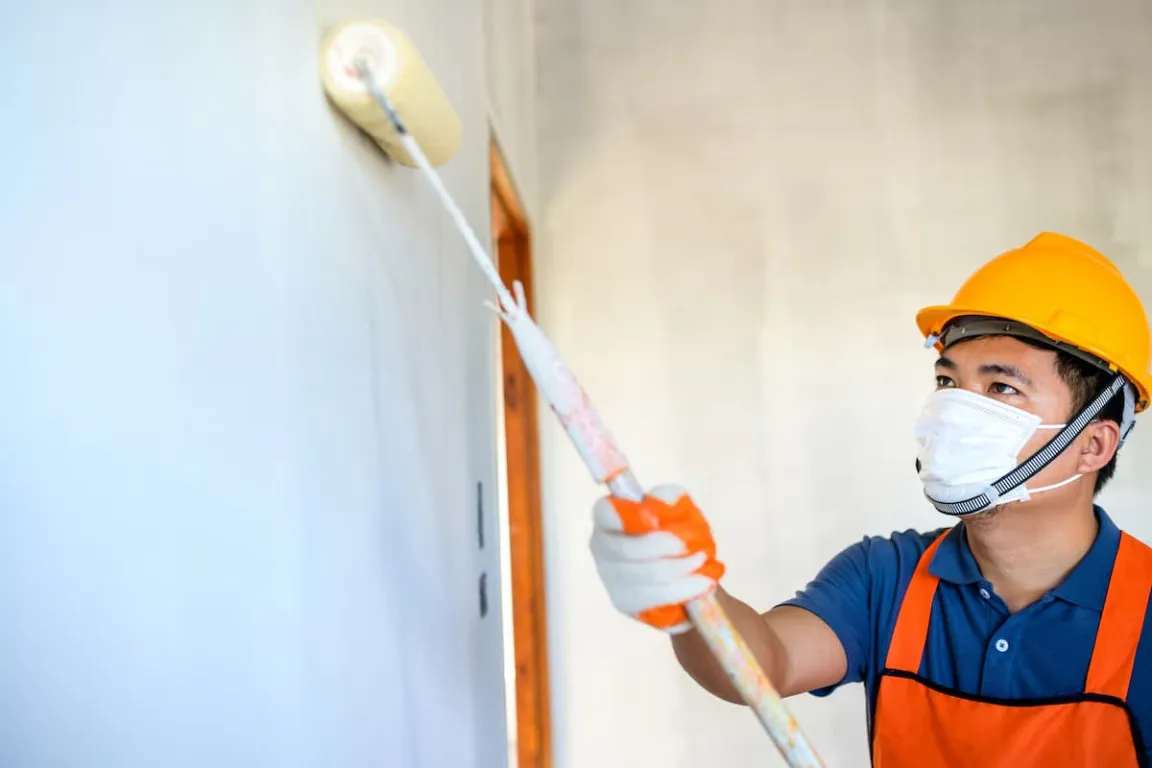
You may have seen newly painted walls that still look uneven, blotchy, or rough to the touch. Many people assume that the problem lies with the paint or the painter, when in fact it is often due to improper finishing.
One stage that is often overlooked is the use of a skim coat. This thin layer may seem insignificant, but it plays a crucial role in the house's final appearance. What is the function of a skim coat, and how does it work? Read on for an explanation!
What Is a Wall Skim Coat?
A wall skim coat is a layer of instant cement mortar mixed with very fine filler and applied thinly over the rendered surface. Its purpose is to even out the surface pores and texture before painting.
While plaster and render form the structure and surface of the wall, the skim coat refines its appearance. This layer is usually only about 1-3 mm thick, but it has a significant impact on the final result.
Without a skim coat, the render surface will generally still have small pores, scratch marks, a fine sandy texture, and thin waves that may not be visible from a distance but will be clearly visible after the wall is painted.
Wall paint, especially light or matte colors, is very sensitive to the wall's condition. When exposed to light, any imperfections in the wall will be immediately visible. Using a skim coat can cover these imperfections, helping the paint adhere better and the color appear more even.
Functions of Wall Skim Coat
A skim coat not only adds an extra layer to the wall but also plays an important role in determining the quality of the wall finish. Here are some of the main functions of skim coat that you need to understand:
1. Closing Pores and Smooth Texture on Render
The render surface still contains small pores and a rough texture. A skim coat serves to cover these gaps so that the surface becomes denser and flatter, which are not always clearly visible before painting. A skim coat helps cover these gaps, making the surface denser and more even.
2. Smoothing Out Waves and Scratch Marks
Scratch marks and thin waves on the render surface often appear after drying. These irregularities will be clearly visible when exposed to light, especially from the side. A skim coat helps fill and smooth these areas, resulting in a more even finish.
3. Improving Paint Adhesion
Paint applied directly to a render surface tends to peel more easily if the surface is not dense enough. A skim coat creates a more uniform layer, allowing the paint to adhere better and last longer.
4. Reducing Paint Usage
As the surface becomes denser and flatter, the wall's paint absorption becomes more controlled. This helps you save on paint without compromising the quality of the finish.
5. Produces a Neater Finish
A skim coat provides a finishing touch that makes the wall feel smoother and look cleaner. The paint color also appears more even and less patchy, enhancing the room's overall appearance.
Read also: 5 Proper Ways to Apply Wall Putty for Smoother Paint Finish
How to Skim Coat Walls
Skim coating may look simple, but it actually requires precision. The thickness of the coating must be just right, and the wall must be in the right condition. Here are the general steps involved:
1. Make Sure the Rendered Surface Is Dry
If you want to apply a skim coat, the wall must not be wet. The render must be completely dry, typically 7–14 days after application. If it is still damp, the skim coat will not adhere properly and may form bubbles.
2. Clean the Wall Surface
The next step is to ensure the wall surface is free of dust, dirt, oil, and any peeling paint. A dirty wall will make it difficult for the skim coat to adhere properly. For old walls, it is usually necessary to brush or sand them first to improve the surface adhesion.
3. Moisten the Wall Sufficiently
Walls that are too dry will absorb water from the skim coat mixture too quickly. As a result, the skim coat dries quickly and is difficult to level. Therefore, the wall needs to be moistened sufficiently, not to the point of flooding, but moist enough so that the mixture can adhere properly.
4. Mix the Skim Coat Mixture
The skim coat mixture is made according to the manufacturer's instructions by mixing skim coat powder with clean water. The mixture must be stirred evenly until the texture is smooth and there are no lumps. The consistency of the mixture should be neither too runny nor too thick, so it is easy to apply.
5. Applying the First Coat
Once the mixture is ready, the skim coat can be applied using a trowel or steel trowel. Apply the mixture thinly and evenly to the entire surface of the wall. The trowel should be moved in one direction and pressed consistently so that the coat is not bumpy.
For skim coats on exterior walls, ensure the work is done in sunny weather to optimize drying.
6. Leveling and Smoothing
When the skim coat is half dry, level it again to remove any lines left by the trowel. This step is crucial to the final result, as it will make the wall surface smoother and more even.
7. Drying and Sanding
The next step is to allow the skim coat to dry completely. Once dry, lightly sand the surface to smooth out any remaining rough spots. After that, the wall is ready to be painted or coated with other finishes.
Wall Skim Coat Price
The cost of the wall skim coat is usually calculated per square meter. Prices may vary depending on the city, wall condition, and quality of materials used. The general price range for the wall skim coat is as follows:
- Labor cost: around Rp25,000 – Rp45,000 per m²
- Skim coat materials: IDR 10,000 - IDR 20,000 per m²
Therefore, the total price of the wall skim coat can be estimated at Rp35,000 to Rp65,000 per m².
For example, a type 36 house with a wall area of approximately 200 m² would cost around IDR 7–13 million. This cost is often considered expensive, but it can actually save on paint expenses.
Smooth walls require less paint. Additionally, the results are more durable, so you don't need to repaint as often.
The Difference Between Putty, Rendering, and Skim Coat
Many people assume that putty, rendering, and skim coats are the same thing. However, all three have different functions in wall construction. Here are the differences between these three materials:
|
Type |
Main Function |
Application Location |
Thickness |
Purpose |
|
Putty |
Seal small hairline cracks before repainting. |
On top of old paint. |
Very thin. |
Repairing old walls. |
|
Rendering |
Smooth plaster and shape the wall surface. |
On top of plaster. |
±3–5 mm. |
Forming the base surface. |
|
Skim Coat |
Level pores and refine the surface. |
On top of the render. |
±1–3 mm. |
Finishing before painting. |
The table shows that skim coat is the final stage in the wall plastering process. It does not replace plaster or render but complements them to achieve optimal results.
To support the results of the skim coat and protect the wall from moisture-related issues, using high-quality cement is very important.
One option you can use is Semen Merah Putih Watershield. This product has water-repellent technology that provides double protection against water seepage from the outside, the inside, and the ground (capillary water).
This protection helps reduce the impact of moisture, which can weaken the building's structure over time.
If you want to achieve stronger, neater, and more durable construction results, make sure to choose the right materials from the start.
Don’t hesitate to contact us now to get the best product information and solutions tailored to your building needs!
Read also: 8 Practical and Effective Ways to Remove Mold on Walls!