
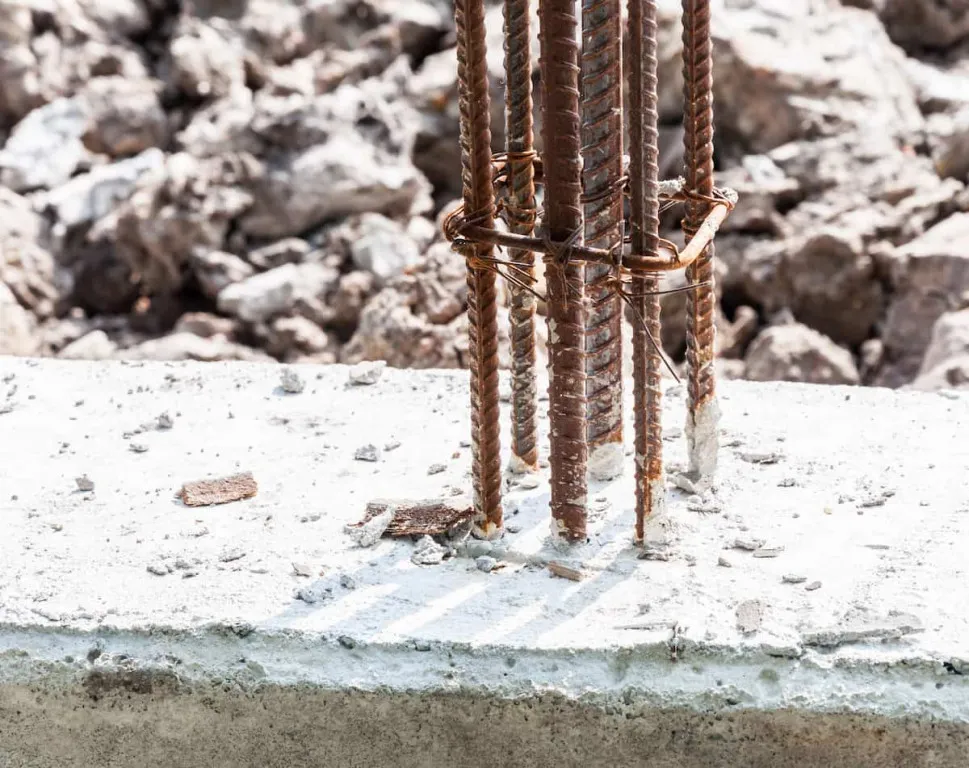
In the construction industry, the strength of a building’s structure depends not only on the main materials, such as concrete, but also on small details that are often overlooked. One such detail is the starter bar.
Although it may seem simple, the starter bar plays a crucial role in maintaining the building's structural integrity, ensuring it remains strong and safe over the long term. To help you understand more about starter bars, let’s discuss their definition, standard lengths, and how to properly maintain them below.
What Are Starter Bars?
Starter bars are sections of rebar left protruding from a structural element, typically from the foundation or lower column, for connecting to the next column or structural element.
The main function of installing column rebar splices is to serve as connectors between concrete elements, so that the building structure becomes a single, cohesive unit. With these splices, loads from above can be effectively transferred downward without the risk of cracks or damage at the joints.
Typically, these splices are used when construction is carried out in phases, such as when column pouring is not done all at once up to the upper floors.
Read also: How to Install Lightweight Bricks for a Neat House Wall
Standard Lengths for Starter Bars
The length of column rebar stubs should not be taken lightly, as it significantly affects the joint strength. In construction practice, stub length generally follows standard development lengths, which are adjusted based on rebar diameter and concrete quality.
As a general guide:
- The length of the reinforcement bar is typically at least 40 times the bar’s diameter (40D).
- For example, if using a 10 mm-diameter bar, the minimum length is approximately 40 × 10 mm = 400 mm, or 40 cm.
However, this number may vary depending on:
- The quality of the concrete used
- The type of load being supported
- Structural design standards (SNI or engineer’s calculations)
Therefore, it is important to always follow the technical calculations provided by experts to ensure the results are safe and meet standards.
Read also: What Is Concere Pasticizer? Definition, Function, & Types
How to Maintain Starter Bars
Column rebar left exposed for a long time can degrade in quality, especially due to weather exposure. Here are some ways to maintain it and keep it in optimal condition:
1. Protecting It from Water and Moisture
Exposure to water and moisture is one of the main causes of corrosion in reinforcing steel, including column steel bars. If left unchecked, rust not only appears on the surface but can also gradually erode the steel’s strength.
In construction projects, this condition often occurs, especially in open areas directly exposed to rain or high humidity. To prevent this, starter bars should be covered with plastic, tarps, or special protective covers that can block water from entering.
Additionally, it is important to ensure the surrounding area is not flooded. Standing water for an extended period can accelerate the oxidation of the starter bars. With proper protection, the rebar’s quality remains intact until the next casting stage.
2. Cleaning Off Dirt and Light Rust
Exposed rebar is typically exposed to dust, soil, debris, and even concrete splatter. If not cleaned, this dirt can interfere with the bonding process between the starter bars and the concrete during pouring.
Furthermore, any light rust that appears must be addressed immediately. Although it may seem minor, rust can spread and accelerate deterioration of the rebar’s quality if not cleaned promptly.
The simplest method is to use a wire brush to remove thin layers of rust and any adhering debris. For optimal results, cleaning should be performed periodically, especially if there is a significant gap between construction phases.
3. Avoiding Impacts or Position Shifts
The position of the column starter bars must remain consistent with the initial design, as it directly affects the structure of the column to be joined. If positional changes occur, such as bending, tilting, or shifting, the rebar splicing process may become imprecise.
This not only complicates fieldwork but also risks reducing structural strength because load distribution is no longer optimal. In some cases, positioning errors may even necessitate demolition and rework.
To prevent this, ensure the area around the starter bars is not used as a traffic route for workers or heavy equipment. If necessary, install markers or additional protective barriers to prevent the formwork from being easily struck during the construction.
4. Using an Anti-Corrosion Coating If Necessary
In projects with significant time gaps between construction phases, the risk of corrosion on steel sections increases. In such cases, using an anti-corrosion coating can be an effective additional solution.
This coating acts as a protective layer that prevents direct contact between the steel and air and water, thereby minimizing oxidation. Typically, the material used is a special coating that remains safe and does not compromise the concrete’s bond strength.
However, its application must still comply with applicable construction standards. Ensure that the type of coating used does not reduce the bond strength between steel and concrete during pouring.
With proper maintenance, the starter bar can remain in optimal condition and be ready for use whenever needed, without compromising the building’s structural strength.
Read also: Timber Roof Frame Structure: Components & Installation
What If the Starter Bar Is Already Damaged?
If the starter bar is already damaged, such as severely rusted or broken, it should not be forced into use. There are several solutions available:
- Cutting and rejoining using connection techniques (using couplers or welding according to standards)
- Adding new reinforcement with proper technical calculations
- Consulting with an engineer to ensure the chosen solution remains structurally safe
Mishandling at this stage can significantly impact the building’s strength, so do not improvise carelessly.
Column rebar may seem like a minor detail, but it plays a crucial role in maintaining a building's strength and structural integrity. From adhering to standard lengths to proper maintenance, every aspect must be carefully considered to ensure the construction remains safe and durable.
In addition to ensuring the quality of the starter bar, selecting concrete materials is equally important. For more practical, consistent, and high-quality results, use Ready-Mix Concrete from Beton Merah Putih.
With controlled production and guaranteed quality, Ready Mix Concrete helps ensure that every structural element, including columns and their connections, achieves optimal strength.
Contact us now to get the best construction solutions for your project! We are ready to help you achieve project success with premium concrete products and services.
Read also: Pile Cap: Functions, Composition, & Construction Steps!