
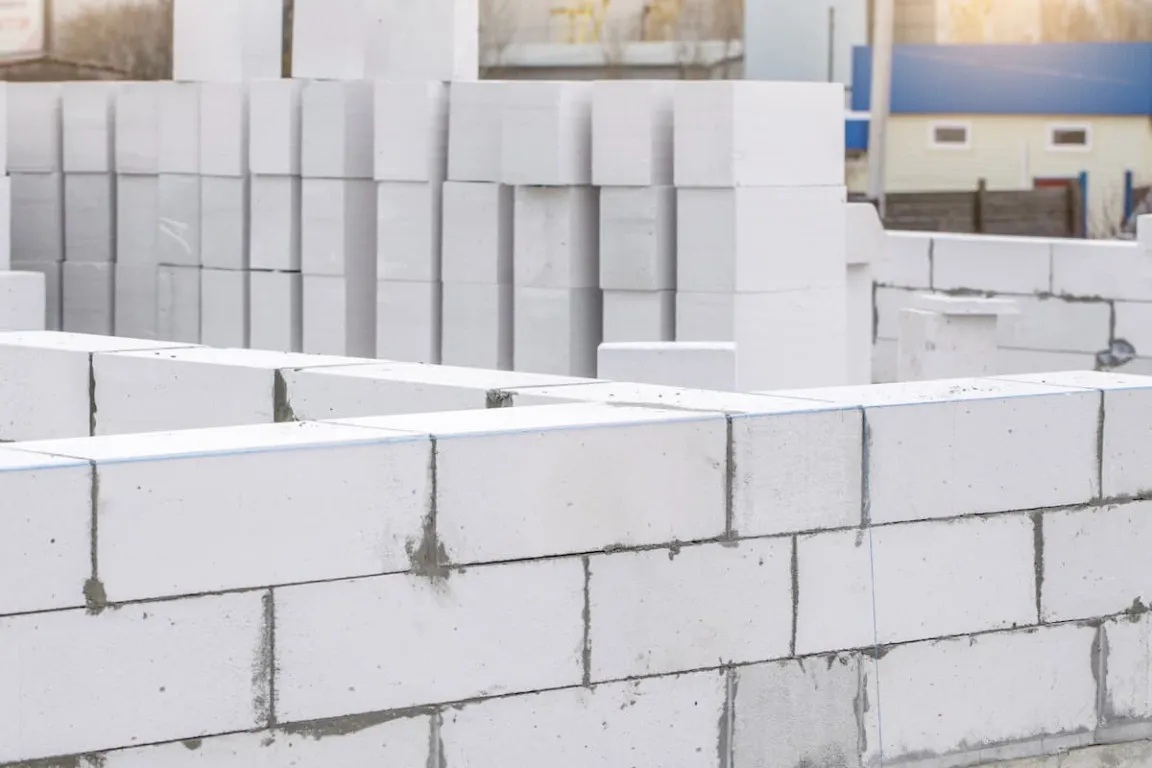
Lightweight bricks are becoming increasingly popular in modern house construction. This material is known for being practical, precise, and lighter than red bricks. However, improper installation can affect the appearance and thickness of the house’s walls.
Therefore, it is important to understand how to install lightweight bricks correctly. Installation mistakes can cause cracks, unevenness, or material waste. To prevent it from happening, check out the following guide on how to install lightweight bricks or Hebel!
What Are Lightweight Bricks?
Lightweight bricks or Hebel are building materials made from a mixture of cement, silica sand, lime, water, and aluminum powder that is processed to create a porous structure. It is this porous structure that makes them lighter than red bricks or concrete blocks.
Generally, lightweight bricks are divided into two main types: AAC (Autoclaved Aerated Concrete) and CLC (Cellular Lightweight Concrete). AAC lightweight bricks are processed under high pressure and temperature using an autoclave, resulting in a denser and more precise structure. Meanwhile, CLC lightweight bricks are dried naturally, making them heavier than AAC lightweight bricks.
Given the precise dimensions and smooth surfaces of lightweight bricks, the wall installation process becomes faster, neater, and more efficient. The application of a thin mortar layer also reduces the adhesive requirements. Additionally, lightweight bricks offer good fire resistance and help insulate against heat and sound within the building.
Advantages of Lightweight Bricks for Buildings
Lightweight bricks are increasingly used in various construction projects because they are considered more efficient and practical. This material offers several advantages, one of which is accelerating the construction process. Furthermore, there are several other benefits to using lightweight bricks for building construction, as follows:
- Lighter weight: As the name implies, lightweight bricks are lighter than red bricks or concrete blocks. This lighter weight helps reduce structural load and prevents the foundation from bearing excessive weight.
- Sound-dampening capability: Lightweight bricks have a porous structure that helps absorb and reduce the transmission of sound waves. This capability makes rooms feel quieter and more comfortable, especially in densely populated residential areas or commercial buildings requiring acoustic privacy.
- Faster installation: The size of lightweight bricks is larger and lighter than conventional bricks, making them easier to move and stack. The process of constructing building walls becomes more efficient, allowing projects to be completed in a shorter time without compromising the quality of the final result.
- More durable: Lightweight bricks have a stable structure and are not prone to deformation due to weather or humidity. When installed properly, this material can last for a long time and minimize the risk of wall damage.
- Reduced adhesive usage: The smooth surface of lightweight bricks allows for the use of thin-set mortar or specialized adhesive with minimal thickness. This reduces the amount of lightweight brick adhesive needed, thereby lowering construction costs.
Read also: How to Calculate the Quantity of Autoclaved Aerated Concrete (AAC) Needed per Square Meter
Tools and Materials for Installing Lightweight Bricks
Before starting the work, it is important to ensure all tools and materials are available. Thorough preparation will speed up the installation process and ensure precise wall results. Here is a list of tools and materials you should prepare beforehand:
- Straightedge.
- Pencil.
- Bucket.
- Trowel.
- String.
- Clean water.
- Rubber mallet.
- Waterpass.
- Hand mixer.
- Lightweight bricks.
- Lightweight brick saw.
- Ruler or L-square.
- Mortar as lightweight brick adhesive.
How to Install Lightweight Bricks
Lightweight brick installation must be done systematically to ensure the wall is sturdy, smooth, and durable. Each step must be carefully followed to minimize the risk of cracks or unevenness. Here are the steps for installing lightweight bricks that you can follow:
1. Set the String Line
The first step in installing lightweight bricks is to set a string line in the work area. This string line serves as a guide to ensure the brickwork remains level and aligned. To ensure the line is perfectly straight, you can use a long ruler or a metal square to assist in setting the string line.
2. Prepare the Mortar Mix
Mortar is often referred to as instant cement because it does not require additional sand or gravel. To prepare the mixture, simply mix the mortar with water according to the recommended ratio. The ideal ratio is generally 1 part water to 2 parts mortar.
Stir until well blended to achieve a thick, not too runny consistency. The right consistency will ensure optimal bonding strength. Ensure the water content is not excessive to maintain the strength of the brickwork and prevent cracking.
3. Apply the Mortar Mix to the Lightweight Bricks
Apply a thin and even layer of mortar mix to the top surface of the bricks using a notched trowel. Ensure the thickness is consistent at around 1–3 mm to maximize adhesion between the lightweight bricks. Avoid using mortar that is too thick, as this can affect the neatness and stability of the wall structure.
4. Install the Lightweight Bricks
Next, you can begin laying the lightweight bricks on top of the leveled mortar layer. Press gently and tap with a rubber mallet to ensure they are precisely positioned and aligned with the guide string. Make sure each brick is installed straight and tightly without gaps by using a water pass to maintain the wall’s strength and neatness.
Read also: Learn How to Calculate Sand Requirements for Bricklaying!
5. Moisten the Lightweight Bricks Before Plastering
Once the installation is complete, wait until the mortar or cement is completely dry before proceeding to the plastering stage. This waiting period is crucial to ensure maximum adhesion and structural stability of the wall. A day before plastering, moisten the wall surface first to keep it damp. This step helps the plaster mixture adhere more firmly and prevents cracking.
6. Keep the Walls Moist
Water is a key component in the cement hardening process and the success of the plastering system. Maintaining moisture helps the cement’s hydration reaction proceed optimally, resulting in a stronger finish. So, be sure to moisten the walls periodically, ideally once a day for about 3 days. This process is essential to prevent hairline cracks caused by overly rapid drying.
That is the complete guide on how to install lightweight bricks to ensure your walls are sturdy, neat, and durable. Every step, from preparing tools and materials to laying the bricks to plastering, plays a crucial role in ensuring a precise and high-quality final result.
In addition to paying attention to installation techniques, choosing high-quality cement for plastering is also crucial to achieving a smoother wall finish. So, make sure to select high-quality cement, such as Semen Merah Putih Watershield, to ensure stronger walls.
Semen Merah Putih Watershield is a super-premium, multi-purpose cement with numerous advantages over ordinary cement. This cement is ideal for various construction applications, ranging from foundations, concrete slabs, cast-in-place concrete, brickwork, plastering, and finishing.
Equipped with water-repellent technology, Semen Merah Putih Watershield provides triple protection for your building, shielding it from water seepage from three directions (outside, inside, and from the ground). As a result, the building becomes stronger and more durable.
Want to learn more about other Semen Merah Putih products? Contact us now and discover the best solutions for your project needs!
Read also: 3 Reasons to Use Lightweight Bricks as Building Material