
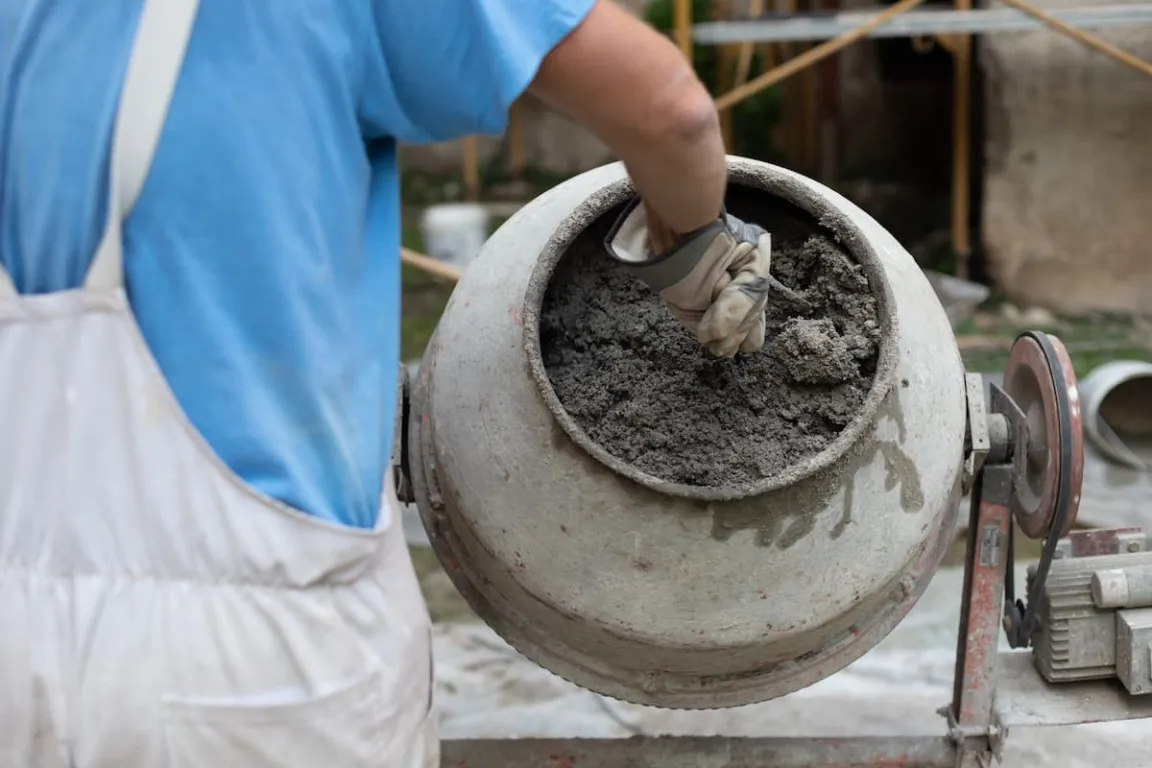
In modern construction, concrete plasticizers are key additives that improve the quality and workability of concrete. To meet construction demands for more practical processes and durable results, concrete mixtures are often supplemented with specific chemical, non-chemical, or fiber additives, one of which is a plasticizer.
This material helps make concrete easier to work with without adding too much water, which can actually reduce its strength. So, what exactly is a concrete plasticizer, what are its functions, and what types are commonly used in construction projects? Read the full explanation in this article!
What Is a Concrete Plasticizer?
A plasticizer is an admixture of organic or inorganic substances mixed into concrete to transform its physical properties. Its function is to make the mixture softer, reduce viscosity, improve workability, and simultaneously reduce water usage without compromising quality and strength.
This material is typically added at a rate of approximately 0.1%–0.4% of the cement weight and can reduce water requirements by 5%–15%. Plasticizers are available in both mineral and chemical forms, such as superplasticizers.
When mixed in, the plasticizer molecules are absorbed by the cement particles, altering their surface charge. This process increases the plasticity of the concrete, making it easier to pour and compact without compromising its quality.
Functions of Concrete Plasticizers
In field practice, plasticizers play a significant role by improving concrete quality and making the construction process more efficient. Here are some of their main functions.
1. Improving Workability
With the addition of a plasticizer, the cement and aggregates mixture becomes more fluid and pliable during application. This makes the casting process into formwork easier, especially in narrow or hard-to-reach areas.
Read also: Get to Know Manual Concrete Casting Measurements Based on SNI
2. Reducing Water Content Without Compromising Quality
Typically, concrete that needs to be more workable requires additional water. However, excess water can actually reduce the concrete’s strength. Plasticizers help reduce water requirements without sacrificing quality, ensuring that the concrete’s properties remain intact.
3. Increasing Compressive Strength
The water-to-cement ratio becomes more balanced as water content is reduced. The mixture becomes denser and more compact, significantly increasing the concrete’s compressive strength.
4. More Efficient in Terms of Cost and Material
Using plasticizers helps reduce the need for excess cement or water. Although there is an added cost for the admixture, the overall process can be more cost-effective and efficient.
5. Controlling Concrete Setting Time
Some types of plasticizers can slow down the setting time of concrete. This is especially useful in hot weather or large-scale projects, as it prevents the concrete from hardening too quickly before it is properly compacted. However, it’s important to use the correct dosage to achieve optimal results.
Types of Concrete Plasticizers
Each type of plasticizer and admixture has its own characteristics and functions. To select them, you should consider the quality, strength, and on-site working conditions of the concrete. Here are some common types of concrete plasticizers:
1. Mineral Admixtures
Mineral admixtures are additives mixed into concrete to improve its properties. The most common types are derived from cement byproducts, such as granulated blast furnace slag, which helps enhance concrete performance.
2. Pozzolanic Admixtures
Pozzolanic admixtures exhibit cement-like properties when reacting with calcium hydroxide. These materials are typically added to Portland cement to enhance the strength and durability of concrete.
3. Chemical Admixtures
Chemical admixtures are used to modify concrete properties to meet specific requirements. One of the most commonly used is the superplasticizer, also known as a water-reducing agent. This material can reduce the water content by approximately 5% to less than 12%, resulting in a lower water-cement ratio and increased concrete strength.
Additionally, chemical admixtures can improve concrete’s workability to the point where it self-compacts, resulting in high strength, reduced shrinkage, and improved durability by suppressing water diffusion and permeability. In mass concrete, these materials also help reduce hydration heat.
Read also: The Guide to Manual K-225 Concrete Mix for Construction
4. Natural Materials
In addition to minerals and chemicals, natural materials are also used as admixtures to enhance concrete properties according to construction requirements.
Benefits of Concrete Plasticizers
Concrete plasticizers are formulated to enhance strength while significantly improving workability. With better workability, the casting process becomes more practical, faster, and less labor-intensive.
By reducing the amount of water needed in the mix, plasticizers also help create denser and more durable concrete. This minimizes water permeability and absorption, reduces vapor transmission, and lowers the risk of thermal cracking and shrinkage, resulting in a more durable structure.
Amid the demands of modern projects, such as thin-slab concrete, reinforced structures, and complex precast shapes, plasticizers function as a critical solution to maintain a balance between strength, durability, and workability.
Thus, their use is not merely about adding chemicals but a strategic step toward producing efficient, water-saving concrete that remains high-quality on-site.
The Application of Plasticizers in Concrete
Plasticizers are widely used in various construction projects, ranging from commercial buildings to large-scale infrastructure. This material plays a crucial role in projects demanding high-quality concrete, such as bridges, high-rise buildings, and industrial facilities.
Their use helps produce concrete that is stronger, more durable, and easier to apply to complex structures.
1. Bridge Projects
In bridge construction, plasticizers are used to produce concrete with high structural strength and durability. With these qualities, bridges can remain sturdy and safe for long-term use.
2. High-Rise Building Projects
In skyscraper projects, plasticizers support the use of high-strength concrete capable of withstanding heavy loads and pressure. Additionally, the casting process for tall and complex structures becomes easier and more controllable.
3. Infrastructure Projects
Plasticizers are also used in the construction of highways, tunnels, and dams. With the help of this material, concrete achieves superior quality, withstands harsh environmental conditions, and supports the long-term project sustainability.
That is a comprehensive explanation of concrete plasticizers, covering their definition, functions, and types in construction mixtures. As previously explained, with the right additive, concrete can be worked more easily without compromising the strength and structural quality.
To support the need for high-quality concrete, Semen Merah Putih, through its subsidiary, Beton Merah Putih, provides Ready-Mix Concrete and Precast Concrete solutions designed in accordance with the latest construction standards.
When combined with Semen Merah Putih FLEXIPLUS, which has earned Green Label Indonesia (Gold) certification and is formulated for high-strength structural applications and optimal performance, the concrete results can be superior and more reliable.
So, be sure to choose high-quality materials and trusted concrete solutions to ensure your construction project is efficient and long-lasting. Contact us now to get complete information and find the best solutions tailored to your construction project’s needs.
Read also: Get to Know Concrete Mix Design for Sturdy Construction