
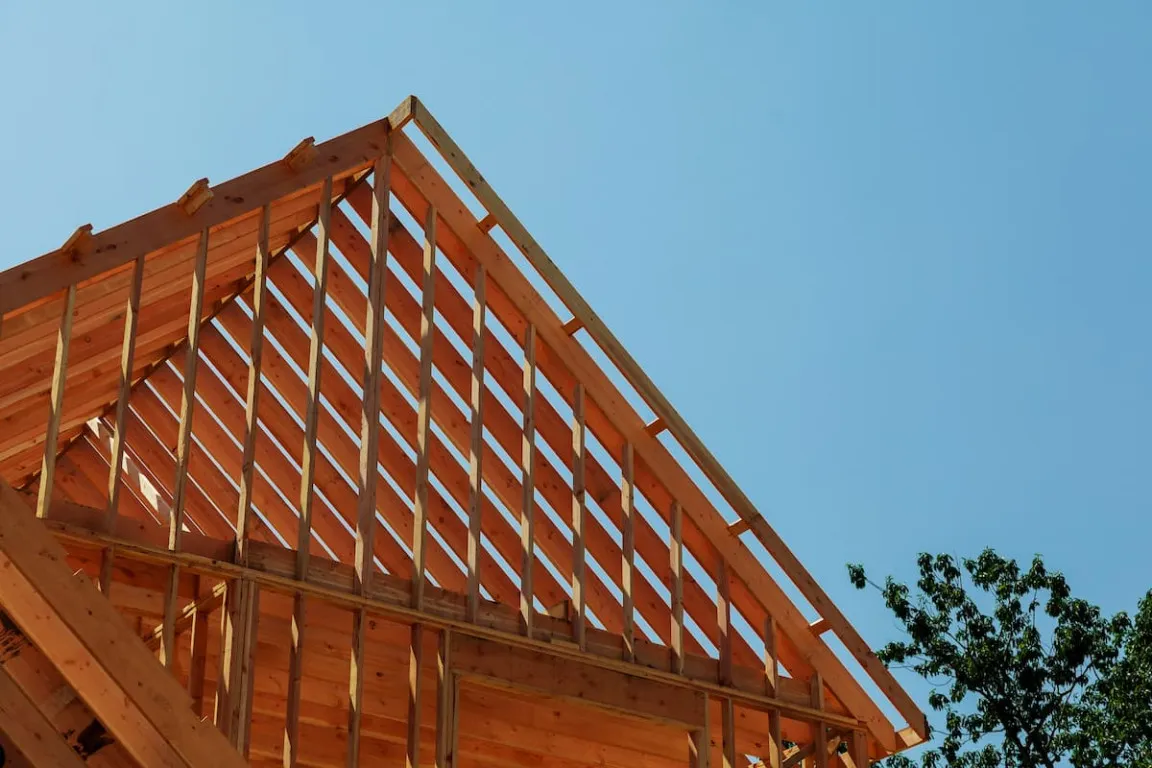
The roof is a vital component of a building, protecting occupants from heat, rain, and various weather conditions. Beneath the roof covering lies a timber roof frame that supports the roof’s weight and transfers it to the building’s underlying structure, ensuring stability.
This framework consists of wooden beams installed vertically and horizontally to reinforce the entire building construction. However, because it is hidden behind the roof and ceiling, many people do not understand its function or how it is installed. Therefore, let’s explore its components and installation process below!
Understanding Timber Roof Frames
A timber roof frame is an important component in residential roof construction, supporting the roof’s load while maintaining the building’s structural integrity against weather conditions such as rain and wind. This structure acts as a primary element in ensuring the roof’s stability and strength.
In modern architecture, timber roof frames are frequently chosen for their ability to provide a strong structural foundation while accommodating diverse building designs. Additionally, wood is often chosen because its construction costs are relatively lower than those of steel.
Timber Roof Frame Structure
To understand the strength of a timber roof frame, it is best to first identify the components that make up its structure. Each part plays a role in maintaining the roof’s stability and durability. Here are some of the main components of a timber roof frame structure:
1. Rafters
Rafters are the main components of a roof frame that support the roof and transfer its load to the building structure below.
These components are typically installed at the center and ends of the roof frame in a triangular configuration made of wooden beams, providing structural strength while enhancing the house's aesthetic appeal.
Timber rafters are often chosen for their aesthetic appeal and for the ability to utilize the space beneath the roof. However, they tend to be more expensive and are susceptible to termites.
2. Purlins
Purlins are wooden beams installed horizontally above the rafters, serving as both supports and connectors between them. This component serves as the primary support for other roof frame parts, such as rafters, purlins, and the roof covering.
Additionally, purlins help support and distribute the roof load evenly across the entire roof structure. Purlins are typically made of strong materials to ensure the roof frame remains stable and sturdy, as they bear significant loads.
3. Ridge Cap
The ridge cap is a part of the roof frame that connects the rafters on both sides of the roof. This component is installed lengthwise along the building’s roof frame, helping to maintain the structure’s stability.
Typically, the lumber used for the ridge cap has specific dimensions, such as 6/12 or 8/12, tailored to the roof construction requirements.
Read also: 5 Types of Ceilings You Should Know + Pros and Cons
4. Roof Batten
Roof battens are horizontal wooden beams installed above the purlins and located directly beneath the roof covering. They are positioned perpendicular to the purlins and serve to secure and support the roof tiles, ensuring they are neatly and evenly arranged.
Although roof coverings often hide them, roof battens play a crucial role in maintaining the roof frame's stability. Generally, they are made from lightweight yet strong materials to effectively support the roof’s load.
5. Common Rafters
Common rafters are the structural parts of the roof that support the purlins and roof covering. These components bear direct external pressure, so they must be strong enough to support the load above them.
During installation, common rafters are typically installed running the full length from one end of the batten to the other, forming a sturdy roof frame.
6. Roof Gutter
The roof gutter is a component of the roof frame that connects two intersecting roof slopes. This component is commonly used in buildings with multiple roof slopes to unify the roof structure.
The roof gutter is divided into two types:
- Valley roof intersection, where two roof slopes meet at an angle pointing inward.
- Hip roof intersection, where two roof slopes meet at an angle pointing outward.
7. Roof Covering
Roof covering consists of roof tiles, which form the outermost layer of the roof frame. This component protects the building from various weather conditions, including rain, wind, and external pressure. Since this component plays a crucial role, the choice of roof covering type and quality must be tailored to the building’s needs and conditions.
Read also: 9 House Rooftop Recommendations and Tips to Make Them
Types of Wood Used for Roof Frames
In addition to wood, roof frames can actually be made from bamboo or steel. However, wood or timber is still often chosen for its strength and durability in building construction. Here are some types of wood commonly used for roof frames:
- Meranti Wood: Meranti wood has a large, straight trunk with relatively few branches. Although its texture is somewhat coarse, this wood is known to be quite strong and durable.
- Mersawa Wood: Mersawa wood is also frequently used in shipbuilding. Its texture is typically coarse, but the wood’s surface is fairly even.
- Mahogany: Readily available on the market. It has a medium texture and is used not only for roof frames but also for doors and windows in houses.
- Sonokeling or Indian Rosewood: Sonokeling has a smooth texture and good strength. This wood is also widely exported overseas and used for various purposes, including sports equipment.
- Bayur Wood: Bayur wood has a somewhat coarse texture and moderate durability. In addition to roof framing, this wood is also commonly used to make matches, combs, and even workshop flooring.
- Yellow Balau Wood: Bangkirai wood is known for its high durability and characteristics similar to meranti wood. It is also widely used in shipbuilding due to its excellent strength.
How to Install a Timber Roof Frame
Installing a timber roof frame requires precision, an understanding of the structure, and accurate calculations to ensure the result is strong and safe. By following the correct steps, the roof frame can be installed neatly and securely, effectively supporting the roof load. Here are the installation steps:
1. Determining the Position of the Main Beams
The first step is to determine the position of the main beams as the foundation of the roof structure. The beams must be installed straight on strong support points, with a level wall surface or foundation, to ensure precise installation of subsequent components.
2. Installing the Rafters
After the main beams, the rafters are installed as the primary supports of the roof frame. They must be installed parallel to each other and positioned at the correct support points. Use strong nails or screws to ensure the structure remains stable.
3. Installing the Purlins
Purlins are installed crosswise to connect the rafters. These components must be installed straight and level, as they will support the battens or roof sheathing.
4. Installing the Roof Batten
Roof battens are installed on top of the purlins to support the roof sheathing and roofing material. Ensure they are evenly spaced and aligned so that the roof pitch matches the design and the structure remains sturdy.
5. Final Inspection and Tightening of Joints
The final step is to inspect the entire roof frame, from the joints and beam positions to its overall stability. If any sections are weak, retighten them so the frame is ready for the roof covering.
Understanding the structure of a timber roof frame and how to install it properly is crucial to ensuring the roof can support loads optimally. In addition to proper design and installation, the quality of the materials used also plays a significant role in maintaining the building’s strength and durability.
To support these construction needs, Semen Merah Putih offers a variety of product solutions, including Semen Merah Putih Watershield, which can be used in various construction projects, including roofing.
Semen Merah Putih Watershield is a premium cement with Water Repellent technology that provides Triple Protection for buildings, namely protection against water seepage from the outside, the inside, and the ground (capillary water).
This product can be used in a wide range of construction projects, including foundations, concrete slabs, concrete pours, brickwork, plastering, rendering, and roofing. With these many benefits, Semen Merah Putih Watershield is the right choice for maintaining the strength and durability of your building.
If you would like to learn more about Semen Merah Putih products, contact us to get the best construction solutions for your project.
Read also: 10 Functional Back Shed-Roof House Design Inspirations