
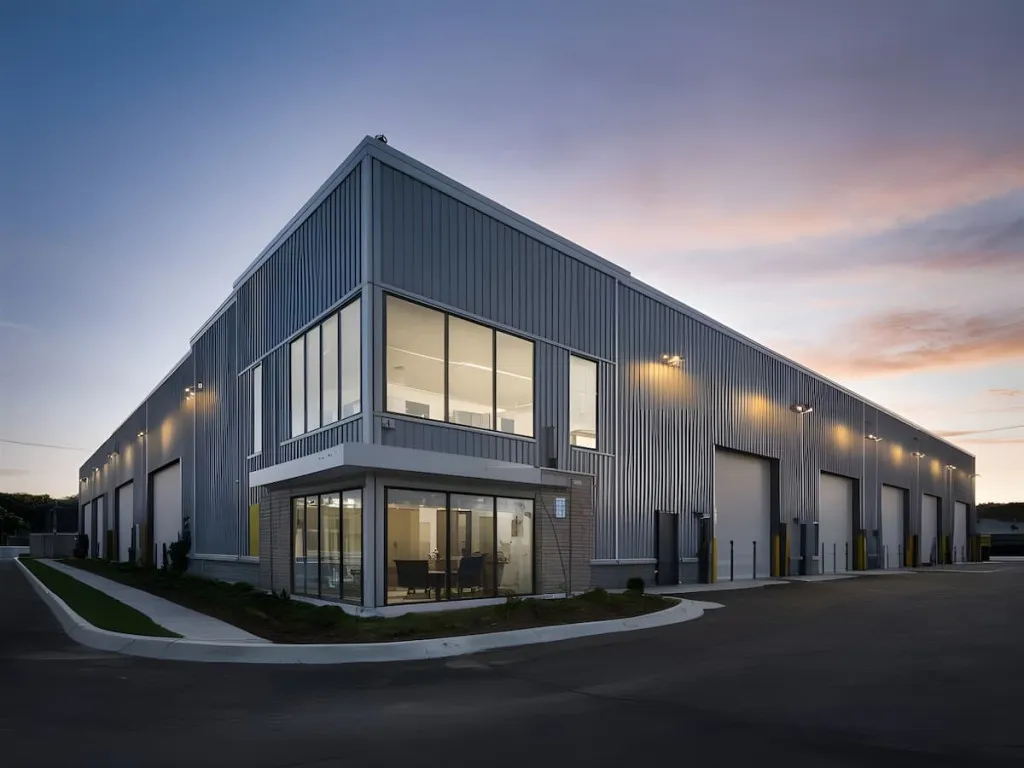
Prefabricated buildings are becoming increasingly recognized as a practical and efficient construction solution. This method is also supported by the use of appropriate building materials to produce high-quality structures.
So, what exactly are prefabricated buildings? Read on to learn about their definition, construction process, advantages, and disadvantages in the following article.
What Are Prefabricated Buildings?
Prefabricated buildings are a construction method that uses building components manufactured in advance at a factory. Once production is complete, each component is shipped to the project site to be assembled into a complete building.
This method can be applied to various types of buildings, including residential homes, commercial buildings, and industrial structures.
Specifically for prefabricated houses, components such as walls, floors, and roofs are prepared in advance, making the construction process more practical and faster.
Types of Prefabricated Buildings
Prefabricated buildings come in several types, distinguished by the form of their components and construction methods. Here are some commonly used types of prefabricated buildings.
1. Panel
In the panel system, each part of the building, such as walls, floors, and roofs, is manufactured separately at a factory. These components are then transported to the project site to be assembled into a single building unit.
This method makes the construction process more structured, although installation typically takes longer than with modular systems.
Read also: Plan to Build a Prefab House? Know the Advantages Here!
2. Modular
Modular prefabricated buildings are available in three models, namely detachable, foldable, and expandable.
Detachable structures are assembled from separate components, foldable structures simply unfold from their folded position, and expandable structures are installed by extending the building sections to form a ready-to-use space.
3. Hybrid
Hybrid prefabricated buildings combine panel and modular systems into a single construction. This combination makes the construction process more flexible while helping to adapt to the building’s needs.
Advantages of Prefabricated Buildings
Prefabricated buildings offer various advantages that make them an increasingly popular choice. Here are some advantages you should know about.
- The construction process is faster, saving both time and money.
- Some types of buildings use more environmentally friendly materials.
- They are easy to move or reassemble as needed.
- They feature a structure designed to withstand seismic shocks.
- They require less labor during construction.
The Prefabricated Home Construction Process
The construction of prefabricated homes involves several stages to ensure the process runs more efficiently. Here are the stages of prefabricated house construction you should know.
1. Design
The first stage is to create a prefabricated house design based on the owner’s needs and preferences. Afterward, this design serves as a blueprint for manufacturing each building component at the factory.
2. Factory Production
Once the design is complete, each component of the house is manufactured in a factory. This process takes place in a controlled environment, resulting in a neater, more consistent finish and helping to minimize errors during installation.
Read also: House Roof Renovation Cost and When It Should Be Conducted
3. Delivery
The completed components are then transported to the project site for installation. This stage is carried out in a planned manner to ensure that all building parts arrive in good condition and are ready for assembly.
4. Assembly
Once all components have arrived at the site, the construction team begins assembling them into a complete building. Since most components are manufactured in a factory, the installation process is generally faster than with conventional construction methods.
Examples of Prefabricated Building Models
Prefabricated homes come in a variety of designs that can be tailored to your needs and tastes. Here are some examples of prefabricated building models that can serve as inspiration.
1. Single-Story House with a Modern Single-Pitch Roof
Prefabricated homes with mono-pitch roofs feature a simple yet modern design.
This model is ideal for those who want to build a home with a unique look. Today, you can also customize the home’s design to suit your needs with the help of an architect.
2. Unique Sliding Door Layout
Prefabricated buildings with sliding doors are constructed by installing the doors directly during the manufacturing process at the factory. Once all components are fully assembled, the building is shipped to the site for installation, making the construction process more convenient.
3. Bedroom with Secret Storage Space
Prefabricated houses can also be equipped with hidden storage spaces as needed. These spaces can be designed to blend seamlessly with the home’s design so they are not easily noticeable.
If you wish to incorporate this feature, discuss your requirements with the service provider during the planning phase.
That concludes our explanation of prefabricated buildings, from their definition to examples. The construction process for these buildings tends to be more practical than conventional methods.
Therefore, this method can be a viable alternative for those seeking to build a home or other structures more efficiently.
To ensure optimal construction results, make sure the materials used meet the quality standards required for the project.
Through its subsidiary, Beton Merah Putih, Semen Merah Putih offers a variety of concrete products to support various types of construction, such as ready-mix concrete, precast concrete, and aggregates.
Specifically for concrete pouring needs, Ready-Mix Concrete is available in a variety of grades, making it suitable for the construction of homes, commercial buildings, industrial areas, and various infrastructure projects.
If you would like more information about our products and services, please contact Semen Merah Putih through our contact page to find construction solutions tailored to your project’s needs.