
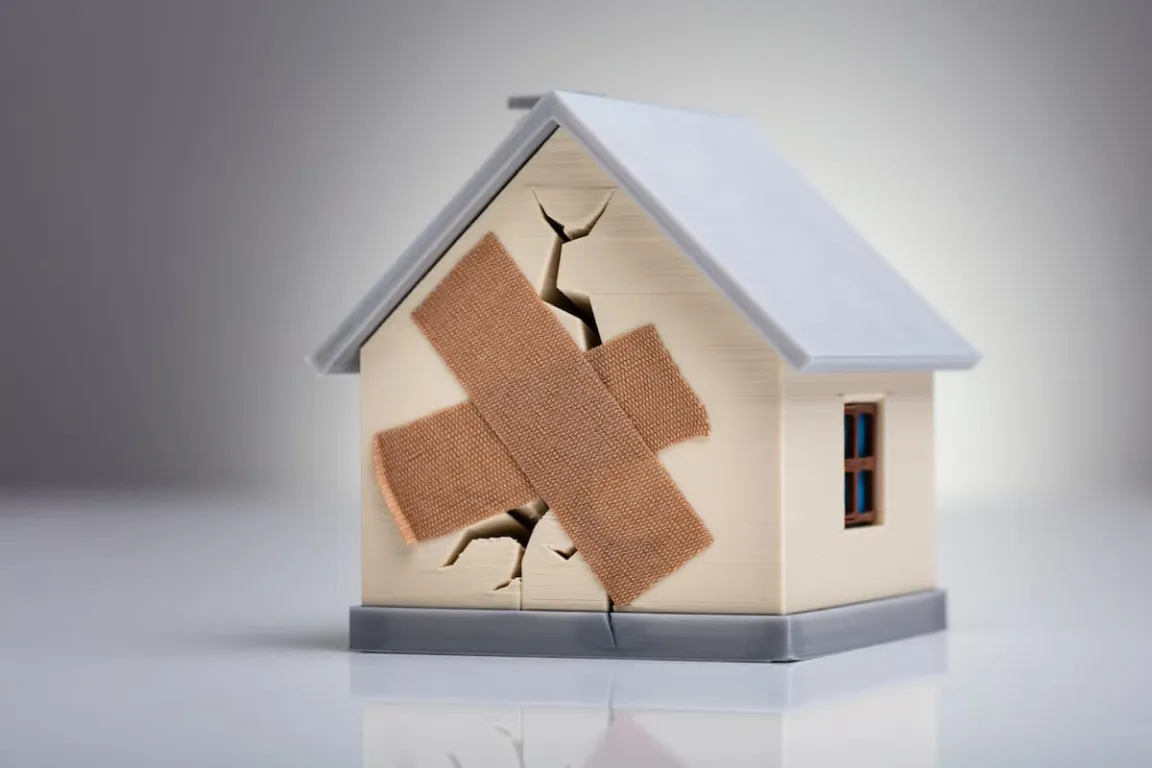
Earthquakes cannot be prevented, but the risks can be reduced by choosing the right building materials. It is important to note that the risk of loss and casualties increases when houses are built without regard for the safety and quality of the materials used.
In earthquake-prone Indonesia, using building materials that comply with standards is a crucial step in building earthquake-resistant houses and protecting families. Safe houses are not always expensive, as long as the materials and construction techniques are right.
Want to understand more about earthquake-resistant houses and the selection of appropriate building materials? Read the article below to find out what earthquake-resistant houses are like, their characteristics, and how to build them.
What Are Earthquake-Resistant Houses?
Earthquake-resistant houses are built with a special design to keep them standing during an earthquake. These buildings are designed to withstand even strong tremors without collapsing.
With the right design, extensive damage can be minimized, allowing residents to exit safely. However, an earthquake-resistant house is not completely immune to damage. The walls may undergo fine cracks, which are still considered normal.
The main focus is on the building frame, such as columns and beams, which must remain sturdy and not collapse suddenly. This is what makes the house safer during an earthquake.
Before discussing the building materials to be used, understand the important philosophy behind earthquake-resistant houses. Buildings are not made rigid to withstand earthquakes completely. In fact, overly rigid buildings are at greater risk of more severe damage.
Therefore, the concept of flexibility or ductility is key. Houses can move with the tremors, as long as the main structure remains strong and does not collapse.
Various Earthquake-Resistant House Designs
Here are some earthquake-resistant house designs that you can learn about. These designs have been implemented as residential buildings in earthquake and landslide-prone areas. However, you should still conduct in-depth research on the risk profile of your construction site. Read on for more!
1. Dome House
The dome house design was used for the homes of residents affected by the 2006 Yogyakarta earthquake. You can visit the settlement with this earthquake-resistant architecture in Sleman, Yogyakarta. Additionally, this settlement has now become a tourist destination.
2. Rumah Instan Konvensional (RIKO)
RIKO is the result of a collaborative research innovation aimed at creating earthquake-resistant housing. The Rumah Instan Konvensional was built in Lombok in 2018. Moreover, this earthquake-resistant design is frequently used as a subject for scientific research articles by many universities.
Read also: How to Calculate Foundation Volume Based on Its Type
3. Rumah Instan Sederhana Sehat (RISHA)
RISHA is a ready-to-assemble house that does not require additional bricks or cement. This is an innovation from Puslitbang Kementerian PUPR. The RISHA house was implemented in 2006 in Aceh as a response to the communities affected by the 2004 tsunami disaster.
4. Bangunan Rumah Rakyat Tahan Gempa (Barrataga)
Similar to the RIKO house, Barrataga is an innovative earthquake-resistant housing design concept based on various academic studies, applied by Kementerian PUPR. Barrataga played an important role in the recovery of residential areas following the 2006 Yogyakarta earthquake. This house model has been proven to be safe in withstanding earthquakes.
Characteristics of Earthquake-Resistant Houses
To make houses safer during earthquakes, several important characteristics should be considered. Here are the earthquake-resistant houses' characteristics that you should know:
1. Strong and Stable Foundations
Foundations are arguably the primary support of a house. If it’s strong, the building will be safer during an earthquake. In earthquake-resistant houses, the foundation is designed so that the house's weight does not rest on a single point and remains stable even if the ground moves.
To support this strength, foundations such as chicken claws, piles, or reinforced concrete layers are usually used. These types of foundations are chosen because they are more sturdy and can withstand ground movement.
In addition to being strong, the foundation must also be protected from water problems. Therefore, a good drainage system is built to prevent the ground under the house from becoming damp and easily subsiding.
2. Lightweight and Elastic Building Materials
In earthquake-resistant houses, building materials are very important to consider. Generally, lightweight materials such as AAC bricks, wood, or selected bamboo are used to reduce pressure on the house structure during an earthquake.
Lighter materials are also safer for residents. If there is damage, they can minimize the risk of being struck by heavy materials compared to using denser conventional building materials.
On the other hand, materials recommended for earthquake-resistant houses also exhibit flexibility. With this flexibility, the energy from earthquake vibrations can be absorbed and channeled, preventing buildings from easily cracking or collapsing.
Read also: 15 Types of Raw Materials for Building and What They Do
3. Strong Connections Between Components
During an earthquake, the most vulnerable parts of a building are its connections. Therefore, the connections between the house's elements need to be made truly strong, from columns to beams, from walls to frames, through to the roof and the main structure.
These connections must withstand the various pressures caused by the earthquake. Special fasteners such as anchors, metal plates, or bolts, designed for heavy loads, are typically used to prevent them from shifting or separating easily.
With solid connections, all the building's parts can move together during an earthquake, rather than coming apart. This is what helps the house remain standing and safer.
4. Sturdy and Flexible Building Frame
The building frame of an earthquake-resistant house is designed to be both strong and flexible. Strength is needed to support the weight of the house, while flexibility helps the building withstand earthquake vibrations without being easily damaged or collapsing.
This frame typically uses materials such as lightweight steel, reinforced concrete, or high-quality, tested wood.
In addition to materials, the way columns and beams are connected is also very crucial. Good connections allow the entire frame to support each other, making the house better able to withstand pressure during an earthquake.
How to Build a Safe Earthquake-Resistant House
To create a safer house during an earthquake, several essential things need to be considered from the start of construction. Each stage plays a big role in maintaining the building's strength. Here's how to build an earthquake-resistant house that you need to understand:
1. Building Materials
Building materials play a big role in determining the house's strength during an earthquake. Each material has its own function. Here are the types of building materials used in earthquake-resistant houses.
a. Concrete
When making a concrete mix, several important things to consider. First, use the correct material ratio: 1 bucket of cement, 2 buckets of sand, 3 buckets of gravel, and about 0.5 liters of water.
Add water little by little until the mixture becomes smooth, not too runny or too thick. Second, select gravel with a maximum size of 20 mm and good gradation to make the concrete stronger and denser.
Lastly, use type 1 cement of good quality that complies with Indonesian National Standards (SNI) to ensure the quality of the concrete mixture.
b. Mortar
Mortar must be made correctly. The ideal mixture is 1 bucket of cement, 4 buckets of clean sand, and enough water. Ensure that the sand is not mixed with mud to maintain a strong bond with the cement.
c. Foundation Stones
When choosing stones for the foundation, do so carefully. Use hard river stones or mountain stones with many angles to make them stick firmly to the mortar.
The selection of foundation stones must be made carefully. Choose river stones or mountain stones that are hard and have many angles so that they bond more strongly with the mortar. With the right stone, the foundation will be more solid and durable.
d. Bricks
The selection of bricks for earthquake-resistant houses must be done carefully. Some characteristics to consider are that the edges of the bricks are straight and sharp, there are not many cracks, they are not easily broken, and their dimensions are not too small.
e. Wood
Wood used in earthquake-resistant houses must be of high quality. Choose wood that is hard, dry, dark in color, free of cracks, and straight to ensure the building is sturdier and better able to withstand shocks.
Read also: Building an Elegant House using Natural Building Material
2. Concrete Structure and Casting
Building an earthquake-resistant house requires a robust structure that includes foundations, beams, columns, ring beams, roofs, and walls. All parts must be made to the correct dimensions and with the appropriate construction methods so that they form a single unit, allowing the building's load to be distributed evenly.
The house's structure also needs to be flexible (ductile) so that it remains sturdy even when it changes shape during an earthquake. During concrete casting, several essential factors should be considered. The mold or formwork must be tight and sturdy so that the mixture does not leak. Column casting is conducted in stages every 1 meter to maintain density.
Ensure the concrete mixture is dense, with no voids, so there are no porous areas. The formwork can only be removed at least 3 days after casting, so that the concrete is strong enough.
That concludes the information on earthquake-resistant houses, from the concept to their construction. By understanding each principle and characteristic of the building, you can see that earthquake-resistant houses do not only focus on physical form, but also on strength, safety, and suitability to the environmental conditions where the house is built.
Material selection is one of the key factors in creating a reliable earthquake-resistant house. A house built using high-quality materials will be more stable, better at dampening vibrations, and have a longer lifespan in the face of earthquake risks.
Therefore, it is crucial to choose materials specifically designed for earthquake-resistant houses, such as products from Beton Merah Putih, a brand of Semen Merah Putih. Beton Merah Putih provides a wide range of construction requirements, from Beton Ready Mix, Precast Concrete, to supporting aggregates produced with strict quality standards.
These materials are suitable for constructing earthquake-resistant houses that require optimal strength, high density, and consistent lasting performance. With the right materials, houses can provide maximum protection for their residents during an earthquake.
If you are looking for quality materials or need technical guidance, Beton Merah Putih can be the right choice. With the right materials, earthquake-resistant houses can be built stronger, safer, and better prepared to withstand a range of natural conditions.
For more information, technical assistance, or recommendations on suitable materials, contact us and consult your earthquake-resistant house construction needs.
Read also: Road Construction: Definition, Types, and Work Stages