If you are planning to build a house with a limited budget and time, a semi-permanent house can be the right alternative. In fact, the semi-permanent system can be applied not only to houses, but also to small stalls or other business spaces.
In addition to being affordable, semi-permanent houses also offer various other advantages that permanent houses do not have, both during construction and after the house is completed. If you want to get a complete explanation of the advantages, disadvantages, materials needed, and examples of semi-permanent houses, read the article below!
What Is a Semi-Permanent House?
A semi-permanent house is a simple type of house that is temporary in nature and built using relatively lightweight materials. Since it is temporary, semi-permanent houses are often chosen by workers who have to move from one project location to another, and as emergency housing after a disaster.
The following are some characteristics of semi-permanent houses:
- The wall construction of the house is very simple, consisting of half-walls, unplastered bricks, bamboo, wood, or containers.
- The floors are made of tiles, cement, or wood.
- Designed with economical roofs, such as zinc, tiles, shingles, or asbestos.
- Used for a short period of time, around 5–15 years, because the materials tend to have a short lifespan.
- Have a simple shape, such as a square or rectangle, due to time constraints and material choices.
- Prioritizing functionality over aesthetics, they generally use ready-made accessories.
Read also: Earthquake-Resistant Buildings: Characteristics and Planning
The Differences Between Permanent and Semi-Permanent Houses
To prevent misunderstandings, here are some differences between permanent and semi-permanent houses based on several important aspects:
1. Based on Construction Materials
Permanent houses generally use construction materials that support high strength, such as concrete, stone, brick, and steel. Meanwhile, semi-permanent houses generally involve the use of lighter materials, such as wood, light metal, and bamboo.
2. Based on Structural Durability
In general, permanent houses are designed to last for a long time and be able to withstand various weather and climate impacts. This is supported by the use of high-quality materials, strong structural designs, and some permanent houses even apply earthquake-resistant techniques.
Meanwhile, semi-permanent houses have the potential to be used for a long time, but not as long as permanent houses. Again, this is related to the use of materials.
3. Based on the Foundation
Permanent houses are built using deep foundations due to the need to support heavy loads. Examples of foundations commonly used in permanent houses are stone foundations, chicken claw foundations, and footing foundations.
On the other hand, semi-permanent houses generally use shallow foundations that are quick to install, such as staddle stone foundations. In fact, some semi-permanent buildings now also adopt prefabricated construction, which is a method of manufacturing structures with components that are produced in a factory and then assembled at the construction site.
4. Based on Its Usage
Because they involve materials and designs that support structural strength, the purpose of building permanent houses is usually long-term, for example, for residences, office buildings, hospitals, schools, and other public infrastructure.
The purpose of constructing semi-permanent buildings is more temporary, for example, for post-disaster shelters or storage facilities.
5. Based on the Easy Modification
Permanent houses are known to have strong and durable structures, but they are difficult to modify, except at great cost. Conversely, semi-permanent houses are more flexible to dismantle, expand, and even move.
The Advantages and Disadvantages of Semi-Permanent Houses
Before deciding to build a semi-permanent house, you should understand its advantages and disadvantages. First, here are the advantages of semi-permanent houses:
- The construction process is relatively easy and fast.
- Budget-friendly.
- Can use natural and recycled materials.
- Easy to renovate or redesign as needed.
- The location selection is quite flexible and can be moved easily.
- Easy to maintain and clean.
- Suitable for construction in disaster-prone areas.
Meanwhile, the disadvantages of semi-permanent houses include:
- Tend to be vulnerable to extreme weather.
- The design options are limited.
- To remain comfortable, the number of occupants must be limited.
- If wood is used as a material, it is prone to mold or termites.
- Their longevity tends to be shorter, especially if they are built without proper consideration or the right techniques.
Read also: Get to Know Some Popular and High-Demand House Types
Materials Used for Semi-Permanent Houses
In general, to build a semi-permanent house, you will need the following materials:
1. Wood
The use of wood to make semi-permanent buildings is commonly found in old houses. Wood is a solution for constructing environmentally friendly buildings. However, it should be noted that wooden houses tend to be infested with mosquitoes and attacked by termites.
2. Bamboo
Bamboo is a natural building material that can give a semi-permanent house an oriental feel. This material offers several advantages, including good flexibility, easy disassembly, affordability, and availability.
3. Lightweight Bricks
In fact, lightweight bricks or Hebel are also widely used as a material for building semi-permanent houses. In terms of characteristics, this material is quite light, heat-resistant, fire-resistant, termite-resistant, comes in various sizes, is easy to process, and can be installed quickly.
4. GRC (Glassfiber Reinforced Concrete)
GRC is a material made from a mixture of cement or concrete and glass fiber. Nowadays, the use of GRC for semi-permanent houses is becoming more widespread, especially for walls and ceilings.
5. Containers
Containers are also a popular choice for building semi-permanent houses because of their relatively large size. In addition, manufactured containers also make the assembly and disassembly process easier.
Examples of Semi-Permanent Houses
To give you a more specific idea of semi-permanent houses, here are some of the examples:
1. Stilt Houses
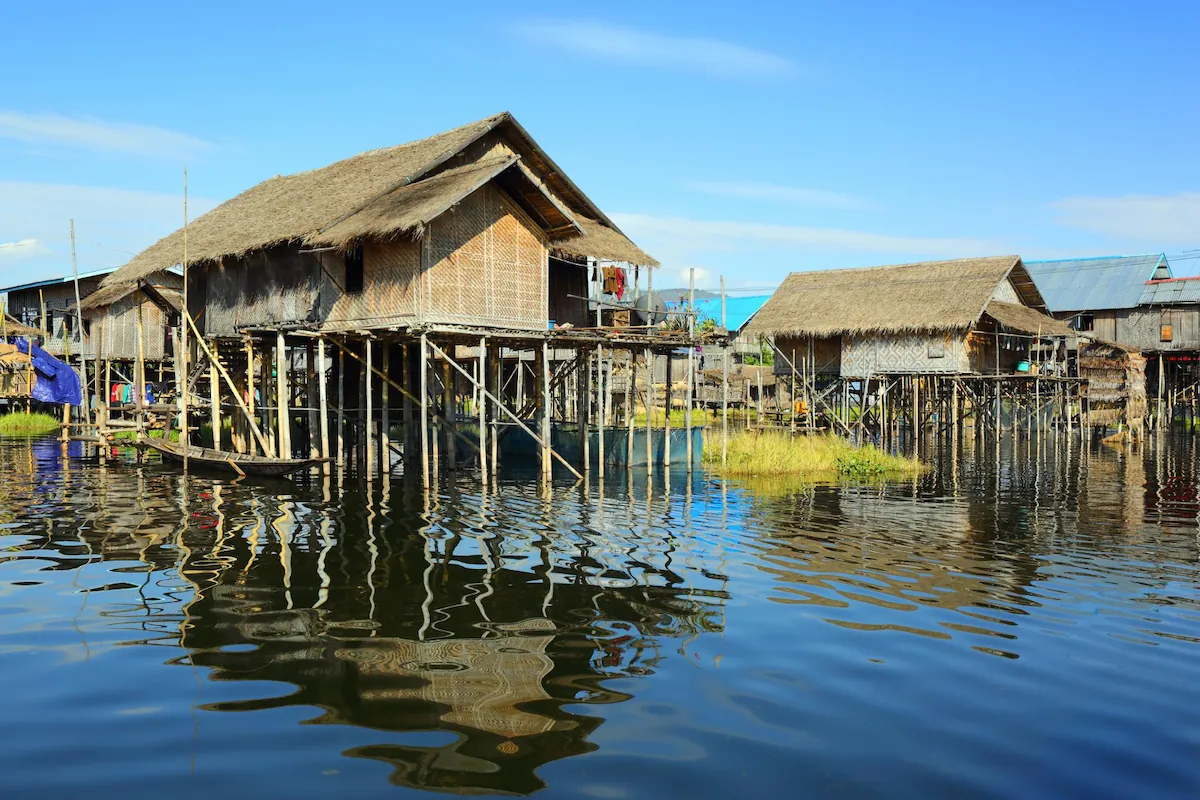
Stilt houses are semi-permanent houses that are raised above the ground and supported by poles or columns. Stilt houses are usually built to protect the house from flooding or unstable ground conditions.
2. Wooden House
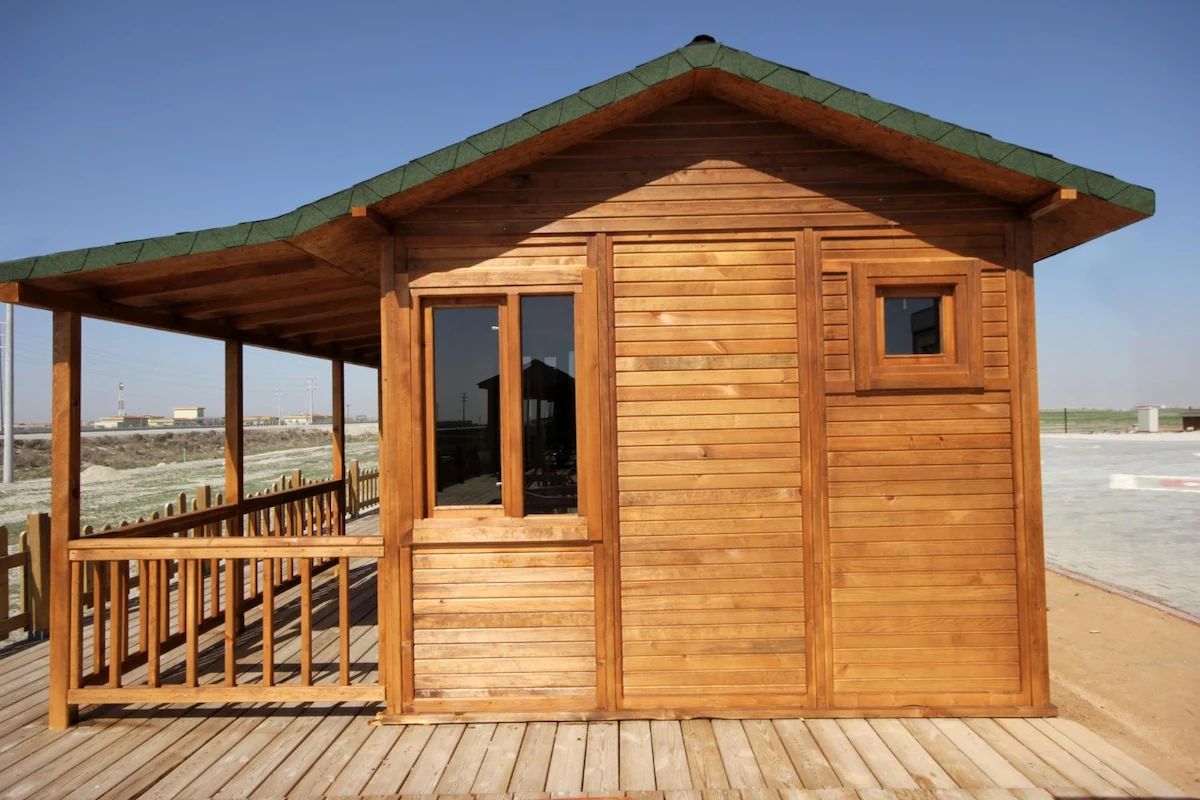
Semi-permanent wooden houses are identical to a simple, modest, natural, and warm impression. These houses also provide good thermal insulation so that the use of air conditioning can be limited.
3. Container Houses
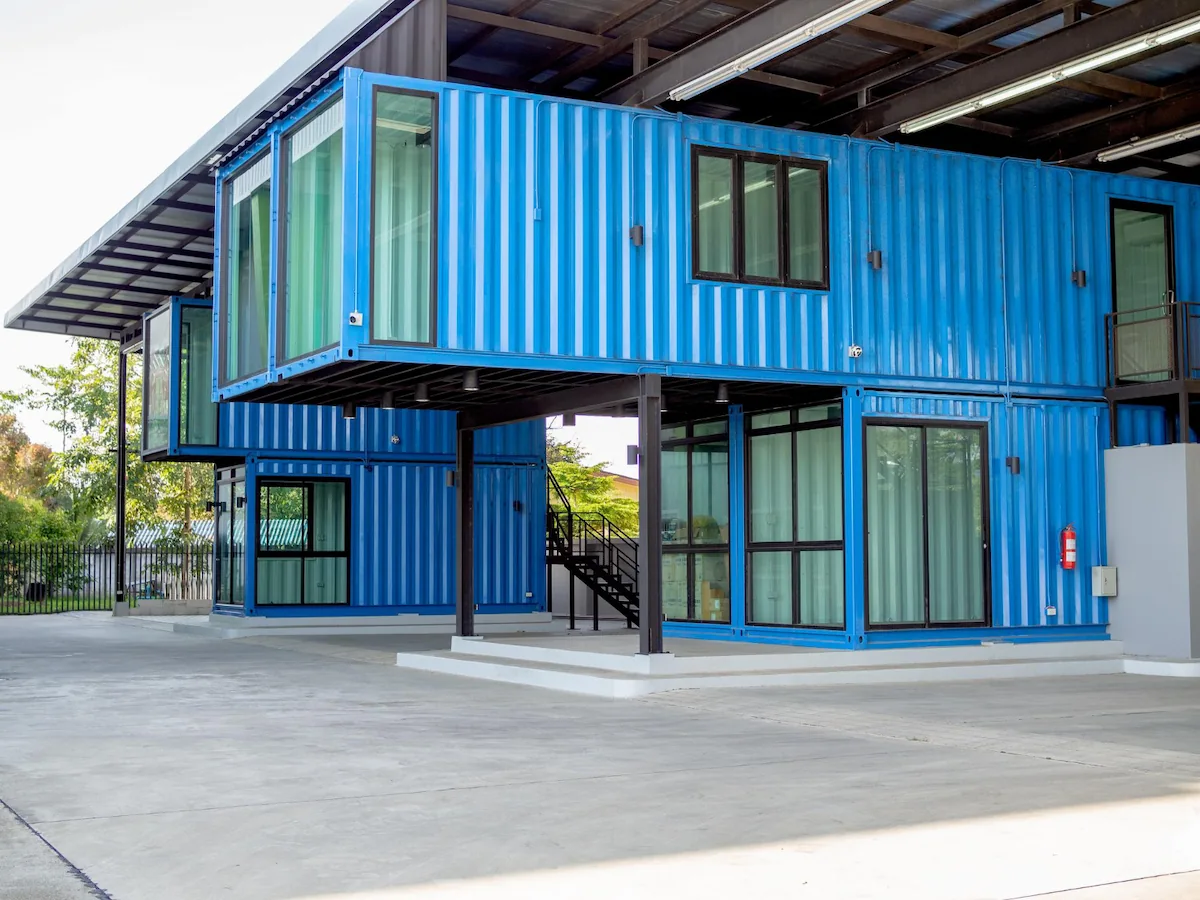
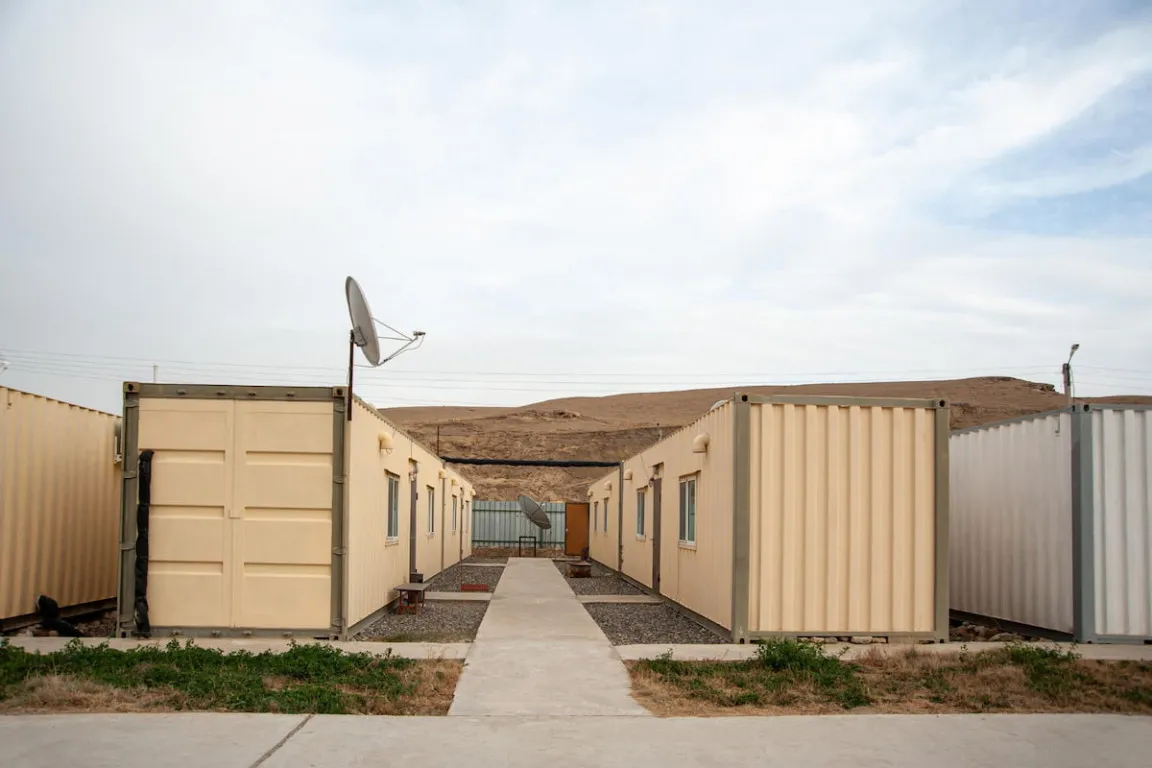
Container houses can create a unique and futuristic impression. Interestingly, these houses are easy to disassemble and can be used at other times. However, because they are made of steel, container houses require proper thermal insulation to make them more comfortable to live in.
4. Bamboo Houses
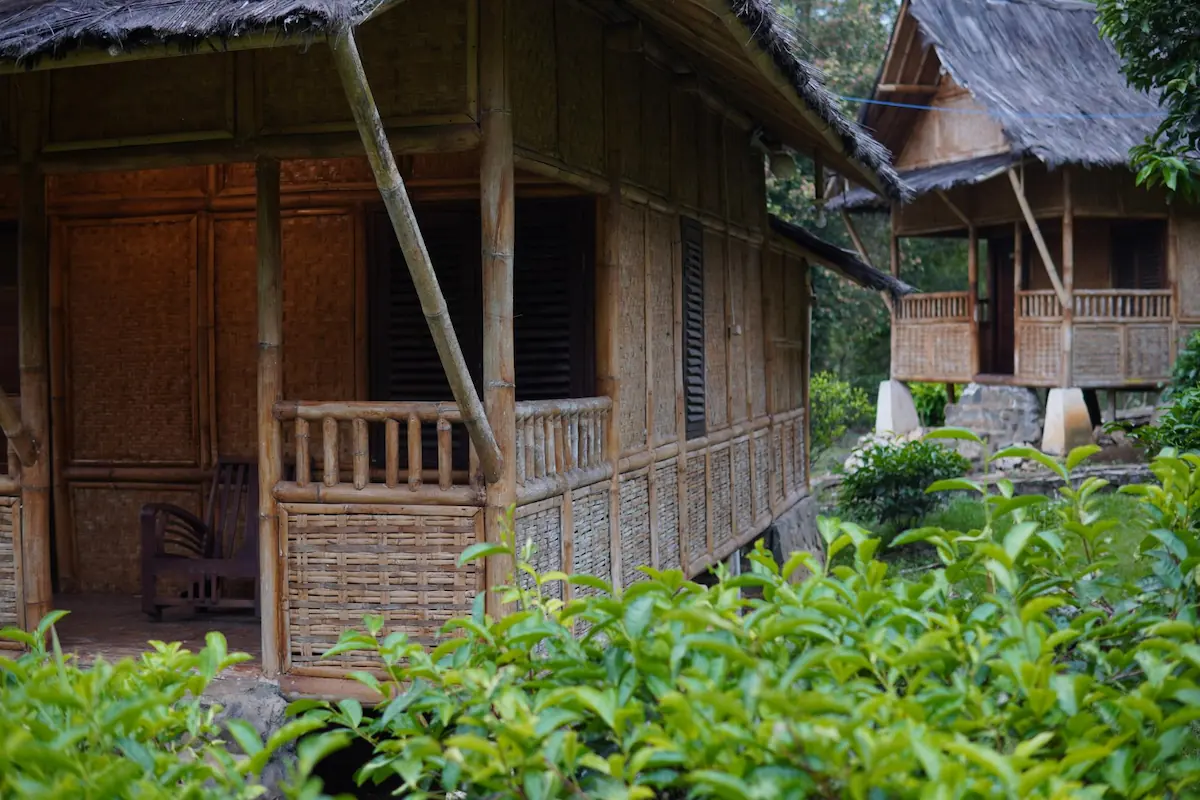
In fact, bamboo houses are not only identical to traditional houses, but can also be applied to modern houses. However, it is important to remember that bamboo houses require proper maintenance to prevent termite infestation and weather damage.
That is the explanation of semi-permanent houses as an option worth considering when you need temporary housing, whether due to cost or lifestyle considerations. Even though they are temporary, safety factors must remain a top priority.
One important step to improve the safety of semi-permanent structures is to use high-quality materials, including cement. To meet your cement needs in construction projects, trust the products from Semen Merah Putih.
The premium cement product from Semen Merah Putih, Semen Merah Putih Watershield, offers various advantages over regular cement. Semen Merah Putih Watershield features water-repellent technology, providing triple protection against water seepage from the outside, inside, and soil or capillary water.
This multipurpose cement can also be used in various building applications, both structural and non-structural, ranging from foundations, slab casting, column casting, brickwork, plastering, to skim coat.
If you would like more information about Semen Merah Putih products or would like to consult with us to find the best construction solution for your project, do not hesitate to contact us now!
Read also: 6 Cozy Small House Designs Inspirations & Some Useful Tips