
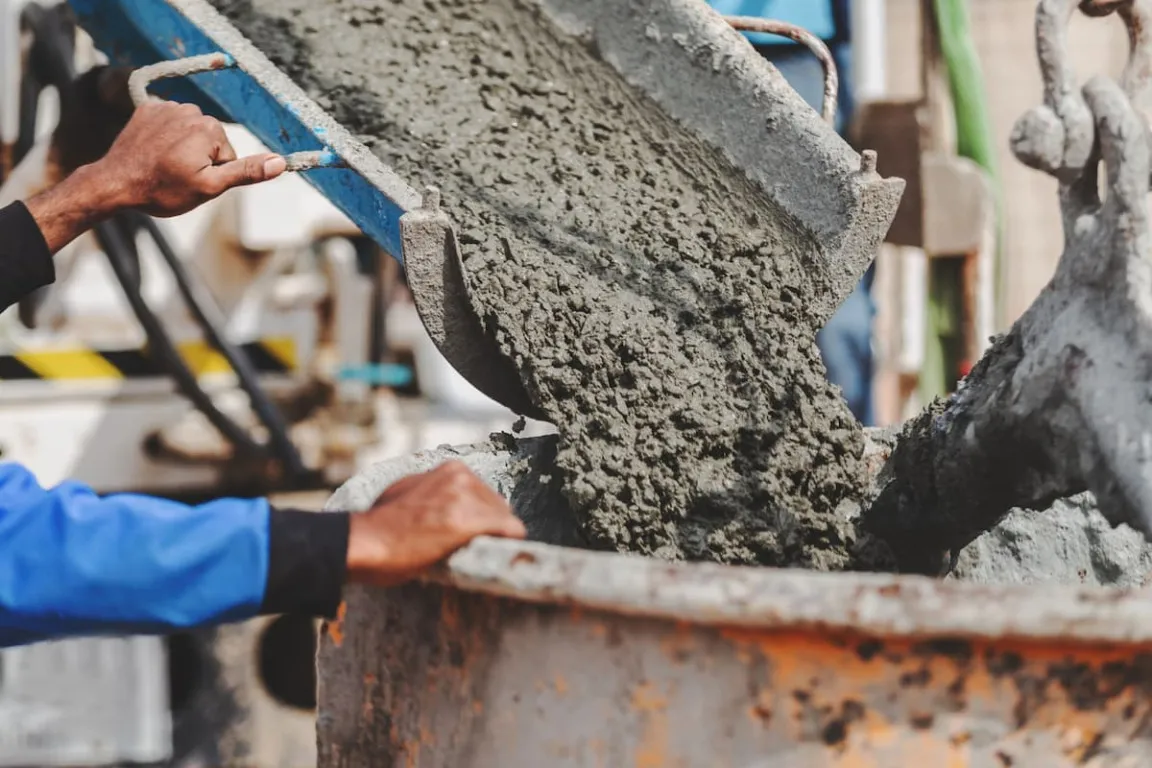
When discussing building construction, one of the important materials that is often mentioned is mortar. Although it is often compared to cement, mortar actually has different functions and characteristics.
In its use, mortar is often referred to as plaster cement because of its practicality and ability to speed up the construction process. Let's take a look at its definition, types, and functions in this article.
The Definition of Mortar
Mortar is an innovative instant cement product that facilitates construction work. Unlike regular cement, mortar already contains a mixture of other materials, such as PC1 cement, special sand, premium filters, and additives.
That bing said, you no longer need to mix various building materials separately. Just add water, and the mortar is ready to be applied. Generally, mortar is used for jobs such as wall coating or as an adhesive.
The application of mortar makes the construction process more practical and efficient compared to conventional cement and sand mixtures.
The Functions of Mortar
Mortar is not only practical but also has various functions in the construction industry. Here are some of the tasks of mortar that make it a popular choice as a building material.
1. As Plaster
Mortar plays an important role as plaster to level uneven wall surfaces after construction. In addition, mortar can also be used as a plaster base when installing ceramic tiles, both on floors and walls, to produce a smooth and even surface.
2. As a Binder
Mortar functions as the main binder that holds building materials, such as red bricks, lightweight bricks, natural stone panels, or roosters. The strong adhesive power of instant mortar makes it an efficient and material-saving choice compared to conventional cement.
Read also: Learn About Cement Raw Materials, Types, & How to Make It
3. Used for Wall Finishing
Mortar also functions as a finishing material in addition to plastering, which aims to smooth the surface of the wall. This process will facilitate painting and, in some designs, the plaster can be left exposed to create an industrial look.
4. Covering Uneven Surfaces
Mortar is also effective for covering uneven surfaces, especially on brickwork. By leveling out these imperfections, the construction work becomes neater. This function is similar to plastering, which is done before the plastering process.
Types of Mortar
Mortar cement comes in several types that can be tailored to construction needs. Each type offers different functions and advantages. Here is the explanation:
- Thinbed mortar: Thinbed mortar is used to bond lightweight bricks with a thin application similar to glue. This type has a spread rate of between 10 and 14 meters and is considered economical to use.
- Instant plaster mortar: This type is suitable for a smooth, bright, and crack-resistant finish. With a special formula, instant plaster mortar provides a perfect finish without the need for additional plaster, thus saving project costs.
- Wall plaster: In addition to lightweight bricks, this type can also be used on red bricks and concrete blocks. This mortar is ready to use and does not require additional building materials.
- Ceramic adhesive mortar: This mortar is specially designed for installing ceramic tiles on floors and walls. It has extreme and stable adhesive power even when exposed to weather or structural changes, so the tiles do not come off easily.
- Protection mortar: This type excels in resistance to water and decomposition, and functions as heat and sound insulation. It is suitable for providing extra comfort in buildings.
Characteristics of Good Mortar
To achieve strong and durable construction results, it is important to choose the best quality mortar cement. The following are the characteristics of good mortar:
- High adhesive strength: The Mortar must have strong adhesive strength. This is influenced by the ratio of cement, water, and sand quality, ensuring it adheres well after it hardens.
- Easy to apply: With a consistent composition, mortar can be applied thinly and evenly, facilitating the work process.
- Suitable for various building materials: Mortar must bond different types of building materials due to its precise composition.
- Resistant to water seepage: Mortar must be able to protect the gaps between stone units from rainwater seepage and ensure that the bond stays strong.
- Good water retention: Mortar must contain adhesive materials that retain moisture, preventing the stone units from separating easily during construction.
- Low deformability: High-quality mortar has low shrinkage, expansion, and stretching rates to maintain stable shape and strength.
- Fast drying: Good mortar dries quickly to speed up the construction process.
- Durable and crack-resistant: Mortar must be durable, crack-resistant, and able to maintain structural strength over the long term.
Read also: What Is PCC? Definition, Benefits, & How It Differs From PPC
Differences Between Mortar and Conventional Cement
Although both are used in construction, mortar and conventional cement differ in composition, usage, and efficiency. Here is a brief explanation of the differences between the two.
1. Based on Application
Conventional cement is typically used to build main structures that require high strength, such as reinforced concrete, roads, and retaining walls. Meanwhile, mortar is more often used for finishing work, such as tile installation, wall plastering, and brick laying, as it produces a smooth and firm surface.
2. Strength and Durability
Conventional cement has higher compressive strength, making it suitable for structures that must bear heavy loads, such as concrete. On the other hand, mortar has lower strength because it does not contain large aggregates, but it is still strong enough for jointing applications, such as bricks or plastering.
3. Main Functions
The primary function of conventional cement is to produce sturdy concrete, used in the construction of large structures, such as foundations, columns, and floors. Meanwhile, mortar is more focused on more detailed jointing or coating work, functioning as an adhesive for bricks and ceramics, as well as a wall coating.
4. Basic Material Composition
Conventional cement or Portland cement consists of a mixture of calcium, silicon, aluminum, and iron, which serve as the main binding agents in concrete. Meanwhile, mortar is a mixture of cement, sand, and water without large aggregates, making it smoother and suitable for bonding work, such as plastering, brick laying, and ceramic tile installation.
This is a comprehensive explanation of mortar, covering its definition, types, and functions in the construction industry. Choosing the correct type of mortar is crucial to ensure the building is sturdy and durable.
If you are working on a construction project, be sure to use high-quality mortar for the best results. Semen Merah Putih Watershield comes with water repellent technology that provides triple protection against water seepage from outside, inside, and from the ground.
Suitable for various structural and non-structural applications, such as foundations, concrete slabs, castings, and plastering. We are committed to providing the best construction solutions through innovative products like Semen Merah Putih Watershield.
Contact us now for more information and find the most suitable construction solution for your project!
Read also: What Is Bulk Cement? Various Types at Semen Merah Putih