
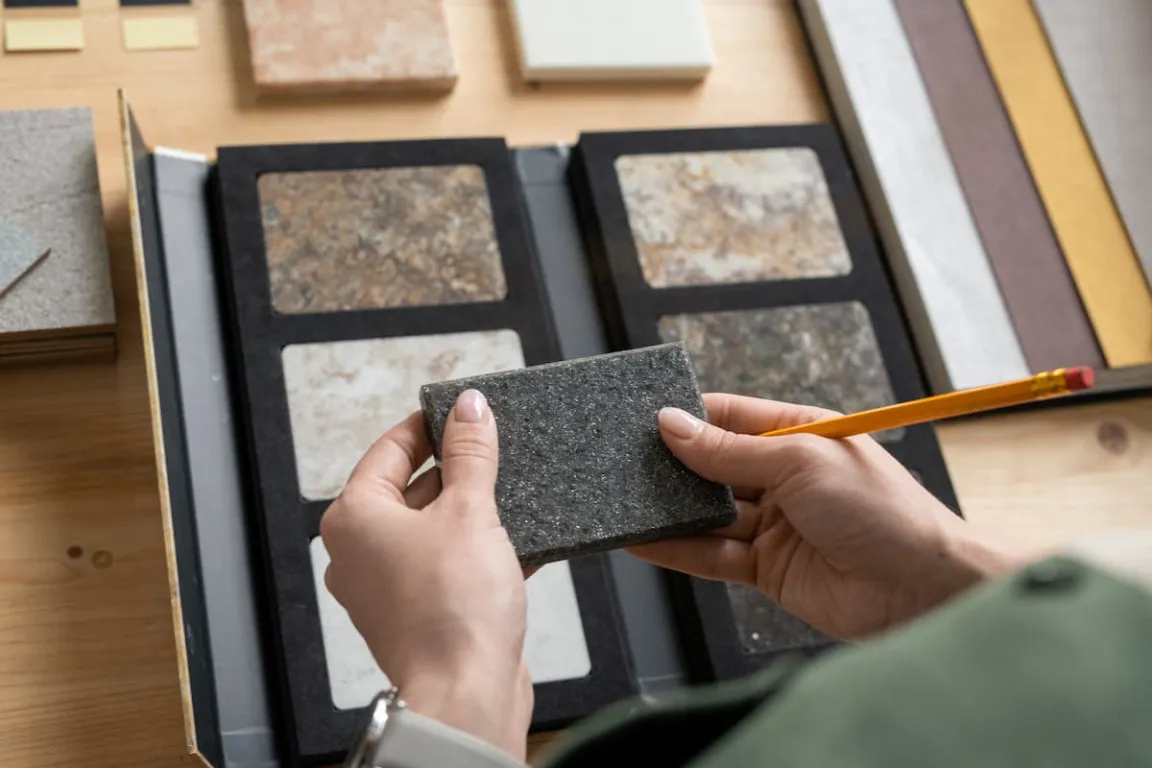
Choosing the right flooring can sometimes be confusing when building or renovating an older house. Although they may look similar at first glance and both offer aesthetic appeal and a variety of attractive patterns, granite and ceramic tiles differ significantly in characteristics, durability, and cost-effectiveness.
Understanding the differences between these two materials is crucial so you don't regret your choice. Take a look at the full overview and tips below before choosing the best material to use for your house!
Differences Between Granite and Ceramic Tiles
Granite and ceramic tiles are two of the most popular flooring options because they can enhance a house’s aesthetic appeal. However, many people assume the only difference between them is price.
In reality, there are many fundamental differences you should know. To help you make the right choice, take a look at the following differences between granite and ceramic tiles:
1. Base Material
These two materials differ in composition and manufacturing processes. Ceramic is made from clay or silicate mixed with ball clay, kaolin, feldspar, quartz, and water, then fired at around 1,000°C and coated with a glaze.
Meanwhile, granite, in this context, refers to homogeneous tiles made from a combination of minerals such as clay, kaolin, feldspar, and silica sand.
These materials are pressed under extremely high pressure and fired at temperatures exceeding 1,200°C, producing dense, uniform slabs with a unique appearance.
2. Appearance
Ceramic tiles typically come in standard sizes of 20x20 cm or 30x30 cm with various patterns, but their surfaces are slightly uneven because the glaze is distributed unevenly. Their colors also tend to be more muted, and they can absorb up to 7% water.
In contrast, granite generally comes in larger sizes, such as 40x40 cm or 60x60 cm, with natural patterns. Due to the pressing technique, its surface is much flatter, smoother, and more precise. Its colors are also brighter, with a very low water absorption rate of just 0.05%.
3. Manufacturing Process
The manufacturing processes for these two materials also differ significantly. Ceramic tiles are made from clay or silicate molds, fired at around 1,000°C, and then coated with a glaze for a glossy finish, making them generally stiffer and more fragile.
Meanwhile, granite tiles are made from a mixture of clay and selected minerals, then pressed, cut, and fired at extreme temperatures of up to 1,230°C. This process produces precise, extremely strong, impact-resistant, and durable slabs. These advanced processes and superior quality are what make granite more expensive than ceramic.
Read also: How to Calculate Ceramic Needs, Avoid Losses and Material Waste!
4. Applications
Beyond their physical properties and manufacturing processes, these two flooring types also differ in their intended applications. Because of its high resistance to extreme weather, granite is ideal for outdoor areas, such as patios and other outdoor spaces.
On the other hand, ceramic tiles, including porcelain tiles, can also be used outdoors. However, you need to take extra care, depending on your climate and the conditions around your house.
5. Maintenance
Ceramic tiles are far more practical and efficient to maintain. Their surfaces are easy to clean when stained, soiled, or exposed to liquid spills, so they don't require special care and maintenance costs are generally lower.
In contrast, granite flooring requires extra care to maintain its quality and appearance. Granite stains are harder to clean, so it requires special maintenance steps, such as maintaining proper humidity levels, installing protective pads on furniture legs, and polishing the surface periodically.
6. Installation Process
Ceramic tiles are relatively simple and more economical to install. Their light weight makes them easy for most contractors to handle, cut, and install, resulting in significantly lower shipping and installation costs.
Meanwhile, installing granite is relatively more complicated and requires extra precision. It demands specialized skills and cutting tools. Additionally, granite's weight leads to higher shipping costs and labor rates.
7. Price
Cost is the most notable difference between these two materials. If you have a limited budget, ceramic tile is the ideal choice because it is very affordable. For a standard 30x30 cm size, the price typically ranges around IDR 50,000.
Meanwhile, the relatively high price is often the main consideration when buying granite. For a 60x60 cm tile, prices generally start at around IDR 200,000, depending on the type and pattern.
Nevertheless, these prices are comparable to the quality granite offers, such as its strength, durability, and the luxurious look it brings to a house.
Read also: What Is Floor Screed? Learn Its Definition, Type, & Function Here!
8. Water Absorption
The difference in water absorption rates between these two materials depends on pore size. Ceramic tiles have relatively larger pores, with a water absorption rate of more than 0.5% and can even exceed 3%. Therefore, ceramic tiles must be soaked in water before installation to prevent lifting or cracking.
On the other hand, granite has very dense pores, resulting in a low water absorption rate of less than 0.5%. As a result, you can install granite immediately without soaking it beforehand. This high water resistance also makes granite more stain-resistant and less prone to moisture buildup.
9. Window Frame
A “window frame” is the white border that appears around ceramic tiles because of the manufacturing process, a feature you will not find in granite. Additionally, ceramic tile edges are slightly rounded (unrectified), requiring a fairly wide grout line (2–4 mm).
Unlike ceramic tiles, granite undergoes a recutting process that produces precise dimensions and sharp right angles. This allows granite to be installed with very narrow grout lines (1–2 mm), creating a seamless, more luxurious floor appearance.
Granite or Ceramic, Which Should You Choose?
Choosing the right flooring material is no trivial matter. To avoid making the wrong choice, here are some tips you can follow to find the best material for your house:
- Consider patterns and colors: Choose neutral colors, such as cream, white, gray, brown, or black, that complement your room’s theme and size.
- Adjust the tile size: Use larger tiles to make the room feel more spacious. Conversely, use smaller tiles for patios, outdoor areas, and bathrooms.
- Customize to your house design: Choose granite with a natural stone pattern for a modern, elegant look, or custom ceramic tiles for a more unique look.
- Consider the room’s size: Measure your room dimensions to avoid a cramped feel, and choose simple patterns for small spaces.
- Consider the room’s function: Ceramic tiles suit areas regularly exposed to water, such as bathrooms and kitchens, while granite works better in living rooms and family rooms.
Choosing the right flooring is important for creating an aesthetically pleasing, comfortable living space. However, the appearance and durability of your flooring depend not only on its material but also on the quality of the supporting building materials you use.
To keep your house strong and free from moisture issues, use Semen Merah Putih Watershield. This super-premium, multipurpose cement offers better performance than regular cement.
Equipped with innovative water-repellent technology, this cement provides triple protection against water seepage, whether it comes from the outside, inside, or the ground. As a result, the building becomes stronger, more durable, and more affordable to maintain.
This cement is highly versatile for all your construction needs, from foundations and concrete slabs to cast-in-place concrete, brickwork, plastering, and rendering.
Want the best construction results for your dream house? Contact us now! We are ready to guide you and provide top-quality materials and services to bring your dream project to life.
Read also: Guide to the House Construction from Scratch to Finish