
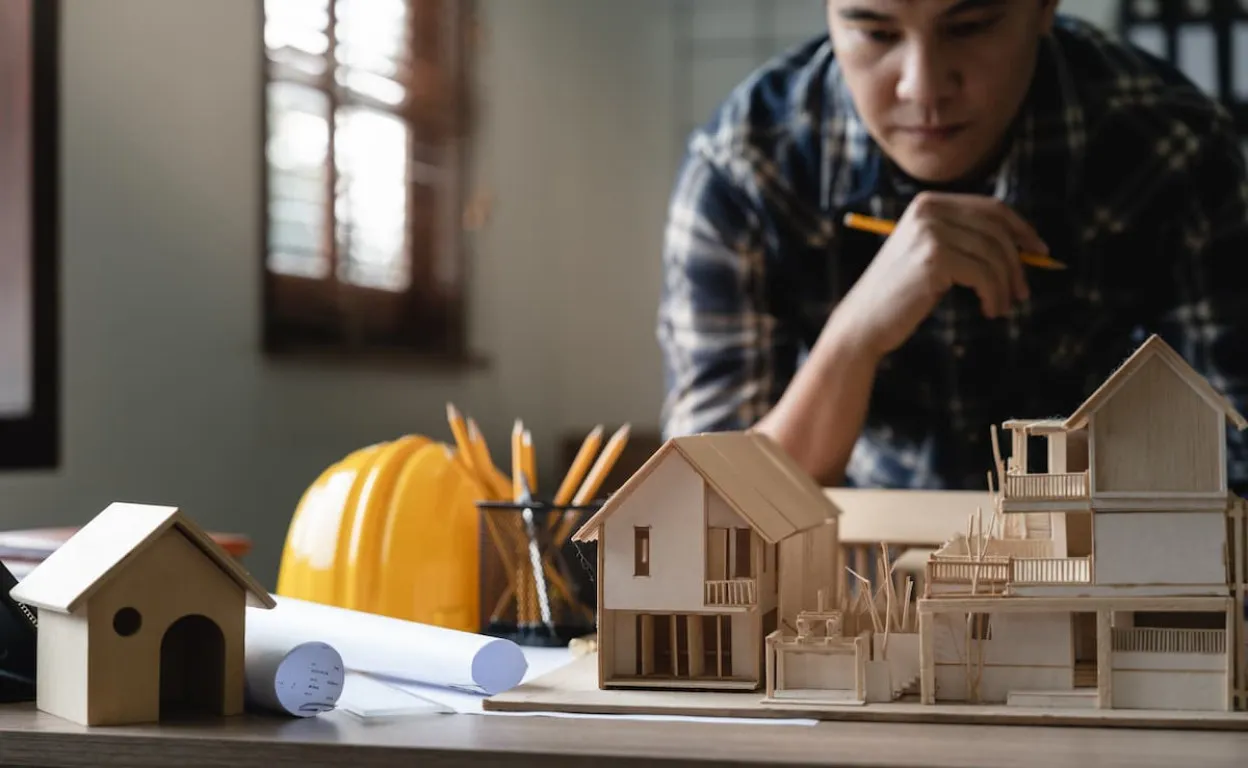
Building a house requires careful planning. This is because the cost of building a house can escalate, and the construction period can exceed the set deadline, both of which carry financial risks. Therefore, every stage of building a house should be carefully understood from the outset.
Understanding the house construction process helps you avoid costly mistakes. Every step, from design to finishing, determines the quality of your home. Read the full explanation in this article to ensure that the construction runs smoothly.
Stages of the House Construction Process
The process of constructing a house consists of several interrelated stages that must be carried out systematically. By understanding the entire process, you can manage your house construction more effectively and with greater control. The stages include:
1. Determining the Purpose and Requirements of the House
The first stage begins with understanding the purpose of building a house: whether it is for personal use, investment, or rental. You need to determine the number of rooms, any additional space requirements (such as a workspace or storage room), and the desired design concept.
Additionally, you need to align these needs with the land conditions and budget constraints to ensure the plan remains realistic and feasible.
2. Preparing Designs and Working Drawings
Once the requirements are determined, the next step is to prepare detailed architectural designs. The designs cover not only floor plans, but also elevations, building sections, and structure and utility details.
Complete working drawings will serve as the main guidelines for contractors and builders in the field, thereby minimizing errors during construction.
3. Creating a Budget Plan
The budget plan is prepared based on the working drawings to ensure more accurate calculations. This document includes detailed material requirements, work volume, per-unit material prices, and estimated labor costs. With a clear budget plan, you can control expenses and anticipate potential cost overruns during construction.
4. Dealing with Legalities and Permits
Before construction begins, ensure that all legal documents are completed in accordance with local regulations. One important document is the Building Approval (Persetujuan Bangunan Gedung/PBG), which serves as a substitute for the Building Permit (Izin Mendirikan Bangunan/IMB). Taking care of these legalities is important to avoid administrative sanctions, building demolition, or problems during future sales and purchases.
Read also: How to Create a Simple Floor Plan, Easy & Practical!
5. Preparing the Construction Site
This stage begins with clearing the site of weeds, debris, or remnants of old buildings. Once the area is completely ready, measurements are taken again to align with the working drawings, and a bouwplank is installed as a reference point for the foundation and building boundaries.
In the process of building a 1-story house, this stage is usually simpler because the structural requirements and foundation depth are less complex than those for a multi-story house.
6. Foundation Work
The foundation is an important element that supports the entire building. The foundation is built according to the soil conditions and the planned building load. The foundation type can be stone, footplate, or pile, depending on the building's structural requirements.
For a 1-story house, stone or foot plate foundations are typically used. Meanwhile, in a 2-story house, the foundation must be designed to be stronger because it supports a greater load.
7. Main Structure Work
This stage is the foundation for the entire construction, including the installation of sloops, columns, beams, and floor plates. Each structural element must be installed according to its size and design to support the building's weight and prevent cracking.
The material quality is crucial at this stage. The selection of concrete, iron, or brick must meet standards to ensure the building is durable and stable. Additionally, the craftsmen's precision greatly affects the house's accuracy and safety.
8. Installation of Walls and Room Partitions
Once the main structure is complete, walls are built to form the house's rooms. The materials used can be red brick, Hebel, or other panels as needed for the design and the room’s functionality.
In addition to forming spaces, this stage also determines the position of doors, windows, and partitions between rooms. Proper planning ensures optimal air circulation and natural light while maintaining the occupants’ comfort.
9. Installation of Roof Frames and Coverings
Roof frames are installed to support the roof covering, using wood, lightweight steel, or a combination of other materials. Installation must be precise to ensure that the roof is strong enough to withstand loads and resistant to wind or rain.
Once the frame is in place, roof coverings such as tiles, zinc, or metal roofing are installed. At this stage, it is important to ensure that the joints are tight and the roof slope conforms to the design to prevent leaks and allow rainwater to flow smoothly.
Read also: 10+ Tips for Building a 30 Million House & Its Calculations
10. Electrical and Sanitation Installation
After the roof is installed, electrical wiring, light fixtures, outlets, clean water pipes, and drainage pipes are installed. The installation must comply with safety standards to minimize the risk of short circuits, leaks, or system damage.
For multi-story houses, power and water distribution to the upper floors must also be carefully considered. The placement of light fixtures, outlets, faucets, and drains must be precise to ensure user comfort and efficient operation of the utility system without obstructions.
11. Plastering, Rendering, and Flooring Stage
The walls are then plastered and rendered to ensure a smooth, even surface that is ready for finishing. This process is crucial to achieving a neat and durable finish for painting or tile installation.
Next, the flooring is installed using materials such as ceramic tiles, granite, marble, or parquet according to the predetermined interior design. This stage begins to give the house a neater, more comfortable visual appearance, ready for the final stage of finishing.
12. Finishing and Final Details
The finishing stage includes painting the walls, installing ceilings, doors, windows, and other decorative accessories. Every detail is checked to ensure that the quality and appearance match the initial design.
In addition to visual aspects, finishing also ensures optimal home functionality, including installing light fixtures, door handles, and ventilation systems. Once this stage is complete, the house is ready for final inspection and handover to the owner.
These are the stages in the house construction process you need to understand to ensure the construction runs smoothly, efficiently, and as planned. Each stage plays an important role that must be considered, so careful planning is essential for a high-quality result.
Additionally, in the house construction process, selecting high-quality materials is key to ensuring the building is strong, durable, and comfortable to live in. One solution to consider is the application of cement with advanced technology, such as Semen Merah Putih Watershield.
Semen Merah Putih Watershield is equipped with water-repellent technology that protects buildings against water seepage, soil moisture, and capillary water. This cement is suitable for foundations, beams, columns, slabs, and other cast structures, making the house sturdier and more durable.
Let's build your dream house that is strong, aesthetically pleasing, and durable, using the right construction process and high-quality materials. Contact us for further consultation regarding your construction needs!
Read also: Buying or Building a House? Here Are Some Considerations!