
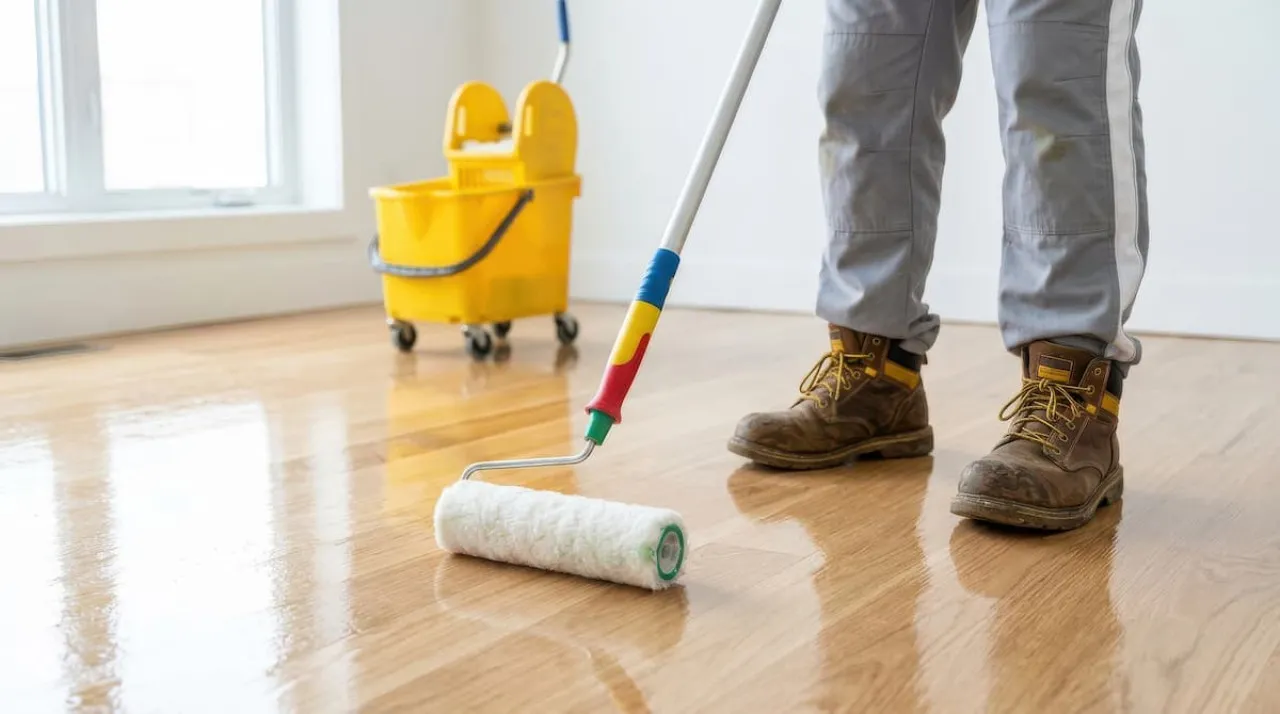
Maintaining your floors is the best way to keep your house clean, shiny, and aesthetically pleasing. This can be achieved by applying a floor coating, an epoxy resin-based coating that protects the surface from friction, scratches, and impacts, making it more durable.
However, proper floor coating application, from selecting the right coating type for indoor or outdoor areas to the application technique, can significantly affect the final result. To ensure long-lasting, stunning, and optimal results, check out the complete guide below, covering everything from benefits and types to application tips!
What Is Floor Coating?
Floor coating, also known as floor paint or epoxy, is a resin-based layer designed to strengthen surfaces like concrete, ceramic, granite, and wood.
Besides making a room look more aesthetically pleasing, this coating protects floors from common issues such as slippery surfaces, rapid wear, and easy damage, especially in work areas and industrial settings.
Before applying it, consider the floor type, surrounding conditions, and desired result. Each area requires different coating types, so these considerations are crucial to ensure an even, durable, and long-lasting result.
Types of Floor Coatings
Epoxy resin coatings on cement, concrete, ceramic tiles, or granite effectively prevent stains from penetrating the pores while protecting the surface from scratches and cracking.
Each material has different characteristics, so choose the most suitable coating. Learn about the following types of floor coatings before choosing them:
1. Concrete Floor Coating
Open areas such as rooftops, patios, and carports need extra protection because heavy loads can damage them. Applying a concrete coating not only increases surface hardness but also enhances its appearance.
For best results, clean the floor thoroughly, apply a primer, then finish with two roller coats.
2. Granite Floor Coating
Although granite adds a touch of luxury to a house, its surface can fade or turn yellow from sun exposure and stains. Beyond regular polishing, a special coating acts as an outer protective layer that preserves the granite’s natural luster and helps it retain its shine longer.
Read also: Waterproofing Coating: Types, Advantages, & Application Tips
3. Concrete Floor Coating
The exposed concrete look in modern interiors can generate dust and sand if it isn't properly coated. A concrete coating seals the floor’s pores, making the surface shinier, easier to clean, and more comfortable underfoot. If you want to use it, it's available in colors ranging from clear to various shades of gray.
4. Coating for Plastered Floors
Improperly finished plastered surfaces often feel rough and look dull. A protective coating evens out the surface texture, prevents dirt from getting trapped in the pores, and provides a smoother, more aesthetically pleasing finish.
5. Ceramic Floor Coating
Ceramic tiles made from clay are prone to cracking under heavy foot traffic. A ceramic coating helps absorb impact, provides waterproof protection in wet areas such as bathrooms, and lets you change the floor color without tearing up the existing floor.
6. Mortar Coating
This coating combines resin, hardener, and silica sand to produce extremely high durability. Its exceptional strength lets the mortar coating support heavy loads while protecting the surface from abrasion, corrosion, and extreme weather.
7. Multi-Layer Coating
This application is carried out in stages, starting with a primer, followed by putty filling, and finishing with a self-leveling topcoat. For precise, peel-resistant results, the ideal micro-thickness is approximately 2,000 to 3,000 microns.
8. 3D Coating
For a unique visual look, 3D coating is the right choice. To ensure the image looks realistic and flawless, smooth the base floor surface and choose a glossy coating.
9. Flake Coating
This coating is unique because it contains flakes of mica, metal, or synthetic materials. The resulting artistic patterns are ideal for enhancing the beauty of patios, living rooms, bedrooms, and even garages.
10. Anti-Static Coating
Static electricity on floor surfaces can pose a hazard in industrial areas or rooms equipped with sensitive electronic equipment. Anti-static coatings use conductive materials to neutralize these charges, ensuring a safe work environment.
Read also: Concrete Slabs Waterproofing: Definition, Types, and Benefits
Functions of Floor Coatings
Floor coatings help extend the service life of buildings by resisting corrosion, chemical exposure, friction, and extreme weather. For this reason, they are widely used in industrial facilities, offices, and residential houses. Here are some key functions of floor coatings you should know:
- Protects against scratches and stains: Keeps floors durable even with heavy foot traffic and prevents oil or chemical spills from seeping in and damaging the surface.
- Makes rooms appear more spacious and elegant: The glossy finish hides tile seams, making interiors look cleaner, more elegant, and more spacious.
- Makes floor maintenance easier: The smooth surface prevents dirt from sticking, making it easy to clean with a broom, mop, or vacuum.
- Prevents moisture, mold, and mildew: The coating seals the surface tightly so water cannot seep through. This helps prevent mildew and mold, which can damage the building’s structure and make the room feel damp.
Tips for Applying Floor Coating for Optimal Results
Achieving a neat, smooth, and durable floor coating requires the proper application technique. If you apply it carelessly, the epoxy coating may peel off quickly or develop a rippled appearance.
To avoid these issues, follow these tips for applying floor coatings to achieve optimal results:
1. Thoroughly Clean the Floor Surface
Surface preparation is the most critical step because it affects how well the coating adheres. Before applying the coating, ensure the floor is completely free of contaminants such as dust, sand, oil, old paint residue, and grease.
Also, ensure the surface has a slightly rough texture and is completely free of standing water so the coating adheres properly.
2. Pay Attention to Humidity and Weather Conditions
Avoid applying the coating during rain or drizzle. High humidity (ideally below 80%), along with suboptimal floor surface temperatures, can interfere with the drying process. Measure these conditions beforehand with a digital psychrometer.
3. Apply a Primer Coat as a Base Layer
This step is often overlooked, even though it’s essential. A thin primer coat evens out the concrete floor’s surface while sealing open pores. This ensures the main coating adheres more strongly and will not peel off easily.
4. Use Self-Leveling Epoxy
If you want a smoother floor surface, apply self-leveling epoxy after you've prepared the surface and repaired any damage, such as cracks or holes. Its non-volatile properties let the coating flow into uneven gaps, creating a smooth, even final floor surface.
5. Wait Until the Coating Is Completely Dry
The epoxy coating cures through a chemical reaction between the resin and the hardener. Therefore, allow the area to dry completely, typically about 7 days, before stepping on the floor or exposing it to heavy loads. As a result, the surface becomes very hard, abrasion-resistant, and impervious to chemical exposure.
Applying floor coating correctly can indeed help keep the floor surface neat, glossy, and durable. However, protecting your house isn't limited to the floor. Other structural areas, such as walls, are also highly susceptible to damage from water exposure and seepage.
For comprehensive home protection, trust Semen Merah Putih Watershield. This super-premium, multipurpose cement product features water-repellent technology that provides triple protection from three directions at once: outside, inside, and the ground.
These advantages make buildings sturdier, more resistant to extreme weather, moisture-free, and low-maintenance. Plus, this cement is highly versatile and ideal for a wide range of construction projects, from foundations, concrete slabs, cast-in-place concrete, and masonry to plastering and rendering.
Do you want your dream house to stand strong and stay protected for the long term? Contact us today to get the best materials and top-notch construction services for your project!
Read also: What Makes Polished Concrete Floors Popular? Find Out Here!