
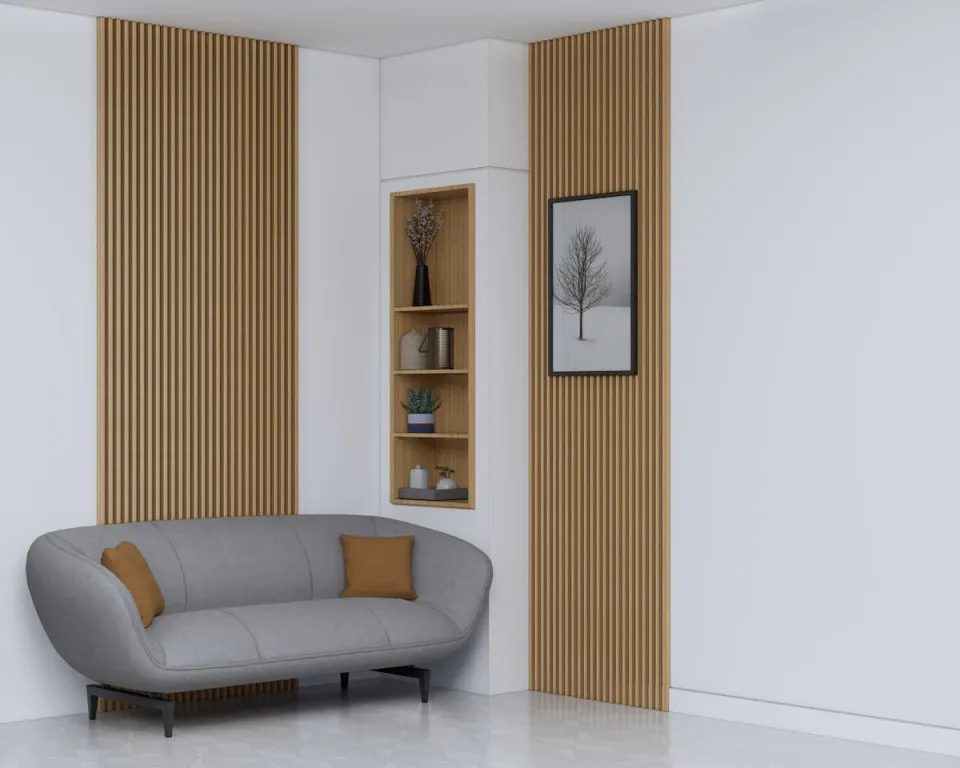
Are your walls starting to look dull, faded, or slightly damaged, but you are too lazy to repaint them? Installing wall battens is a practical way to cover these imperfections while adding texture and dimension, making the room look more aesthetic and elegant.
In addition to enhancing rooms with plain cement walls using vertical or horizontal lines, these decorative wooden planks come in a wide variety of colors and materials.
Curious about how to instantly transform your house's interior? Let’s explore their uses, types, and top design ideas in this article before you start decorating!
What Is Wall Batten?
Also known as “board & batten,” wall battens are decorative wall accents made of boards and battens arranged in geometric patterns, either vertically or horizontally. This visual design creates a neat, textured, and luxurious look in any room.
Interestingly, this concept comes from classical architectural styles. In the past, wooden panels like these were used on the exteriors of warehouses or old houses for various purposes, such as wicking away moisture, absorbing impact, and maintaining a stable indoor temperature.
However, today wall battens have evolved into a modern interior element. The range of available materials has expanded, offering flexible designs that integrate seamlessly into home concepts ranging from minimalist to bohemian. This is why they remain popular and why designers rely on them to enhance bedrooms, living rooms, and other areas.
Functions of Wall Battens
Wall battens are not merely decorative; they also offer a variety of practical functions for your home. Some of the functions of wall battens are as follows:
- Enhancing visual appeal and creating a focal point: Transforming a plain, boring wall into a mid-century-style statement wall that is more dimensional, elegant, and captivating.
- Creating visual effects in a room: Vertical patterns create the illusion of a higher ceiling, while horizontal patterns can make a room feel more spacious.
- Hiding wall imperfections: A practical solution for covering fine cracks, nail holes, or peeling paint without the hassle of repainting.
- Customizable to suit your taste: They are flexible and can come in attractive colors such as beige, white, and grayish blue, with layout options tailored to the homeowner’s personality.
Read also: Structural Walls: Definition, Functions, and Types
Types of Wall Battens
Before choosing, you should learn about the different types of wall battens. These decorative elements are generally categorized by the area they cover and the materials used. Here are several options that can be tailored to your design concept and budget:
1. Based on Installation Area
Depending on how much of the wall you want to cover, there are two main installation styles:
- Half Board: Covers only the lower half of the wall. The upper portion is usually left bare or paired with wallpaper. The battens used for this style are typically thinner.
- Full Board: An installation that covers the entire wall surface from floor to ceiling. With wider planks, this style is ideal for creating a grand, distinctive look.
2. Based on Material Type
Beyond the design area, the material choice also significantly affects the final result, durability, and the budget you need to prepare. Some popular materials to choose from include:
- Solid Wood: A classic choice made from solid wood, plywood, or MDF, offering a warm, natural, luxurious feel. Although aesthetically pleasing, this material costs more and requires extra maintenance to prevent termite damage.
- PVC (Plastic): An economical, lightweight alternative that is easy to install. Its water resistance makes it ideal for damp areas, such as kitchens or bathrooms.
- GRC (Fiber-Reinforced Cement): A sturdy material that withstands weather changes and physical impact. It is ideal if you want extra durability, indoors or out.
- Metal (Aluminum): Thin, sleek metal batten strips. This type is perfect for modern, industrial, or futuristic interior designs.
How to Install Wall Battens
Want to try a Do-It-Yourself (DIY) project at home? Installing wall battens yourself isn't as difficult as you might think. If you prefer not to go through the inconvenience of hiring a contractor, you can follow these practical steps:
1. Prepare the Work Area and Walls
Clear the area around the wall and remove any attached decorations. Make sure the wall surface is clean, dry, and smooth. If there are cracks or nail holes, fill them with spackle, sand until smooth, then wipe off dust and grease.
2. Prime the Wall Surface
Painting the wall before installing the panels is much easier and neater than painting after they're in place. Apply your chosen color evenly, then let the paint dry completely.
3. Plan and Measure the Pattern
Carefully measure the wall's width and height, then sketch the pattern on paper. To determine the precise spacing between the battens, you can use the following formula:
(Wall Width - Total Width of Batten Boards) ÷ Number of Gaps
Next, mark guide lines directly on the wall using a tape measure, pencil, and level to ensure they are parallel and not slanted.
4. Cut and Sand the Batten Material
Cut the batten boards (wood or MDF) to the dimensions shown in the sketch using a saw. Lightly sand the edges and cut surfaces to remove any rough splinters.
5. Attach the Vertical Batten
Apply construction adhesive evenly to the back of the board, then attach it to the wall along the guide lines from one side to the other. To keep it secure while the adhesive dries, secure it with brad nails.
6. Install the Horizontal Batten (Optional)
Once you've securely installed all the vertical battens, measure and mark horizontal guide lines using a chalk line or a waterpass. Attach the horizontal boards according to the planned layout.
7. Finishing and Final Painting
Fill the joints between the boards and the nail holes with wood filler. Once dry, sand the surface until smooth. Finally, use a brush or roller to paint the entire surface of the battens so the color blends perfectly with the wall.
Read also: Wall Cladding: Types, Installation, & Maintenance Tips
Wall Batten Placement Ideas for Various Rooms
Need inspiration to transform a corner of your home into a more aesthetically pleasing space with wall battens? This decorative element works well in almost any room corner, from main living areas to transitional hallways.
Here are some placement ideas you can use as inspiration to create an aesthetically pleasing interior look:
1. Living Room
In the living room, you can use the area behind the sofa or the main wall as a focal point. Create a tight vertical pattern in neutral colors, such as white, gray, or beige, for an elegant look; add wooden accents for warmth; or opt for dramatic geometric patterns.
2. Bedroom
Transform the area behind the bed into a cozier, more luxurious space. For a stylish, minimalist look, simply use simple vertical wooden slats. For a more dynamic look, play with color contrasts or combine matte and glossy finishes.
3. Home Office
To create a more organized, refined, and professional atmosphere, you can arrange the battens vertically or horizontally. This look pairs perfectly with a simple desk and minimalist wall shelves.
4. Kitchen and Bathroom
In the kitchen and bathroom, use water-resistant materials like PVC or GRC in moisture-prone areas. Install short vertical panels at the bottom of the wall, similar to wainscoting, to add a decorative touch while protecting the surface from water splashes.
5. Hallways and Transition Areas
A row of vertical battens can also transform a narrow, monotonous hallway into a more dimensional space. Add lighting from small spotlights mounted above to make the lines on the wall stand out even more.
6. Unique Patterns Through Color Experimentation
Tired of straight wall batten designs? Try using thin battens to create herringbone or wave patterns.
You can also explore bold, playful colors or stick with neutral tones, as long as the concept stays in harmony with your home's overall interior design.
Adding wall battens to your home’s walls is indeed an instant way to create a stunning interior look. However, remember that the beauty of this exterior finish depends heavily on the condition of the wall structure behind it.
If the wall area experiences moisture or water seepage, the installed decorative materials are at risk of rapid damage and decay. Therefore, providing extra protection from the construction phase is a crucial first step.
The best solution is Semen Merah Putih Watershield. Equipped with water-repellent technology, this product provides effective triple protection, blocking water seepage from three directions at once: outside, inside, and the ground.
As a result, the wall structure becomes much stronger, more durable, and free from costly maintenance issues. As a super-premium, multipurpose cement, it outperforms ordinary cement and suits all construction applications, from foundations, concrete slabs, and cast-in-place concrete to brickwork, plastering, and rendering.
Ready to build the dream house with beautiful, leak-free walls? Contact us today for expert consultation and the best construction solutions! We are here to support the success of your project with top-quality materials and services that meet the highest standards.
Read also: Shear Wall: Functions, Types, and Its Importance in Construction