
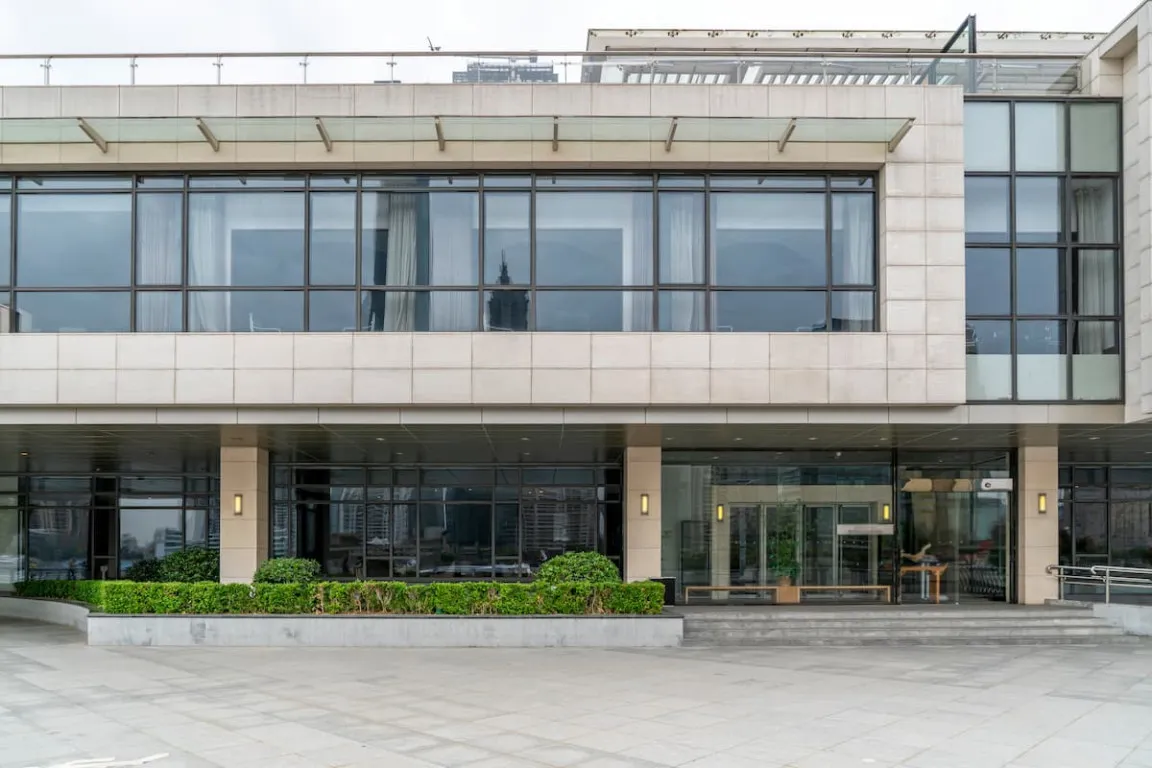
Owning a shophouse is certainly a dream come true for those who want to run a business while also investing in real estate. Its design, which combines residential and commercial functions, makes a shop-house flexible enough to meet a variety of needs, ranging from retail stores, offices, clinics, and restaurants.
However, to ensure the shophouse is truly comfortable to use and compliant with regulations, you need to pay attention to its size. The width, length, and height of the shophouse must be carefully planned to ensure customer comfort, spatial efficiency, and structural integrity.
To help you avoid making the wrong choice or design mistakes from the start, take a look at the standard size requirements for 1- and 2-story shophouses below.
Standard Shophouse Sizes for Business
The ideal size of a shophouse is determined not only by the land area but also by the type of business to be operated. A shophouse for a convenience store naturally has different space requirements than one for a service office or restaurant. That said, there are standard sizes that developers often use as a reference.
Generally, shophouses are built on plots that extend to the rear, with the front facing the street. This width affects the appearance of the facade and the entrance. Meanwhile, the building's length determines how much interior space can be utilized.
In addition to floor area, floor height, and floor-to-floor spacing must also be considered to ensure proper air circulation, lighting, and comfort within the space.
Standard Size for Single-Story Shophouse
Single-story shophouses are typically chosen for small to medium-sized businesses. Businesses such as laundromats, grocery stores, pharmacies, or small service offices are well-suited to this model.
Generally, the following sizes are commonly used as standard sizes for single-story shophouses:
Single-story shophouses are typically chosen by new business owners or businesses with simple operations. Examples include grocery stores, small convenience stores, service counters, pharmacies, or service offices.
Generally, the most common standard sizes for a single-story shophouse are:
- Width: 3.5–6 meters
- Length: 10–20 meters
- Ceiling height: 3.5–4.5 meters
The most popular sizes in Indonesia are 4 x 12 meters and 5 x 15 meters. These sizes are sufficient to accommodate a display area, a cashier, and a small storage space without requiring excessively high construction costs.
In this regard, there are several things you need to know about single-story shophouses, namely:
1. Shop House Width Determines Customer Comfort
A width under 3.5 meters usually feels cramped, especially if there are shelves on both sides. Ideally, it should be at least 4 meters so that two people can comfortably pass each other.
2. Shop House’s Length Determines the Function of the Back Room
If the length is only 10 meters, the back room is usually not suitable for use as a warehouse. A length of 12–15 meters is more flexible because it can accommodate a display area, a cashier area, a small warehouse, and a restroom.
3. Ceiling Height Has a Significant Impact on Room Temperature
A ceiling that is too low makes the shop feel hot and stuffy. A minimum height of 3.5 meters promotes air circulation and makes the room feel more spacious.
Read also: 7 Single-Story Shophouses Design Ideas for Small Businesses
Standard Size for a 2-Story Shophouse
A 2-story shophouse is better suited for businesses that require separate functional spaces, such as a ground-floor commercial space and an upper floor for offices, storage, or even living quarters.
In terms of size, the width and length are usually not much different from those of single-story shophouses. The main differences typically lie in the number of floors and the supporting structure. Here are the commonly used sizes:
1. Shop House Width
The width generally ranges from 4 to 5 meters. A 4-meter width is considered a balance between cost and functionality. Meanwhile, a 5-meter width creates a more spacious and professional impression, especially for businesses such as clinics or small showrooms.
2. Shop House Length
The average length of a two-story shophouse is 12–15 meters. With a size of 4 x 12 meters, the floor area per level is 48 m². For a two-story building, the total floor area is 96 m².
3. Floor-to-Floor Height
The ground-floor height is typically around 4 meters to create a spacious, airy feel. The second floor can be slightly lower, around 3–3.5 meters.
4. Total Building Area
Two-story shophouses generally have a total area of 70-120 m². Two-story shophouses offer greater flexibility. You can separate public and private areas or use the upper floor as an additional source of income by renting it out.
However, constructing a two-story shophouse requires more thorough structural planning. The foundation must be stronger to support the weight of two floors. Additionally, construction costs are naturally higher compared to a single-story shophouse.
Cost Estimates for 1- and 2-Story Shophouse Construction
The cost of building a shophouse is heavily influenced by the building’s floor area, material specifications, project location, and structural system. These calculations typically use a price per square meter.
As a general guideline, the cost of building a shophouse in Indonesia ranges from Rp3,000,000 to Rp5,500,000 per square meter, depending on the quality of finishes and materials.
Here is a simple estimate:
Estimated Cost of a Single-Story Shophouse
- Shophouse measuring 4 x 10 meters (40 m²).
If the cost is Rp3,500,000/m²:
40 m² x Rp3,500,000 = Rp140,000,000
- Shophouse measuring 4 x 12 meters (48 m²).
48 m² x Rp3,500,000 = Rp168,000,000
Additionally, there are usually additional costs, such as building permits (IMB/PBG), electrical and plumbing installations, rolling doors, interior finishes, and display shelves, so the total cost may increase by 10–20% from the initial estimate, depending on your needs.
Estimated Cost of a 2-Story Shophouse
- Shophouse measuring 4 x 12 meters (96 m² total)
96 m² x Rp3,500,000 = Rp336,000,000
Besides these costs, there are other expenses for additional structural elements, such as concrete stairs, larger beams and columns, reinforced-concrete floor slabs, two-story finishes, ceramic or granite flooring, additional bathrooms, as well as painting and ceilings.
Generally, a 2-story shophouse can cost between Rp300 million and Rp500 million, depending on the specifications.
Please note that the figures above are only rough estimates. For a more accurate calculation, it is best to consult a contractor or planning consultant regarding your construction needs.
Read also: 10 Staircase Designs for Small Houses to Look Spacious
Tips for Building a Shophouse That Meets Standards
To ensure that the shophouse you build truly meets your needs and is durable, there are several important considerations.
1. Adjust the Size According to the Business Type
Make sure the floor area and layout support your business activities. Don’t just follow size trends, rather, focus on functionality.
2. Follow Zoning and Permitting Regulations
Each area has different regulations regarding Floor Area Ratio (FAR), Floor Space Index (FSI), and building boundary lines. Therefore, ensure your design complies with these regulations.
3. Use a Sturdy Structure
Make sure you use a sturdy structure, especially for a two-story shophouse. Everything from the foundation to the columns and beams must be designed by experts to ensure long-term safety.
4. Optimize Air Circulation and Lighting
Good ventilation will keep the space comfortable and dry. In this case, you can add a rear window or a void.
5. Choose High-Quality Materials
High-quality materials will determine the building’s resistance to weather and humidity. Additionally, using high-quality materials helps minimize long-term maintenance and repair costs.
6. Consider Parking Access
A shophouse without a parking area can certainly make things difficult for customers. Make sure there is enough space in front of the building. Convenient parking access can boost your business’s appeal and make customers more likely to return.
7. Plan for Future Expansion
If you ever want to add a floor or expand the space, make sure the original structure can support it.
Those are the standard shophouse size recommendations for 1- and 2-story buildings, complete with cost estimates. With proper planning, your shophouse will not only be comfortable to use but also offer good investment value.
In addition to size, one of the key factors to consider is the selection of materials, particularly cement. The quality of cement significantly impacts the structural strength and long-term durability of a building.
To help maintain your building's quality, you can use Semen Merah Putih Watershield. This product features water-repellent technology that provides dual protection against water seepage from the outside, the inside, and the ground (capillary water). This technology helps reduce the impact of moisture that can weaken the building’s structure, making your shophouse stronger and more durable.
Ensure your shophouse construction uses the best materials to keep your property investment safe and profitable. Contact us now to learn more about Semen Merah Putih Watershield and the best material solutions for your project!
Read also: How to Start a Shophouse Property Business from Zero