
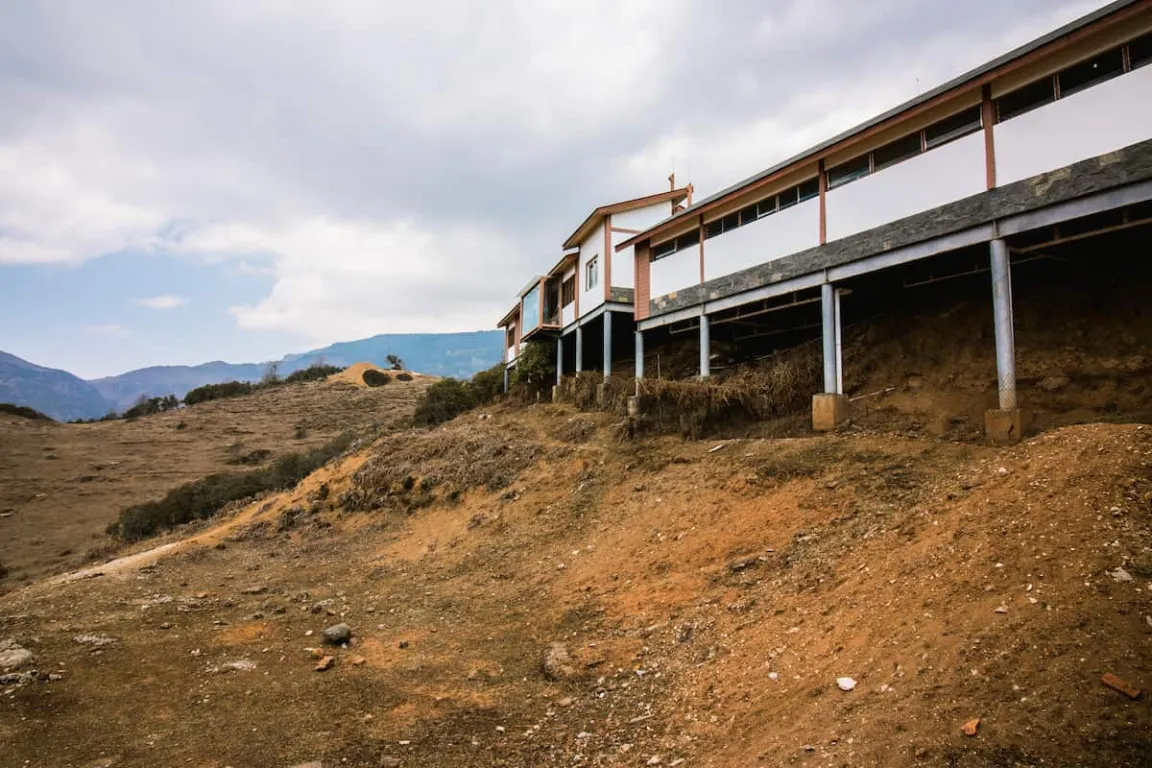
Building a house foundation on sloping ground is not a job that can be done carelessly. The uneven ground contour makes the foundation more prone to damage and can even cause the building to collapse if not planned properly.
Therefore, every step, from site selection and soil conditions to construction techniques, must be carefully considered.
Unlike flat land, building a foundation on sloping ground requires specialized expertise, high precision, and high-quality building materials to ensure that the structure remains stable and safe.
With proper planning and methods, this challenge can actually become an advantage for the house design.
To ensure that the house on sloping ground remains sturdy and durable, take a look at the following article about how to build a house foundation on sloping ground.
How to Build a House Foundation on Sloping Ground
Each type of ground has its own challenges, including sloping ground, which requires specific calculations and techniques to ensure the building remains stable.
Here are several ways to build a house foundation on sloping ground that can be applied to ensure the building structure is sturdy, safe, and durable:
1. Support Pillars
Support pillars or pier foundations function to distribute the building load through several pillars placed at key points.
This method helps maintain the foundation's stability while adjusting the construction to the ground slope.
2. Using Soil Stabilization Techniques
Soil stabilization techniques are used to strengthen and stabilize sloping ground. This method typically involves using chemicals or geotextiles to reduce the slope and increase the soil's bearing capacity. This step is important to prevent soil displacement and maintain the foundation's stability.
3. Multi-level Foundations
Multi-level foundations are an advancement of conventional footplate foundations, built to follow the contour of sloping ground.
This type of foundation is constructed gradually, allowing the building's load to be distributed evenly and making it easier to overcome soil pressure.
Usually made of strong and water-resistant river stones, this foundation is suitable for 1–2 story houses on land with a slight to moderate slope. However, it is not recommended for extreme slopes or soil with low bearing capacity.
Read also: Types of Deep and Swallow Foundation for Buildings
4. Pile Foundation
Pile foundations are an effective solution for building on steep or unstable sloping ground.
This system uses long concrete, steel, or wooden piles that are driven into the ground until they reach a hard soil layer, allowing the building load to be properly distributed.
This reduces the risk of soil shifting or subsidence. There are two commonly used methods: driven or pressed piles, and bored piles that are drilled and then filled with concrete.
5. Stepped Embankment
A stepped embankment is constructed by forming a tiered retaining wall, which distributes soil pressure evenly.
This method helps reduce the risk of erosion and soil displacement, making foundations on sloping ground more stable and secure.
Read also: Retaining Walls: Functions, Types, & Ideal Material Solutions
6. Chicken Claw Foundation
Chicken claw foundations are suitable for buildings on soft or sloping ground. The system uses reinforced concrete slabs with vertical pipes resembling “chicken claws” that serve to strengthen the bearing capacity and distribute the building load evenly.
These foundations can withstand heavy loads and reduce the risk of land subsidence, although their design requires fairly complex structural analysis.
7. Contour-Adjusted Mat Foundation
A mat foundation is a concrete slab that covers the entire area of the building and is generally used on fairly stable soil.
On sloping ground, the slab in low areas is made thicker to keep the building load evenly distributed.
This type of foundation is suitable for houses that follow the natural contours of the land without much excavation or filling.
In addition to being stable and reducing the risk of soil displacement, mat foundations require more materials and cost more than conventional foundations.
Advantages of Building House Foundations on Sloping Ground
Building a house on sloping ground is indeed challenging, but with proper planning and techniques, there are several benefits to be gained. Here are some advantages of building house foundations on sloping ground.
1. Good Drainage
Building a foundation on sloping ground can support the natural drainage system. With a design that allows water to flow smoothly, the risk of flooding and soil erosion can be reduced.
In addition to protecting the foundation, a good drainage system also supports the overall sustainability of the building structure.
2. Safer House Structure
If the foundation on sloping ground is built with the right techniques, the house structure will be more stable and better able to withstand uneven soil pressure.
The use of methods such as pile foundations or support pillars can increase stability and reduce the risk of shifting or cracking in the building.
3. More Aesthetic and Innovative Buildings
Foundations on sloping ground allow for unique and attractive architectural designs, such as terraces or stepped embankments. By following the contours of the land, buildings appear more aesthetically pleasing while remaining sturdy and comfortable.
4. Utilization of Difficult-to-Build Ground
The main advantage of foundations on sloping ground is their ability to maximize the use of difficult-to-build ground. With the right techniques, areas that were previously considered unsuitable can be utilized for sturdy and functional housing.
Read also: The House Foundation Cost Estimation Details in 2025
Things to Consider When Building a House Foundation on Sloping Ground
Building a house on sloping ground requires careful planning to ensure a safe and durable structure.
Here are some important things to consider before and during the foundation construction process on sloping ground:
- Evaluate sloping ground conditions: Check soil stability to determine the potential for landslides or shifting. Measure the slope to adjust the type of foundation and building design can be adjusted accordingly.
- Selecting the type of foundation: Pile foundations are suitable for unstable soil and steep slopes. Local foundations (footings) can be used on moderately sloping ground with a good drainage system.
- Structural design: Use retaining walls to hold the soil behind the building. Adjust the floor design so that the height difference remains safe and neat.
- Construction methods: Excavate or fill in accordance with soil contour requirements. Use special formwork so that the concrete follows the slope.
- Drainage system: Ensure rainwater can flow smoothly to prevent flooding around the foundation. Use a drainage system that can control soil erosion.
- Consult with experts: Seek advice from geotechnical experts for soil testing and design recommendations. Involve architects to ensure the design remains functional and aesthetically pleasing in accordance with the land contours.
- Risk control: Apply soil stabilization techniques to prevent landslides.
That is an explanation of how to build a strong and safe house foundation on sloping ground. Careful planning, choosing the right techniques, and using high-quality materials are important to ensure the house remains sturdy even when built on uneven ground.
To ensure a durable foundation, use the best building materials, especially for the cement.
You can choose Semen Merah Putih Watershield, a super premium product with water-repellent technology that provides triple protection against water seepage from outside, inside, and the ground.
Semen Merah Putih Watershield is suitable for various construction needs, ranging from foundations, concrete slabs, brickwork, plastering, and rendering.
With its superior quality, even foundations on sloping ground will be stronger, more stable, and resistant to extreme weather conditions.
Contact us now for more information and to discuss your construction project needs.
Read also: Choosing the Right Foundation for A Two-Story House