
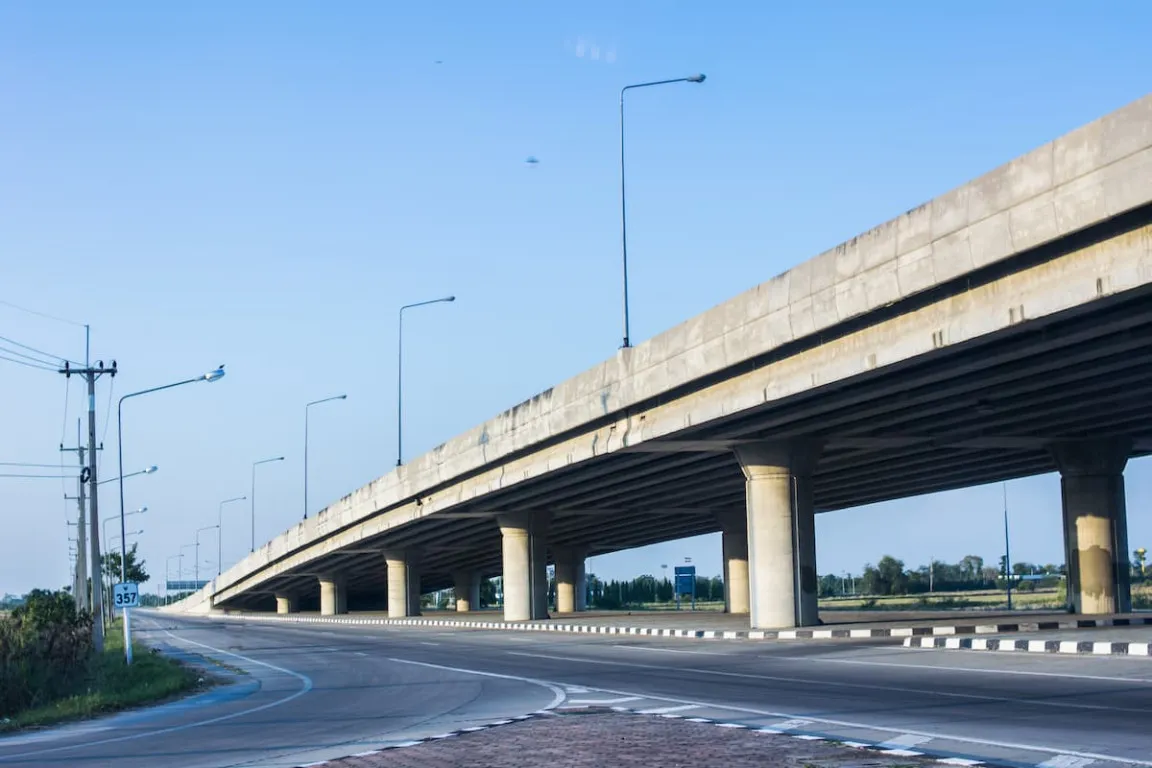
Quality construction certainly requires materials that are not only strong but also durable and efficient. Multi-story buildings, public infrastructure, and industrial facilities need structures that can withstand heavy loads and endure various environmental conditions.
One material commonly used to meet these needs is high-strength concrete. This type of concrete is considered superior to conventional concrete. Therefore, before constructing a building, let's first understand what high-strength concrete is and how it is used. Read the explanation below!
What Is High-Strength Concrete?
High-strength concrete is concrete with a compressive strength higher than that of conventional concrete. This type of concrete is made with a low water-to-cement ratio, resulting in a denser, stronger structure. Generally, high-strength concrete is used in construction projects that require high load-bearing capacity and a high level of structural safety.
Besides compressive strength, high-strength concrete is also known for its good resistance to environmental factors such as humidity, temperature changes, and exposure to certain chemicals. Therefore, this concrete is often chosen for long-term projects that require structural durability.
Differences Between High-Strength Concrete and Conventional Concrete
High-strength concrete has certain characteristics that distinguish it from conventional concrete. This is not only seen in its strength but also in its composition and application. Here are some differences between high-strength concrete and conventional concrete:
1. Concrete Compressive Strength
High-strength concrete has a much higher compressive strength compared to conventional concrete. This allows it to support heavy loads and be used in the main structure of buildings. That is why high-strength concrete is ideal for construction projects that require high levels of safety, stability, and long-term durability.
2. Material Composition
High-strength concrete uses higher-quality materials and more precise proportions. The quality of these materials aims to produce concrete that is denser and more consistent, thereby maintaining strength, durability, and optimal long-term performance.
3. Water and Cement Ratio
Conventional concrete generally has a higher water-to-cement ratio, whereas high-strength concrete uses a lower ratio to increase density and strength. This lower ratio also helps reduce the size of pores in the concrete.
4. Building Durability
High-strength concrete is more resistant to cracking, water seepage, and environmental degradation. This durability makes structures sturdier and requires less maintenance than conventional concrete.
5. Cost and Planning
In terms of initial cost, high-strength concrete is typically more expensive than conventional concrete. However, this cost is justified by the long-term benefits, as maintenance and repair needs can be minimized.
Read also: Concrete in Construction: Learn the Functions and Types!
Concrete Quality and Compressive Strength Table
The difference between high-strength concrete and conventional concrete can also be seen from the classification of concrete quality and the compressive strength values used in construction practice in Indonesia, as shown in the following table.
SNI Concrete Quality Table
|
fc’ (MPa) |
Equivalent K (kg/cm²) |
Types of Concrete |
Common Applications |
|
10 MPa |
K-125 |
Non-structural concrete |
Work floor |
|
15 MPa |
K-175 |
Non-structural concrete |
Lightweight structure |
|
20 MPa |
K-250 |
Structural concrete |
Residential house |
|
25 MPa |
K-300 |
Structural concrete |
High-rise building |
|
30 MPa |
K-350 |
Strong structural concrete |
Medium-sized building |
|
35 MPa |
K-425 |
High-strength concrete |
Tall building |
|
41 MPa |
K-500 |
High-strength concrete |
Bridge |
|
45 MPa |
K-550 |
High-strength concrete |
Heavy infrastructure |
|
≥50 MPa |
≥K-600 |
Very high-strength concrete |
Special structure |
Concrete Compressive Strength Table
|
Concrete Quality (K) |
Compressive Strength (kg/cm²) |
Equivalent fc’ (MPa) |
General Usage Category |
|
K-125 |
125 |
±10 MPa |
Non-structural concrete (working floor) |
|
K-175 |
175 |
±14 MPa |
Lightweight structure |
|
K-200 |
200 |
±16,6 MPa |
A simple residential house |
|
K-225 |
225 |
±18,7 MPa |
1–2 story residential house |
|
K-250 |
250 |
±20,8 MPa |
Low-rise building |
|
K-275 |
275 |
±22,9 MPa |
Reinforced concrete structure |
|
K-300 |
300 |
±25 MPa |
Multi-story building |
|
K-350 |
350 |
±29 MPa |
Mid-rise building |
|
K-400 |
400 |
±33 MPa |
High load structure |
|
K-450 |
450 |
±37 MPa |
Special structure |
|
K-500 |
500 |
±41 MPa |
High-strength concrete |
|
K-600 |
600 |
±50 MPa |
High-strength concrete |
High-Strength Concrete Components
The quality of high-strength concrete is greatly influenced by its constituent materials. Each material determines the overall strength and durability of the concrete. Here are the components of high-strength concrete:
1. High-Quality Cement
Cement is the main binder component. Selecting high-quality cement is crucial to the final outcome of concrete, as it affects compressive strength, adhesion, and resistance to damage.
2. Fine and Coarse Aggregates
Aggregates must be clean, strong, and well-graded to ensure the concrete is dense and stable. Aggregates that do not meet the requirements can reduce the concrete's strength and increase the risk of cracking sooner.
3. Mixing Water
The water used should be clean and free from substances that could interfere with the cement hydration process. Poor water quality can hinder the chemical reaction of cement and reduce the quality of concrete.
4. Mineral Admixtures
Materials such as silica fume or fly ash are often added to improve concrete's strength and density. The use of these materials also helps reduce porosity, making the concrete more resistant to water infiltration.
5. Chemical Admixtures
The use of superplasticizers helps improve the workability of concrete without increasing the water content. This way, the concrete remains easy to apply while maintaining high compressive strength.
Read also: What Is a Concrete Deck Block? Definition & Types
Advantages of High-Strength Concrete
The use of high-strength concrete offers numerous benefits during construction. Here are some advantages that make it increasingly popular in modern projects:
1. Better Structural Strength
High-strength concrete can withstand heavy loads, making it safe for use in multi-story buildings and large structures. This capability helps reduce the risk of structural failure due to heavy loads.
2. Long-Term Durability
Its resistance to weather, water, and chemicals makes high-strength concrete more durable. Building structures become more resistant to decay and material degradation. This supports a longer lifespan for buildings.
3. Structural Dimension Efficiency
With high strength, the size of structural elements can be reduced. Building space can be used more efficiently because structural elements take up little space. Additionally, architectural design becomes more flexible and modern.
4. Minimal Maintenance
High-strength concrete does not crack or deteriorate easily, resulting in lower long-term maintenance costs. Damage caused by environmental factors or repeated loads can be minimized from the start. This condition is very advantageous for buildings with intensive use.
5. Better Building Safety
Good structural stability provides a sense of security for building users. The risk of collapse due to material degradation can be effectively reduced. With a strong structure, the building's long-term reliability is also better ensured.
High-Strength Concrete Manufacturing Process
Making high-strength concrete requires strict procedures and close supervision to ensure the resulting concrete meets the plan. Here is the high-strength concrete manufacturing process that you need to pay attention to:
1. Concrete Mix Planning
The initial stage begins by calculating the material composition to achieve the desired compressive strength. This planning is carried out based on the building's structural requirements and environmental conditions. Additionally, a proper mix design helps control concrete quality from the early stages of work.
2. Material Weighing
All materials are accurately weighed so that the mix proportions correspond to the plan. Precision in weighing greatly affects the consistency of the resulting concrete strength. Small errors at this stage can reduce the overall strength of the concrete.
3. Mixing Process
Mixing is carried out using special equipment to ensure all materials are thoroughly and evenly mixed. Uneven mixing can result in concrete with inconsistent strength.
4. Concrete Casting
Fresh concrete is poured into molds or formwork and compacted to remove air voids that can reduce its strength. This process must be done quickly and carefully to prevent segregation of the concrete.
5. Concrete Compaction and Curing
After casting, the concrete is compacted and properly cured to ensure optimal hardening. Proper curing helps the concrete achieve maximum strength in accordance with the structural design.
Use of High-Strength Concrete
Due to its advantages, high-strength concrete is widely used in various construction projects. Here are some applications of high-strength concrete:
1. High-Rise Buildings
High-strength concrete is used in columns, beams, and slabs to bear the large loads of buildings. The use of this concrete helps maintain structural stability while also enhancing the overall safety factor of the building.
2. Bridges and Flyovers
High-strength concrete is commonly used in bridges and flyovers because it must withstand heavy and continuous traffic loads. Additionally, this concrete has good resistance to weather and temperature changes, making the structures more durable in the long term.
3. Industrial Buildings
Factories and large warehouses require concrete that can withstand the load of heavy machinery. High-strength concrete provides floor strength and structural stability. This is important to ensure smooth production and workplace safety.
4. Buildings in Extreme Environments
High-strength concrete is suitable for areas with extreme environmental conditions, such as coastal regions. Its resistance to high humidity and salt-laden air helps reduce the risk of structural damage.
5. Special Structures
This type of concrete is suitable for use in dams, ports, and other structures that require high durability. Its strength and resilience keep the structures sturdy even under continuous heavy pressure.
The use of high-strength concrete in construction demonstrates that a building's strength and durability depend on proper material selection. When planning construction, it is not only the concrete that needs attention, but also the quality of other main materials, such as the cement used.
Good cement will support the formation of strong, dense, and durable concrete. To meet these needs, you can use Semen Merah Putih Watershield.
The water-repellent technology of Semen Merah Putih Watershield provides protection against water seepage from the outside and inside, as well as from the ground (capillary water), and helps reduce moisture, making buildings more solid and durable in the long term.
For more information on the proper use of cement and material solutions that suit your construction needs, contact us now!
Read also: What Is a Concrete Retarder? Here Is Its Functions and Types