
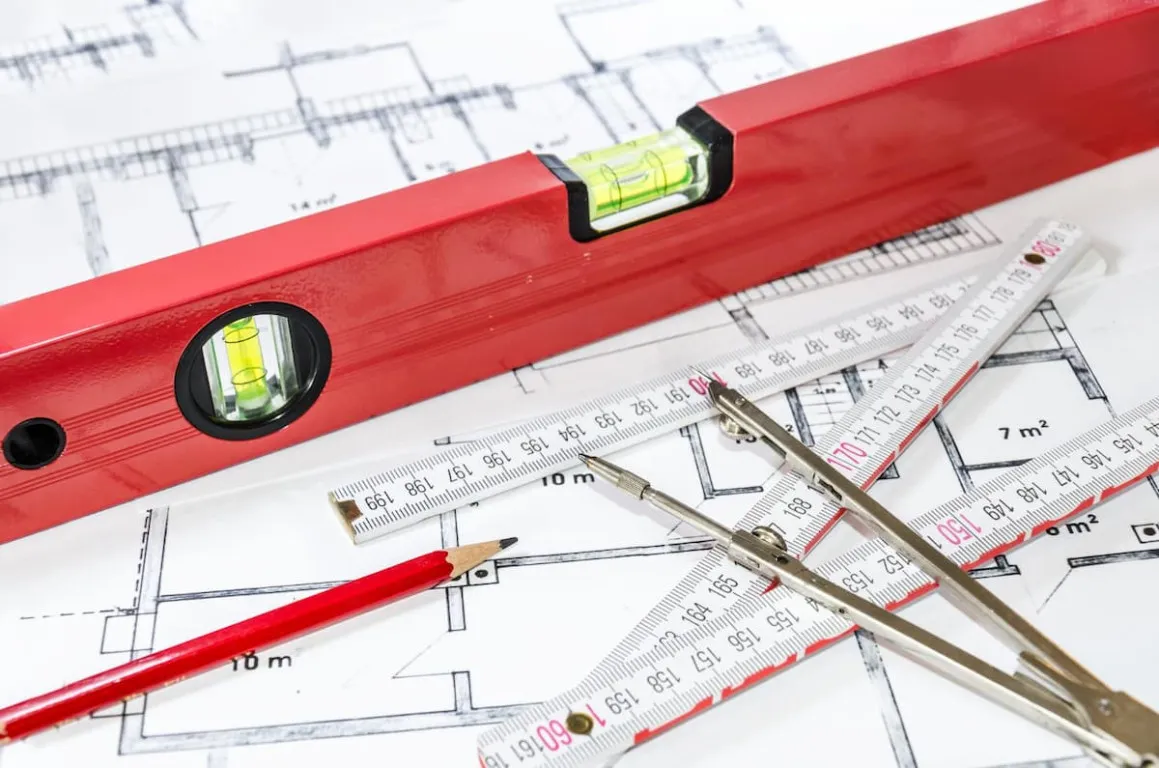
Planning to build a multi-story house? The first step in construction planning is understanding how to calculate the building area of 2 stories.
With the correct calculations, you can prepare a budget, determine material requirements, and even estimate the future selling price of the house.
In this era of limited land availability and rising land costs, building a 2-story house is a wise choice, as it offers a higher resale value than a 1-story house. However, the ultimate goal of saving money might not be achievable if the calculations are wrong.
Don’t think too much about the fault in the calculations because there is an easy way to follow. Read this article to the end so you will not make any mistakes in building your dream home.
How to Calculate the Area of a 2-Story Building
Before building a multi-story house, it is important to understand the steps for calculating the area of each part of the building. Here is a guide to calculating the area of a 2-story building, starting from the base area to the additional areas:
1. Calculate the Base Area of the Building
The first step in calculating the area of a 2-story building is to determine the ground-floor area. Measure the length and width of the building on the first floor, then calculate it using a simple formula, that is:
Area = Length × Width.
For example, if the length of the ground floor is 10 meters and the width is 8 meters, then the area is:
10 m × 8 m = 80 m².
Make sure all corners are measured accurately so that the calculation results are accurate.
2. Calculate the Area of the Second Floor
The next step is to calculate the area of the second floor. Generally, the second floor is similar in size to the ground floor, except for design differences, such as balconies or open areas.
Measure the length and width again, then calculate using the same formula:
Area = Length × Width.
If the area of the second floor is the same as the first floor, the total area will be:
80 m² (ground floor) + 80 m² (second floor) = 160 m².
Read also: Foundation for a 2-Story House: Types & Key Influencing Factors
3. Calculate Additional Areas
When calculating the area of a 2-story building, do not forget to calculate additional regions, such as balconies, terraces, or carports. For example, if the balcony measures 5 meters × 2 meters, the area is 5 m × 2 m = 10 m².
Add this result to the previous total area, so that the total becomes:
160 m² + 10 m² = 170 m².
Tips for Easier and More Accurate Calculations
To calculate the area of a 2-story building more easily and accurately, there are several practical tips you can apply. Here are the details:
1. Utilize the Technology
For more accurate results, you can utilize technology. Use home design applications or building calculators to simplify and speed up the calculation, especially if the building design is quite complex.
2. Use Sketches or Floor Plans
Create simple sketches or floor plans of the building, complete with the dimensions of each room. This method helps ensure that all areas are calculated accurately without any being overlooked. Some things that should be included in the house floor plan are:
- Room requirements, such as the number of bedrooms, bathrooms, kitchens, and living rooms.
- The size of each room.
- The layout of the rooms.
- The location of doors, windows, and other vital elements.
3. Use the Right Measuring Tools
To accurately calculate the area of a 2-story building, you need the right measuring tools. Choosing the right measuring tools greatly affects the accuracy of the calculations. For accurate results, use a tape measure to measure the length and width of the building.
4. Measure the Building Area Twice
Next, retake measurements to ensure more accurate results. By measuring twice, you can be more sure that the calculated building area is correct and there are no errors.
5. Consider Wall Thickness
Be sure to include wall thickness in your calculations. This is important so that the total building area calculated is entirely accurate.
Read also: Minimalist 2-Story Houses: 10 Trendy Designs & Aesthetic Ideas
Things Building Owners Need to Know When Calculating Building Area
Before calculating the building area, homeowners need to know several important things to ensure calculations are more accurate and in accordance with standards. Here is the guide:
- The floor area of a room is usually calculated up to the outer wall.
- If there are rooms that are adjacent to each other and separated by walls, the calculation is made from the center of the wall to the next wall.
- For rooms with a roof and walls higher than 1.20 meters from the floor, the area is calculated at 100 percent. For example, a room measuring 3 × 4 m² has an area of 12 m².
- If the height of the dividing wall is less than 1.20 meters, the room area is calculated using the Building Base Coefficient (KDB) applicable to the area.
- Overhanging areas, such as balconies or low fence walls (below 1.20 meters), are not usually included in the building area.
- For covered terraces with some walls higher than 1.20 meters, the area is calculated at only 60 percent, while the land area is still calculated at 100 percent.
The Importance of Calculating the Area of a 2-Story Building
Calculating the area of a 2-story building is not only used to determine the total square meters, but also in various aspects, including:
- Efficient spatial planning: With accurate building dimensions, you can optimally design the interior layout, ensuring each area functions properly, including the movement within the house, furniture placement, and vertical space utilization.
- Realistic construction cost estimates: Building area is a key factor in calculating construction costs. With accurate figures, estimates for materials, labor, and other expenses become more precise, reducing the risk of budget overruns.
- Objective property valuation: In sales or rentals, building area is an indicator of property value. Accurate calculations help determine a fair price for all parties.
- Regulatory and licensing compliance: Building area is one of the important requirements in applying for a Building Permit (IMB). Accurate information ensures compliance with regulations and avoids penalties.
- Accurate tax calculation: The amount of Land and Building Tax (PBB) depends on the building area. With the correct calculations, you pay taxes in accordance with the provisions.
- Interior design optimization: The floor-area data serves as a reference for interior designers in determining room scale, selecting proportional furniture, and arranging decorative elements appropriately.
- Property insurance applications: Insurance companies require building area information to determine premiums and claims. Accurate data helps protect you from future losses.
By understanding these factors, you can calculate a building's area more accurately and in accordance with applicable regulations.
That concludes our discussion on calculating the area of a 2-story building, along with some tips. From this, we can understand that accurate calculations will significantly affect cost planning, material requirements, and even the future sale value of the house.
In every construction project, material selection is also important. One material that cannot be ignored is cement.
Cement is one of the primary materials in almost all construction stages. To fulfill your cement needs in a construction project, you can rely on Semen Merah Putih Watershield.
This premium multipurpose cement, with water-repellent technology, provides extra protection against water seepage.
This product is suitable for various applications, from foundations, concrete casting, roofs, brickwork, plastering, and rendering.
Curious about what advantages Semen Merah Putih products can offer? Contact us to get a special offer and find the best solution for your construction needs.
Read also: 9 Ideas for Two-Story House Designs with Front Stairs