Currently, urban areas are the top choice of living space for many people. Because of this, urban areas are becoming increasingly crowded over time. This rapid population growth has triggered massive development, in which vacant land is sacrificed and converted into office buildings and landed houses.
As a result, green spaces are steadily diminishing and being eroded until they disappear entirely, triggering various environmental problems, such as air pollution and a significant rise in air temperature. To address these environmental issues and maintain the balance of urban ecosystems, Green Open Spaces (GOS) are essential.
Green open spaces are open areas where plants grow, whether naturally or intentionally planted. They can take the form of urban forests, city parks, greenways, or rooftop gardens. To learn more about green open spaces, read the explanation below.
What Is Green Open Space?
Green Open Space (GOS) refers to areas designated for public use where various types of plants grow, whether naturally or through deliberate planting.
Generally, GOS can be categorized into two types based on ownership, namely public GOS and private GOS. Public GOS are owned and managed by the government and are intended for the benefit of the general public, with unrestricted access. Examples include city parks, urban forests, and green belts along roadsides.
Meanwhile, private GOS are owned by specific institutions, private entities, or individuals, and their use is restricted to the owner or a specific group only. Private GOS can take the form of rooftop gardens, home gardens, office gardens, or green spaces on college campuses.
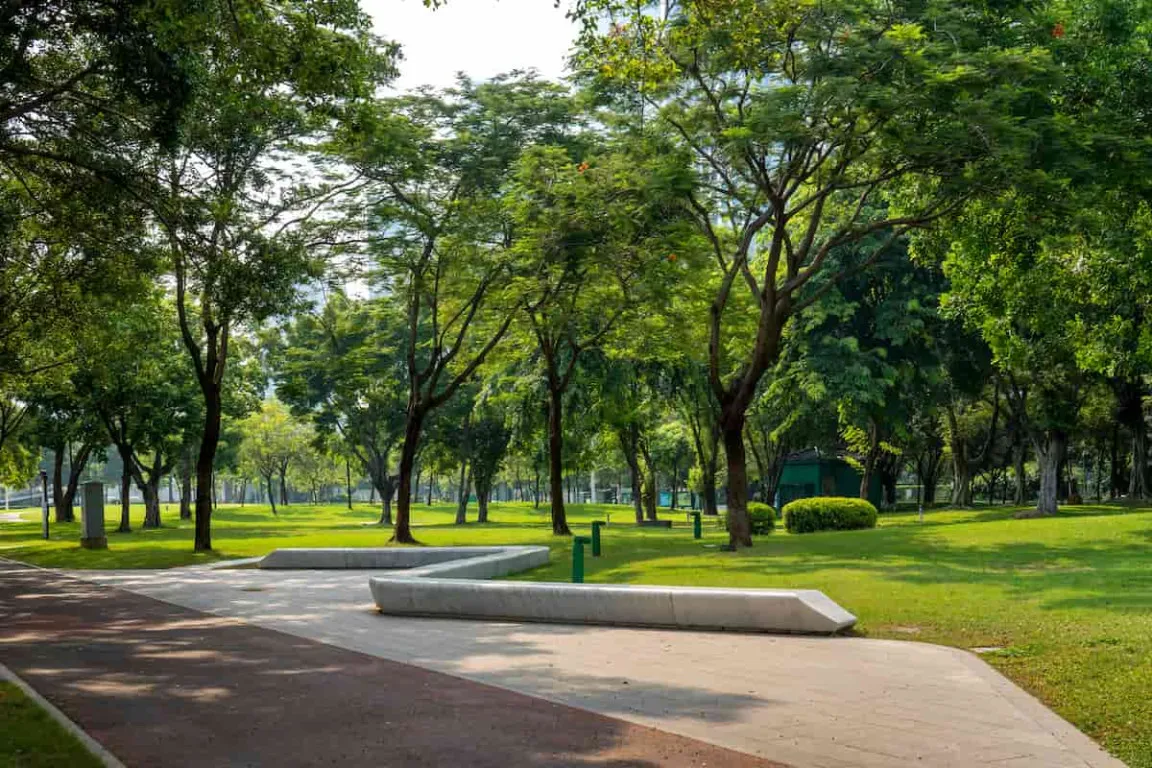
An ideal green space, especially a public one, should feature a combination of softscape and hardscape elements. Softscape refers to living elements such as trees, shrubs, ornamental plants, and groundcovers. Hardscape refers to man-made, non-living elements such as walkways, fences, seating areas, and lighting.
Read also: What Is Property Investment? Understand the Types and Risks
The Benefits of Green Open Spaces
Green Open Spaces (GOS ), whether public or private, play a vital role, especially in densely populated urban areas and industrial zones. Amid massive development, GOS serve as a balancing area for urban planning.
GOS represent an effort to balance man-made ecosystems, such as office buildings, factories, and residential areas, with living natural ecosystems. Without GOS to provide this balance, cities would become barren environments that are hostile to human health. Here are some of the benefits of green open spaces:
1. Absorbing Pollution
One of the benefits of green open spaces is that they act as the city’s “lungs,” naturally neutralizing air pollution. Trees and other plants in green open spaces can absorb air pollution, vehicle exhaust, and other emissions, such as carbon monoxide, nitrogen dioxide, and sulfur dioxide, in industrial areas.
Through photosynthesis, plants process these pollutants and release oxygen back into the air. This supply of oxygen is beneficial and essential for humans to breathe amid polluted urban air.
2. Reducing Flood Risk
Open green spaces play a vital role in reducing flood risk, especially in urban areas dominated by hard surfaces such as concrete and asphalt that cover the roads. This is why, ideally, open green spaces should be present in every corner of the city, even if they are just small parks.
The most important thing to ensure is that these green spaces actually have open ground areas to serve as infiltration wells, rather than merely ornamental plants placed on top of concrete structures. With open ground, rainwater can seep into the soil instead of pooling on the surface and causing flooding.
3. Balancing Urban Temperatures
Massive development in urban areas triggers the Urban Heat Island (UHI) phenomenon, in which urban temperatures become significantly hotter than those in rural areas. Research conducted by the School of Environmental Sciences found that green open spaces act as a natural balancer, lowering air temperatures through plant transpiration.
This study also demonstrates the importance of preserving green open spaces in urban areas. A reduction in green open spaces can raise air temperatures to a greater extent than the cooling effect produced when green open spaces are added.
Read also: 9 Tips for Renovating an Old House & Things to Keep in Mind
4. Enhancing the City’s Aesthetics
The presence of open green spaces can also enhance the city’s aesthetics by making it look lush, cool, and comfortable to live in, rather than barren and stuffy. Open green spaces help balance the city’s appearance so it isn’t dominated solely by buildings and streets. The flowers and shrubs planted there can also enhance the city’s aesthetic value.
5. Educational Tools
Finally, green open spaces can also serve as tools for environmental education for urban communities. They can teach the importance of environmental conservation, raise awareness of biodiversity, and promote sustainable living.
Through simple activities such as planting trees, gardening, tending to flowers, and composting, urban residents can cultivate habits of living in harmony with nature, habits that are often lost amid the hustle and bustle of city life.
These are the benefits of Green Open Spaces (GOS) in maintaining ecosystem balance and quality of life in urban areas. To foster a healthier lifestyle and a more beautiful environment, you can start by creating your own personal Green Open Space. For example, by utilizing your yard, balcony, or rooftop.
To bring your private green space project to life, choose high-quality, environmentally friendly construction materials, such as Semen Merah Putih FLEXIPLUS. This cement features an eco-friendly formula that ensures reduced carbon emissions at every stage of production, without compromising the cement’s quality, strength, and durability.
Semen Merah Putih FLEXIPLUS is the ideal hydraulic cement for projects requiring high-compressive-strength concrete, suitable for ready-mix concrete, precast concrete, and the production of lightweight bricks or Autoclaved Aerated Concrete (AAC).
Contact us for the best construction solutions. We are ready to provide the best services and materials to support the success of your project.
Read also: Standard Shophouse Sizes, Cost Estimates, and Building Tips