
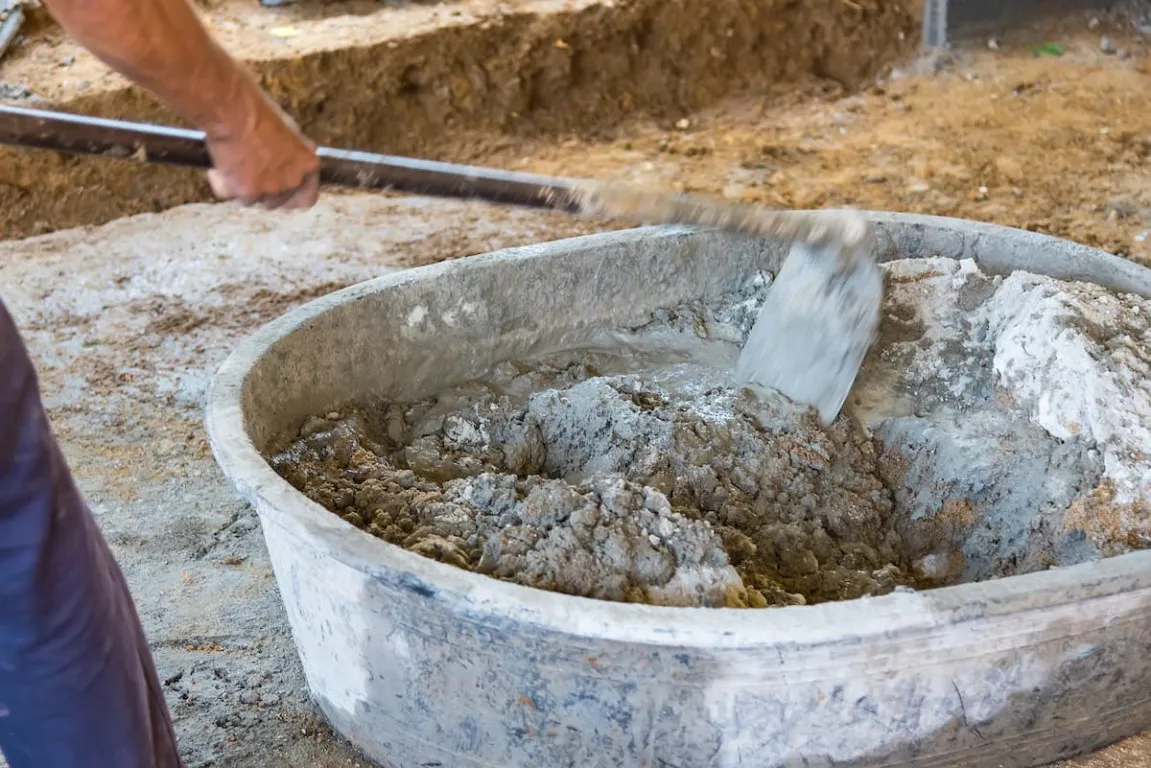
In the construction of houses, shop houses, and warehouses, concrete plays a vital role in supporting the structure's strength. Concrete grade K-225 is often chosen because its strength meets construction requirements at an affordable cost.
In small to medium-scale projects, K-225 concrete mixes are generally made on-site manually. Although it seems easy, the process still requires precision to ensure that the concrete achieves optimal compressive strength and durability.
So, what is a manual K-225 concrete mix, and how do you prepare it correctly? Read this article to the end to understand the composition of the materials and the mixing steps.
What Is a Manual K-225 Concrete Mix?
The letter K stands for the word ‘characteristic’ or ‘karakteristik’ in Indonesian. This term refers to the strength standard of concrete tested using a 15 cm × 15 cm × 15 cm cube mold. This test determines how well the concrete withstands pressure.
On the other hand, the number 225 indicates the compressive strength limit the concrete must achieve, which is 225 kg/cm². The test is carried out at 28 days because concrete generally reaches its maximum strength then.
With this level of strength, the K-225 manual concrete mix is classified as Class II concrete and is reliable enough to be used for various building parts, such as foundations, columns, and beams, floor slabs, sills, and walkways or garages that bear light to medium loads.
Composition of K-225 Concrete Mix
With the right composition, the K-225 concrete mix can perform optimally and be ready for use in a wide range of construction applications. Here is the composition of the K-225 concrete mix that you need to know:
1. Materials Needed
To make a K-225 concrete mix by hand, you only need a few basic materials that are readily available. The main ingredients include cement as a binder, sand as a filler, and stones or coral to strengthen the concrete structure. Water also plays a crucial role, as it helps bind and harden the mixture.
In addition to these main ingredients, other ingredients can be used as needed. Additives such as plasticizers or superplasticizers can help the mixture mix more easily and produce denser concrete. However, their use is optional and not always necessary.
Read also: Precast Concrete: Definition, Functions, and Types
2. Ideal Mix Proportions for K-225 Concrete
For manual K-225 concrete mixes, the most common and widely used formula in the field is a 1:2:3 volume ratio.
This means that for every 1 part of cement, 2 parts of sand and 3 parts of gravel or crushed stone are mixed. This composition is considered ideal for producing concrete with a strength close to K-225 quality, provided the materials used are high-quality and the mixing process is carried out correctly.
Although the formula is simple, the amount of water and mixing method still need to be considered to ensure the concrete is neither too runny nor too dry, thereby maintaining its strength.
3. The Effect of Each Material on Concrete Quality
Cement acts as a binding agent, holding sand and stone together in concrete mixes. Therefore, the type and quality of cement greatly determine the strength and durability of concrete. Good-quality cement produces stronger concrete that is less prone to damage.
Meanwhile, sand acts as a filler, helping strengthen concrete. However, sand that is too fine or too rough can affect the quality of the mixture. Therefore, the use of accurately measured clean sand is highly recommended for optimal concrete results.
Furthermore, coarse aggregates such as stones or coral provide strength and rigidity to concrete. Consistent stone size and clean conditions will help stabilize concrete and reduce its tendency to crack.
Lastly, water activates the cement, ensuring the binding and hardening processes run smoothly. However, water quality still needs to be considered, as dirty water can degrade concrete quality.
4. Example of Calculation in the Field
For easier understanding, here is an example of calculating a K-225 concrete mixture with simple measurements that are easy to apply in the field.
Basic mixture proportions:
- 1 bucket of cement
- 2 buckets of sand
- 3 buckets of gravel
Calculation example for 1 50 kg bag of cement:
- 1 bag or 50 kg of cement
- Approximately 100 kg of sand
- Approximately 150 kg of gravel
- Approximately 10 liters of water, or 20 percent of the weight of the cement
For more accurate results, you can use a weighing scale. Alternatively, you can use a bucket or wheelbarrow to measure the volume, as long as the size is always the same each time you mix.
Read also: Reinforced Concrete: Definition, Advantages, and Types
Manual Mixing Process Guide
Once all the materials are available, the mixing process must be carried out in the correct order to ensure that the concrete mixture is evenly mixed and the results are optimal. Here are the steps you can follow more simply:
- Prepare the mixing area: Choose a flat, hard, and clean surface, such as a zinc surface, thick plywood, or a plastered floor. Do not mix directly on the ground, as dirt can get into the concrete and reduce its quality.
- Mix the dry ingredients first: Pour the sand and gravel onto the surface according to the measurements. Mix them until they are evenly blended before adding the other ingredients.
- Add the cement: Sprinkle the cement over the sand and gravel mixture. Mix again until the mixture is dry and the color is evenly blended. This step is crucial to ensure that the cement is evenly spread.
- Add water little by little: Make a small depression in the center of the mixture, then pour in enough water. Stir slowly as you pull the dry ingredients towards the water. Add water gradually while continuing to stir to prevent the mixture from becoming too runny.
- Stir until the mixture is ready to use: Continue stirring until the mixture looks even, there are no lumps, and the texture is just right. Good concrete is neither too runny nor too hard.
- Use right away: Once the mixture is ready, pour it into the mold and compact it before the concrete starts to harden for a stronger and neater result.
That concludes the information on the K-225 manual concrete mix, from its definition to how to make it. With the right ingredients, proper measurements, and correct mixing process, K-225 concrete mix can produce a strong and stable structure.
To support your construction needs, Semen Merah Putih, through Beton Merah Putih, provides K-225 concrete mix in the form of Ready-Mix Concrete and Precast Concrete. Both products are designed with controlled quality, making them more practical to use and compliant with technical standards.
By using K-225 concrete mix from Beton Merah Putih, you can ensure the construction process runs more efficiently and produces sturdy, reliable results. Contact us for more information and to consult about your construction needs.
Read also: Concrete Roof Slabs Structures: Functions & How to Build It