
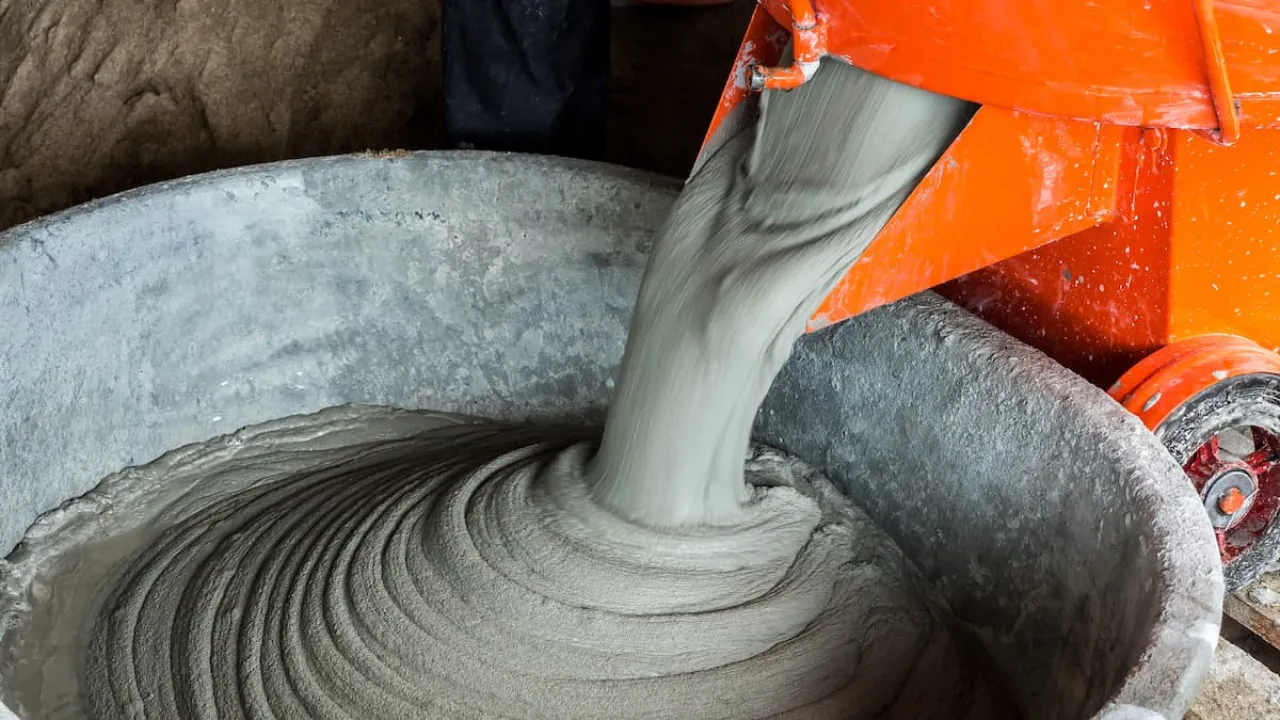
The cement manufacturing process is a complex series of stages, starting with the extraction and grinding of raw materials, then mixing and heating in a kiln to produce clinker.
Then, mix the clinker with gypsum to form cement, one of the most important construction materials used in modern infrastructure development. This process requires significant energy and has an environmental impact, so it is essential to understand each stage and explore more efficient, sustainable production methods.
Read this article to find out the steps and raw materials involved in the complete cement production process!
What Is Cement?
Cement is the primary binding material in construction, holding aggregates together to make building structures strong and stable. Its role is crucial because without cement, modern construction would not be possible.
The use of binding materials has actually been known since ancient times. Around 3000 BC, the Ancient Egyptians used a combination of lime, clay, and water as mortar to build pyramids.
Its development continued during the Greek and Roman periods, when hydraulic cement made from volcanic ash and lime was introduced.
Entering the modern era, innovations continued to emerge, starting with the discovery of hydraulic cement by John Smeaton in 1756, and culminating in the patenting of Portland cement by Joseph Aspdin in 1824, which was later refined by Isaac Johnson in the 19th century.
Over time, the cement industry has grown rapidly, supported by increasingly advanced production technology.
Currently, innovation is focused on energy efficiency, the use of alternative materials and industrial waste, the development of low-carbon cement, and nanotechnology research to improve product performance.
This evolution shows how cement continues to adapt to meet the needs of stronger, more durable, and environmentally friendly construction.
Read also: Learn About Cement Raw Materials, Types, & How to Make It
Cement Raw Materials
Many people may wonder what cement is made of. Basically, cement is a mixture of argillaceous and siliceous materials derived from several main raw materials.
In the Portland cement manufacturing process, materials such as limestone, clay, shale, iron ore, and gypsum are carefully selected from mining areas, then crushed and mixed in specific proportions to form raw meal as the initial stage of cement production.
Limestone is the most dominant component because it serves as a source of calcium. This material provides calcium oxide, which reacts with other elements during the cement manufacturing process, provided that the limestone used does not contain free silica.
Clay and shale complete the composition because they contain the necessary silica, alumina, and iron oxide, and are generally available around limestone deposits.
Iron ore is added to meet the need for iron oxide while helping to regulate the color and strength of the resulting cement. Meanwhile, gypsum helps control the setting time of cement.
The addition of a small amount of gypsum, approximately two percent of the weight of the clinker, makes the hardening process more controllable, allowing the cement to be applied properly.
Cement Manufacturing Process
After learning about the use of raw materials, the next step is to understand how these materials are processed into ready-to-use cement.
The cement manufacturing process involves several important and interrelated stages that determine the quality of the final product. The following is the explanation on cement manufacturing process:
1. Raw Material Preparation
The cement manufacturing process begins with the mining of raw materials, including limestone, clay, and silica sand.
These materials are then crushed into smaller, more uniform pieces. This stage is crucial to ensure the raw materials are easier to process and ready for the next stage.
2. Heating in a Kiln
After being crushed, the raw materials are fed into a rotary kiln. They are then heated to a very high temperature, around 1,400–1,600 degrees Celsius.
At this stage, a chemical reaction occurs, transforming the raw materials into a new compound called clinker. The clinker formed is generally small, pea-sized.
Read also: How to Calculate Cement Requirements: Here’s the Guide
3. Clinker Grinding
The ready clinker is then ground with a small amount of gypsum. The addition of gypsum serves to regulate the cement hardening process.
The grinding process is conducted in a ball mill to produce a fine powder, which we know as cement, making it easy to use in concrete mixtures.
4. Cement Packaging
The final step in cement production is filtering and packaging into bags or large containers.
Packaging facilitates distribution and field use. After that, the cement is ready for marketing and use for various construction needs.
Factors That Affect Cement Quality
To produce strong, durable cement, each manufacturing stage must be conducted with precision. Here are some significant factors that directly affect the quality of the cement produced:
- Raw material quality: The use of high-quality raw materials is essential for producing cement with optimal strength and durability.
- Proper heating temperature: Burning at the appropriate temperature ensures the chemical reaction proceeds smoothly and produces high-quality cement.
- Optimal grinding process: Good grinding produces a finer cement texture, making it easier to use in concrete mixtures.
- Cement factory technology and reliability: Factories that use modern technology and controlled production processes play a major role in maintaining consistent cement quality.
Tips for Making Cement Mixture
A strong cement mixture depends not only on the materials, but also on how it is mixed and processed. Here are some things to consider when making cement:
- Use high-quality materials: Choose clean, soil-, mud-, and organic-matter-free cement, sand, and aggregates for a stronger mixture.
- Apply the appropriate mixing ratio: Adjust the ingredient ratio to the type of work, such as concrete, plastering, or brickwork, for optimal strength and adhesion.
- Adjust the amount of water appropriately: Excessive water can weaken the mixture, while too little can make processing difficult. Keep the water-to-cement ratio balanced.
- Mix until completely blended: Ensure all ingredients are thoroughly combined, either with manual tools for small jobs or a concrete mixer for large-scale projects.
- Pay attention to the mixture's use time: Use the mixture before it starts to harden, generally within 30-60 minutes after mixing, depending on weather conditions.
- Cure properly: Keep the mixture moist for several days after application to maximize hardening.
- Adjust to weather conditions: In hot weather, prevent the mixture from drying too quickly. In cold weather, protect the mixture from damage due to low temperatures.
- Use additives when necessary: For specific needs, additives can help improve workability, accelerate hardening, or reduce water usage.
- Prepare the surface properly: Ensure the application area is clean and damp to ensure the mixture adheres well.
- Prioritize workplace safety: Use protective equipment such as gloves, masks, and goggles to prevent skin and eye irritation when working with cement.
That concludes the information on the cement manufacturing process, from raw materials and manufacturing to its use in construction. Understanding these things is essential for choosing the right cement and producing sturdy, durable buildings.
If you are undertaking a construction project, ensure you use high-quality cement for the best results. One option to consider is Semen Merah Putih Watershield, a super-premium multi-purpose cement with water-repellent technology that provides triple protection against water seepage from outside, inside, and the ground.
This product is suitable for a range of applications, including foundations, concrete slabs, castings, brickwork, plastering, and rendering. With innovation and quality assurance, Semen Merah Putih is committed to providing strong, durable, and reliable construction solutions for a wide range of building needs.
If you need additional explanations or more detailed information about products and construction solutions, do not hesitate to contact us now!