
Choosing the right building materials is crucial to ensuring the overall durability of a building’s structure. From the foundation to the walls and roof, everything must be built with the best materials suited to the site's geographical conditions.
For example, building in a coastal area requires materials resistant to saltwater corrosion. Meanwhile, a site with wet peat soil needs lightweight wall materials to avoid overburdening the underlying structure.
Factors such as climate, humidity, and disaster risks must also be considered when selecting materials to ensure the building resists weather damage and stands strong for a long time.
Therefore, lightweight bricks are an ideal material for various geographic and weather conditions because their light weight does not burden the building’s foundation. Read the full explanation of the characteristics and advantages of lightweight bricks below.
What Are Lightweight Bricks?
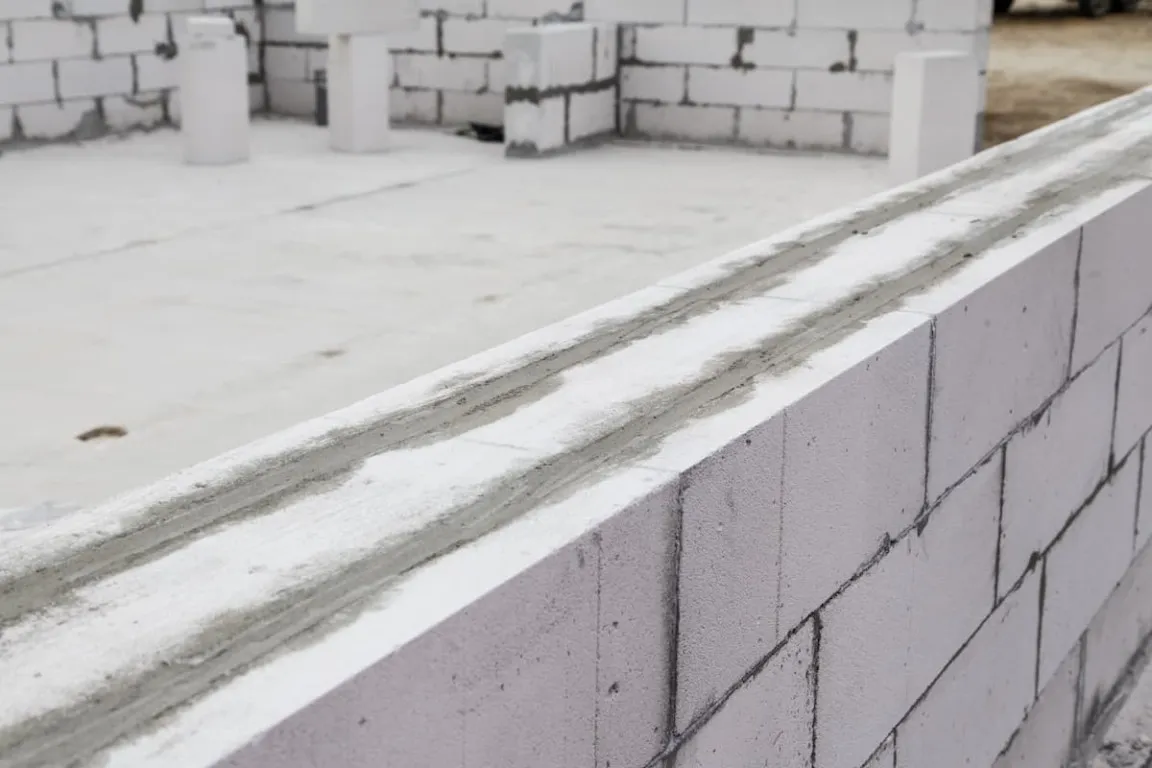
Unlike clay bricks, which are produced manually, lightweight bricks or Autoclaved Aerated Concrete (AAC) are manufactured through a more modern production process.
Lightweight bricks are made from a mixture of sand, lime, cement, gypsum, and aluminum powder. This mixture triggers a chemical reaction that produces air bubbles, making the bricks lighter than regular bricks.
Despite their relatively large dimensions (60 × 20 cm), lightweight bricks tend to be light, with a density ranging from 530 to 650 kg/m³. Meanwhile, red bricks generally weigh 1,500 kg/m³ and measure 17 cm × 7 cm.
Advantages of Lightweight Bricks
Lightweight bricks are widely used in construction projects due to their advantages. Here are some of the benefits of lightweight bricks:
1. Sturdy Structure
One advantage of lightweight bricks over other brick types is their sturdy structure. Their light weight reduces the dead load on the foundation and the building’s main structure.
Lightweight bricks contain a steel reinforcement mesh (wire mesh) that helps prevent cracking or breaking. With these characteristics, lightweight bricks are an ideal material for earthquake-prone areas because they are lightweight yet sturdy enough to withstand collapse.
2. Faster Construction Time
Besides their sturdy structure, lightweight bricks also offer greater construction efficiency than other brick types. In terms of dimensions, the surface area of a single lightweight brick panel is larger, approximately three to four times that of a standard red brick.
The large size of lightweight brick panels shortens the wall-building process because a single installation covers a larger area. The smooth, precise surface of lightweight bricks also reduces construction time because they don't require extensive finishing.
Read also: 20+ Minimalist Shophouse Design Inspirations for Every Business
3. Cost Savings on Materials
Although lightweight brick panels cost more upfront, they deliver greater overall material savings. This is because the large size of lightweight brick panels means that fewer materials are required.
Cost efficiency also includes labor savings, as installing lightweight brick panels is faster. The precise, neat shape of lightweight brick panels also reduces the use of adhesive cement and plaster, lowering material costs.
4. Fire Resistance
One of the most notable advantages of lightweight bricks in the construction industry is their fire-resistant properties. Lightweight bricks are made from non-combustible materials and do not emit harmful gases when exposed to high temperatures.
Generally, walls made of lightweight bricks have a fire rating of three to four hours. This means that in a fire, the walls can withstand exposure to flames without allowing the fire to spread to the other side.
This characteristic makes lightweight bricks a popular choice for residential walls in areas prone to wildfires, as well as for office buildings.
Read also: What Is Suitable Development? Meaning, Goals, and Principles
5. Thermal and Noise Insulation
Another advantage of lightweight bricks is their ability to serve as effective natural thermal insulation that blocks solar heat, keeping indoor temperatures stable and shielding the space from external heat spikes.
Because of their natural thermal insulation, red bricks block solar heat, keeping indoor temperatures stable and unaffected by external heat spikes.
Lightweight bricks have an advantage over red bricks because of their porous structure. These pores also help dampen sound and reduce echoes. This characteristic is a major plus for buildings located near busy highways.
Lightweight bricks are superior to red bricks because their porous structure can dampen sound and reduce echoes. This makes them beneficial for buildings near busy highways.
Lightweight bricks have a porous structure and high water absorption, so they cannot be bonded with ordinary cement. A mortar containing polymer additives is required to adhere to the smooth surface of lightweight bricks.
Without proper protection, the porous structure and high water absorption can become weaknesses. To prevent walls from deteriorating easily, choose the highest-quality cement for your plaster and render mixes.
Use Semen Merah Putih Watershield, which features water-repellent technology that provides triple waterproofing protection from the outside, inside, and from the ground. This keeps your building waterproof, durable, and low-maintenance over the long term.
Semen Merah Putih Watershield is a super-premium, multipurpose cement suitable for a wide range of applications, such as foundations, concrete pours, plastering, and rendering.
Semen Merah Putih Watershield helps optimize bricklaying and supports your construction needs. Contact us for further consultation and find the most suitable material solution for your construction project!
Read also: How to Make an Infiltration Well as a Flood Anticipation