As a building owner, it is essential to understand indoor lighting standards. With proper lighting, daily activities can run smoothly, whether creating an elegant house or a comfortable working atmosphere in the office.
Appropriate lighting not only facilitates activities but also enhances residents' safety and comfort. To learn about the ideal lighting standards, read the explanation here.
Room Lighting Standards
Source: manufacturer. lighting
To create ideal room lighting, it is important to understand the types of lighting systems commonly used.
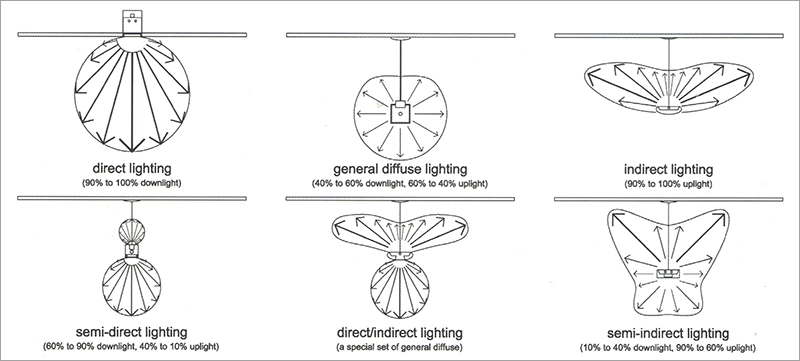
Each system has its own way of functioning and advantages that can be adjusted to the needs of the activity and room design. Here are some commonly used lighting systems:
1. Direct Lighting System
Direct lighting is a system that focuses almost all of the light, around 90-100%, directly on the area or object to be illuminated. The advantage is that the light is used to its full potential, making the lighting more effective and clear.
However, this system can make the room feel glaring and uncomfortable, and can even be dangerous if it is too bright. For use in private rooms, direct lighting should be combined with bright wall colors.
Bright colors help the light spread more evenly, keeping the room bright yet comfortable for the eyes.
2. Semi-Direct Lighting System
Semi-direct lighting is a system that directs approximately 60 to 90 percent of direct light onto the object to be illuminated, while the rest is reflected onto walls, ceilings, or other surfaces in the room. This system is designed to minimize the disadvantages of direct lighting, which often causes glare and discomfort.
With light reflection, semi-direct lighting provides softer, more even illumination, making the room feel comfortable and glare-free. This system is suitable for living rooms or other areas that require both functional and aesthetic lighting.
For maximum results, it is best to use light-colored walls, such as white. White can reflect up to 90 percent of light, making the room brighter without the need for additional lighting. The combination of semi-direct lighting with the right wall color will create a bright, comfortable, and energy-efficient room.
Read also: 12 Living Room Wall Decorations, Aesthetic & Modern!
3. Semi-Indirect Lighting System
Semi-indirect lighting is a way of providing light in which most of it, around 60 to 90 percent, is directed toward the ceiling or the upper part of the walls. The rest, around 10 to 40 percent, is reflected downward to illuminate the room. Because the light does not directly hit objects, the effect is softer and more even.
The color and condition of the ceiling greatly affect the lighting results. A clean, bright ceiling helps reflect light well, making the room feel more vibrant and comfortable.
The main advantage of this system is its ability to reduce sharp shadows and glare, making activities in the room more comfortable. Semi-indirect lighting is suitable for workspaces, study rooms, or relaxation areas that require stable and comfortable lighting for the eyes.
4. Diffused Lighting System
Diffuse lighting is a method of providing light in a room by evenly distributing it in various directions. Approximately 40 to 60 percent of the light directly illuminates the object, while the rest is reflected onto the walls and ceiling.
Since the light spreads up and down, this system involves both direct and indirect lighting. This system is designed to give the room a bright but still soft feel.
The reflected light helps reduce sharp contrasts, so the lighting is more even. However, diffuse lighting can cause shadows or glare if not combined with the right room design.
For best results, use light-colored walls and ceilings to allow light to reflect better. With the right settings, diffused lighting provides comfortable, functional illumination suitable for workspaces, living rooms, or relaxation areas.
5. Indirect Lighting System
Indirect lighting is a method of providing light in which almost all of the light, around 90 to 100 percent, is directed towards the ceiling or upper part of the walls. This light is then reflected throughout the room, creating soft, even lighting without direct rays hitting objects.
This system is more comfortable for the eyes than direct lighting because it does not cause sharp shadows or glare. The reflection of light from the ceiling makes the room feel calm and pleasant, suitable for relaxing spaces, modern kitchens, or areas that need soft lighting.
The disadvantage of indirect lighting is lower efficiency, as some light intensity is lost when it is reflected. To get enough light, higher wattage lamps are usually needed.
With bright ceiling and wall colors and the right interior design, indirect lighting can create a comfortable, attractive room atmosphere.
Read also: 12 Ways to Improve Home’s Air Circulation, Easy & Effective!
Room Lighting Standards According to KEPMENKES RI
To ensure that a room's lighting meets requirements and supports work activities effectively, it is essential to know the lighting standards set by the Ministry of Health of the Republic of Indonesia through KEPMENKES Number 1405/MENKES/SK/XI/02. The following is a guide to lighting levels in lux units according to the type of work and room function:
- 100 lux: For infrequent rough work, such as storage rooms, installation rooms, or equipment rooms.
- 200 lux: Suitable for routine rough work, such as workrooms with machines or rough assembly.
- 300 lux: Required for routine work, such as control rooms, administration, document preparation, or machine work.
- 500 lux: For moderately detailed work, such as inspection rooms, drawing rooms, or work with machine tools.
- 1000 lux: Ideal for detailed work such as detailed assembly, color selection, or precision machine work.
- 1500 lux: Required for very detailed work that must be shadow-free, such as machine inspection or hand assembly.
- 3000 lux: For highly precise and shadow-free detailed work, such as detailed inspection or very delicate assembly.
By following these room lighting standards, activities within the room will be more appropriate, work will be more efficient, the eyes will be more comfortable, and users will be safer.
That concludes the explanation on room lighting standards, including lighting level guidelines for work functions, as per the Minister of Health Regulation. By understanding these standards, you can ensure that the room has appropriate lighting, is comfortable for activities, and is safe for residents.
The selection of wall, ceiling, and floor materials is crucial for optimal lighting in a room. High-quality materials help light spread evenly, reduce glare, and make the room feel brighter without the need for additional lighting.
Smooth surfaces and bright colors on walls or ceilings reflect light well, ensuring every corner of the room is adequately lit and comfortable for daily activities.
To support this, materials such as Semen Merah Putih Watershield can be considered. With water-repellent technology, this material protects surfaces from water seepage from the outside, the inside, or the ground, keeping the structure strong and the surface flat.
This flat and durable surface condition helps the room lighting spread optimally, without being obstructed by damaged or damp surfaces.
By combining high-quality materials with proper lighting standards, you can create a bright, comfortable, and eye-safe room.
The use of Semen Merah Putih Watershield ensures that surfaces remain sturdy and durable, keeping lighting effective in the long term.
For the best results and recommendations on materials that suit your needs, contact us now and consult us about the lighting and construction materials for your house.
Read also: 9 House Designs Maximizing Natural Light You Must Know