
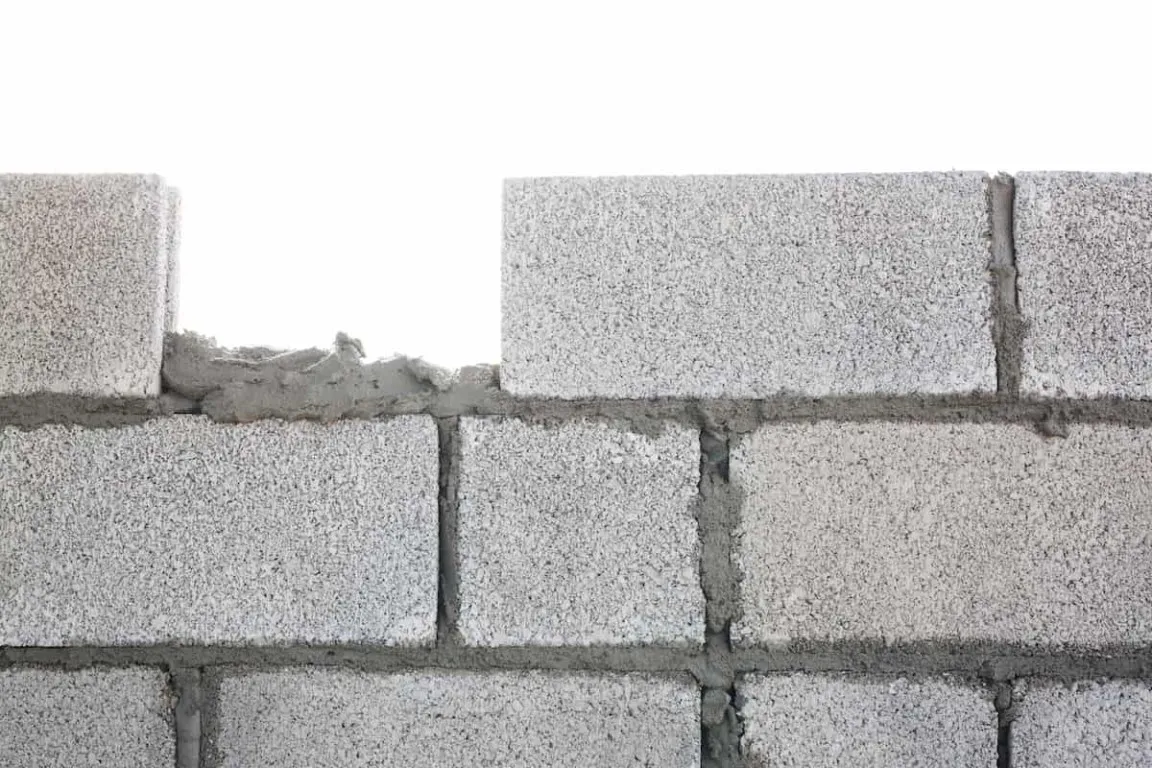
Concrete blocks are among the most widely used building materials because they are relatively affordable and the installation process is practical. It is no wonder that many people gain interest in making their own concrete blocks, either for home construction or as a business opportunity.
From selecting the cement-sand mixture to the drying process, each stage plays an important role in determining the quality of the concrete blocks produced. With the right technique, the blocks you make can be strong, durable, and not easily cracked.
This article is a complete guide to making concrete blocks that can be practiced directly, even by beginners. Read the full explanation below.
Composition of Concrete Block Material
Concrete blocks are a construction material commonly used to build walls, fences, and various simple buildings. In some areas, especially rural ones, concrete blocks made from sertu are used quite extensively because they are considered practical and economical.
Sertu is a mixture of sand and stone known for its good strength and durability for construction. In addition, this material is readily available on the market at a relatively affordable price, making it a favorite choice for many people.
The materials needed to make concrete blocks are sertu sand, cement, and water. To make concrete blocks, use a ratio of 1:7 for sertu sand and cement, that is, 1 part cement to 7 parts sand. It should be noted that the sertu sand used must be free of clay and other impurities so that the concrete blocks do not crack easily.
Meanwhile, the role of water is equally important in the process of making concrete blocks because it dissolves the cement and triggers the hydration reaction. With water, the mixture of materials can blend evenly, making the dough easier to shape during molding.
However, the use of water cannot be arbitrary. It must be in the right amount, enough to produce a plastic mixture but not too watery. Generally, the water-to-cement ratio ranges from 0.4 to 0.6.
If there is too much water, the resulting concrete blocks will be fragile. Conversely, too little water will make the mixture difficult to mold, and its strength will not be optimal.
Standard Size of Concrete Blocks
The standard for cement blocks according to SNI 03-0349-1989 is as follows:
- Solid cement block = length x width x thickness of 39 x 9 x 10, with a tolerance of +3 mm and -5 mm in length, while the tolerance for width and thickness is ±2 mm.
- Small hollow block = 39 x 19 x 10 with a tolerance of +3 mm in length and -5 mm in width, while the thickness tolerance is ±3 mm.
- Large hollow block = 39 x 19 x 20 with a tolerance of +3 mm and -5 mm in length and width, while the thickness has a tolerance of ±3 mm.
Read also: Tips for Choosing Building Material for Minimalist House
How to Make Concrete Blocks
Making concrete blocks is actually quite simple and can be done on your own, as long as the steps are followed correctly. Here are the steps:
1. Prepare Materials and Tools
The main materials needed include cement, sand or aggregate, and water. Meanwhile, the tools typically used include concrete block molds, a shovel, a bucket, and mixing tools (either manual or a cement mixer).
2. Make the Mixture
Combine cement and sand/aggregate in a commonly used ratio, for example, 1:5 (1 part cement and 5 parts sand). Mix evenly while dry first. After that, add water little by little while continuing to mix until the mixture is not too watery, but moist enough and easy to compress.
3. Put Into the Mold
Take an appropriate amount of dough, then put it into the block mold. Make sure the dough is completely filled and compact, with no cavities. You can press or lightly tap the mold to help with compaction.
4. Molding Process
After the dough is compacted, slowly release the mold to keep the block shape neat. Process the molding on a flat surface.
5. Initial Drying
The molded block needs to be left for about 1–2 days to start hardening. Avoid direct sunlight exposure at this early stage to prevent cracking.
6. Curing
Once sufficiently hard, cure by periodically sprinkling the block with water for 7–14 days. The purpose is to maintain moisture so that the hardening process occurs optimally.
7. Final Drying
After the curing process is complete, the concrete blocks can be left to dry until fully dry and ready for use. Usually, the blocks will reach optimal strength after about 28 days.
By following these steps, you can produce strong, dense, and durable concrete blocks for various construction needs.
8. Block Quality Inspection
Before use, ensure the blocks meet the required standards. Some simple ways you can do this include:
- Visual inspection: Make sure the block's surface is not cracked, has no large holes, and is neat and precise in shape.
- Sound check: Tap the block lightly. If it produces a clear sound, it usually indicates a dense structure.
- Simple strength test: A good block does not easily break when pressed or dropped from a low height.
- Weight check: Blocks that are too light may indicate insufficient density.
Read also: Understanding Wall Plaster Mix, Check the Right Ratio!
Advantages and Disadvantages of Concrete Blocks
Concrete blocks are among the most widely used building materials because they offer various advantages. However, there are still some disadvantages to consider before using them.
Advantages of Concrete Blocks
Concrete blocks are known as practical and efficient materials for various construction needs, especially for walls. Here are some of their advantages:
1. Considered More Economical
Compared with several other wall materials, concrete blocks tend to be more affordable, both in materials and installation costs.
2. Larger Size
The larger dimensions of concrete blocks compared to bricks make the installation process faster and more efficient, thereby saving construction time.
3. Relatively Lightweight
Concrete blocks are generally lighter, making transportation and installation easier and reducing the load on the building structure.
4. Smoother Surface
Their precise shape makes concrete block walls tend to be neater, allowing for thinner plaster application.
5. Sufficiently Strong and Durable
When formulated correctly, concrete blocks have adequate strength for various construction needs, such as house walls or fences.
Disadvantages of Concrete Blocks
Besides advantages, concrete blocks also have several limitations that need to be considered to ensure their use remains optimal. These include:
1. Strength Below Reinforced Concrete
Although quite strong, concrete blocks are still not as strong as reinforced concrete, making them less suitable for main structures that bear heavy loads.
2. Easily Cracked If Quality Is Poor
Concrete blocks made with improper mixtures or processes can crack more easily, especially when exposed to weather changes.
3. Fairly High Water Absorption
Concrete blocks have pores that make them easily absorb water. If not properly coated, this can cause damp walls.
4. Less Soundproof
Compared with denser materials, concrete blocks tend to have lower soundproofing properties.
5. Less Attractive Appearance Without Finishing
In terms of appearance, concrete blocks look rougher, so they usually require additional finishing, such as plaster and paint, to be more aesthetically pleasing.
By understanding their advantages and disadvantages, you can determine whether concrete blocks are the right choice for your construction needs.
To achieve the best results for concrete block walls, it is also important to pay attention to the quality of the supporting materials, especially cement. Choosing the right cement not only affects the strength of concrete blocks but also helps produce a wall surface that is neater, stronger, and more resistant to various environmental conditions.
Portland cement products from Semen Merah Putih that you can try include Semen Merah Putih Watershield. This super-premium multipurpose cement features Watershield technology that protects buildings from water seepage, moisture, and corrosion. Its application is not only easy but also makes wall surfaces smoother.
Semen Merah Putih Watershield is suitable for skim coating, plastering, slab casting, column casting, and brick installation. Contact us now for more information about Semen Merah Putih Watershield and find the best construction solutions for your project!
Read also: How to Install Lightweight Bricks for a Neat House Wall