
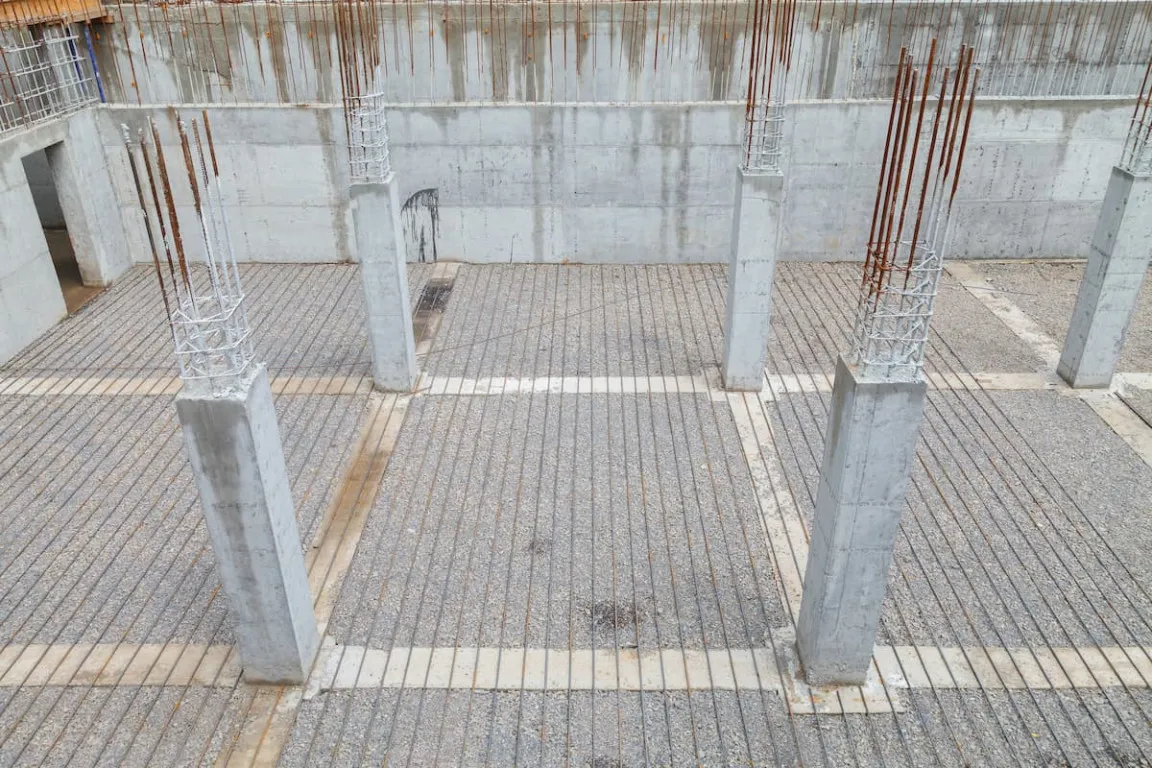
People often think that the tie columns are additional elements in building construction, whereas its role is crucial enough to maintain strength and stabilization of building structure, especially in residential buildings. Without a practical column, the wall is exposed to the risk of cracking or crumbling due to heavy pressure or environmental changes.
Therefore, to understand the functions, size, and how to install the tie columns is very important, especially if you are planning to build or renovate your house. Let’s read the complete review about what tie columns are below.
What Are Tie Columns?
Practical columns are vertical structural element shapes in small pillars which are usually installed on brick or concrete block walls. Their function differs from the main column, which sustains the overall structural loads. The tie columns are the wall stiffener or reinforcement so the wall won’t crack or shift.
This column is usually made from reinforced concrete, with smaller size than the main columns. Its position follows the wall module, usually installed in a certain distance, or in the fragile spots such as in the building corners, wall intersection, or the area around the door or window.
The Function of Tie Columns in Buildings
Despite their small size, tie columns have several important functions that cannot be overlooked, such as:
- Preventing cracks on the wall: Brick wall is prone to crack under influence of temperature changes, vibrations, or the load from upper structure. The tie column is distributing the loads so they won't converge in one spot.
- Adding stiffness to the structural wall: The existence of tie columns help the wall to be stiffer and stabilized. They are very important for multi-story buildings or buildings in areas vulnerable to earthquakes.
- Integrating the wall structure to other elements: The tie column collaborating with foundation beam and ring beam to create an intertwined structure system, thus the building is stronger as a whole.
- Improving building security: In extreme conditions such as earthquakes, tie columns are able to prevent the wall from rapidly collapsing, thus reducing the scale of destruction.
Read Also: Here Are the Right Tools and Guides for Installing Wall Tiles
The Size and Specifications of Tie Columns
Practically, tie column sizes can be varied depending on the building needs. However, there is a common standard that is often used in residential buildings construction.
1. Ideal Dimensions of Tie Columns
The size of a tie column usually ranges from 10 x 10 cm to 15 x 15 cm. These dimensions are considered sufficient to provide reinforcement to the walls without interfering with the aesthetics of the building.
For a simple one-story house, a size of 10 x 10 cm is already quite adequate. However, for buildings with two stories or more, it is recommended to use a larger size so that its strength is optimal
2. Reinforcement and Materials Used
Tie columns generally use steel reinforcement bars as their main frame. The arrangement of the reinforcement usually consists of:
- 4 main steel bars (diameter of 8–10 mm)
- Stirrups or ties with a diameter of 6–8 mm
- The distance between stirrups of about 15–20 cm
In addition, the concrete used should have good quality so that it is capable of withstanding loads and pressure. The commonly used concrete mix ratio is 1:2:3 (cement : sand : gravel).
3. Installation Spacing of Tie Columns
Tie columns are not installed randomly. Generally, the distance between tie columns ranges from 3 to 4 meters. Furthermore, tie columns must be installed at:
- Building corners
- The intersection of two walls
- The left and right sides of doors or windows
Proper placement will ensure that the function of the tie column works maximally in maintaining wall stability.
How to Install Tie Columns Correctly
The installation of tie columns must be done correctly so that the results are optimal. Errors in installation can make the function of the column less than maximum, and even have the potential to cause structural problems in the future.
Stages of Making a Tie Column
In general, here are the steps in making a tie column:
- Determining the column points: Determine the location of the tie columns according to the needs and structural planning of the building.
- Making the reinforcement: Assemble the reinforcement according to the specified specifications, then install it in the predetermined position.
- Formwork Installation: Formwork is used to shape the column before the concrete is poured. Ensure the formwork is installed tightly so that no concrete leakage occurs.
- Concrete pouring: Pour the concrete mix into the formwork evenly. Make sure there are no air bubbles that can reduce the strength of the column.
- Concrete curing: After pouring, perform concrete curing by maintaining moisture so that the hardening proceeds flawlessly.
Common Errors That Occur
In field practice, there are still many errors that frequently occur when making tie columns, such as:
- Using reinforcement sizes that are too small.
- The column spacing is too far apart.
- The concrete mix does not meet the standards.
- Not performing proper curing.
These errors can reduce the effectiveness of tie columns in reinforcing the building structure.
Read Also: 8 Practical and Effective Ways to Remove Mold on Walls!
Differences Between Tie Columns and Main Columns
Many people are still confused about distinguishing between a tie column and a main column. In fact, both have different functions and characteristics.
A. Differences in Terms of Function
The main column functions as a load-bearer for the overall building structure, including loads from floors, roofs, and other elements. Meanwhile, a tie column only functions as a wall reinforcer.
B. Differences in Terms of Size
The main column has larger dimensions, usually starting from 20 x 20 cm or more, depending on the structural design. Meanwhile, a tie column has a smaller size, around 10 x 10 cm to 15 x 15 cm.
C. Differences in Terms of Placement
The main column is placed at the primary structural points of the building, such as corners and the structural grid. Meanwhile, a tie column follows the wall pattern and is installed more flexibly according to needs.
In order for tie columns to function optimally in maintaining wall strength and building stability, the use of quality materials certainly must not be ignored. In addition to the proper concrete mix, choosing a cement with high durability is also important to help keep the structure sturdy and long-lasting, especially in areas prone to water seepage and humidity.
For that reason, you can consider using Semen Merah Putih Watershield, which is equipped with water-repellent technology to help protect the building from the risk of water seepage. With more optimal concrete quality, tie columns and other structural elements can have better durability, making the house safer, more comfortable, and long-lasting in the long run.
Read also: How to Make Strong & Durable Concrete Blocks for Construction