
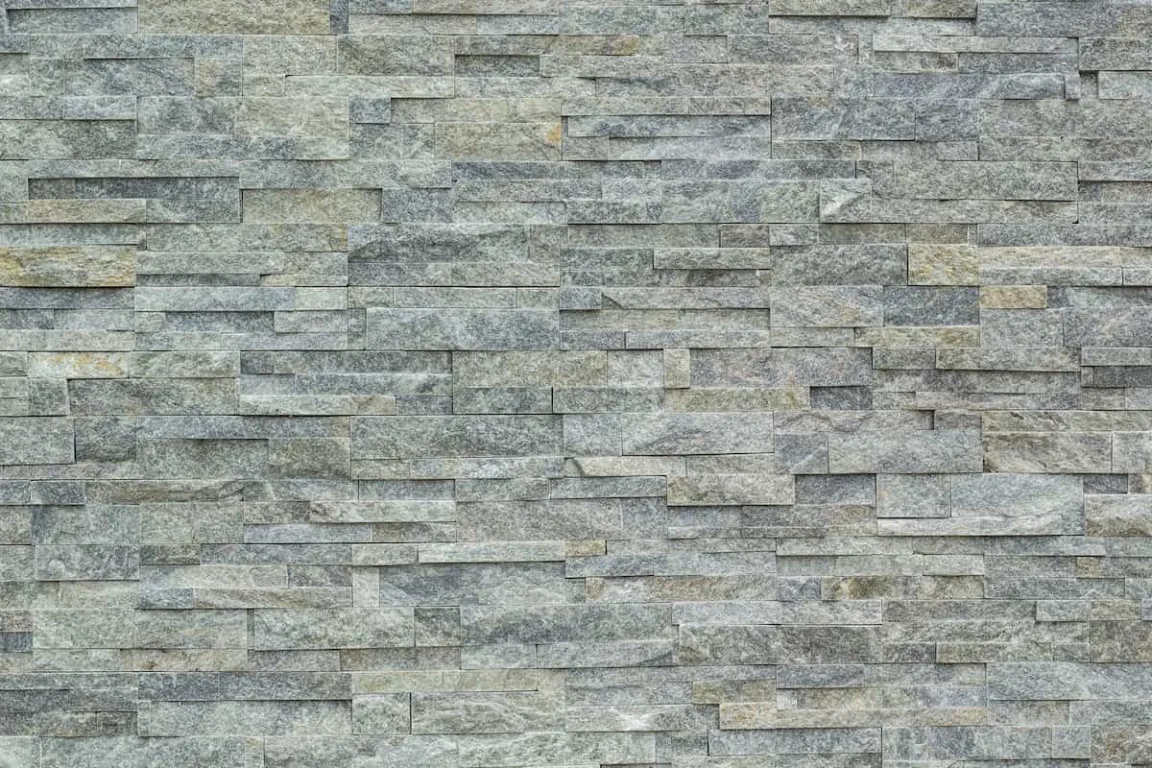
Natural stone is now increasingly popular as a decorative material or for accent walls. People often use it on the exteriors of houses, such as facades and garden walls.
Natural stone for walls has unique characteristics and is versatile enough for aesthetically pleasing modern minimalist houses, natural rustic styles, or tropical resort-style houses.
If you are interested in using this material for your construction project, let’s explore its characteristics and how to install it on cement walls below.
Understanding Natural Stone
Natural stone on cement walls adds dimension, texture, and natural character to plain walls, making the room feel more vibrant while enhancing its aesthetic appeal.
Each type of natural stone has unique characteristics in terms of color, texture, and pattern. Here are several types of natural stone commonly used for house walls, so you can choose what best suits your taste:
1. Andesite Stone
Andesite stone is typically dark gray to black, making it ideal for creating a modern minimalist look. With its smooth texture and strong scratch, mold, and weather resistance, this stone suits both interior and exterior applications.
For interiors, andesite stone walls make an ideal focal point in the living room. Meanwhile, for exterior areas, andesite stone is often used to enhance the beauty of fences and terrace walls. The price of natural stone for walls ranges from IDR 150,000 to IDR 350,000 per square meter.
2. Marble
Marble is a great choice for adding an elegant, luxurious touch to your property. This stone has a striking appearance because of its natural luster and aesthetically pleasing veins.
The colors vary, ranging from white and cream to black, each with unique vein patterns. Marble walls are better suited for interior decoration because they require periodic coating and polishing to maintain their luster. This material is quite expensive, ranging from IDR 500,000 to IDR 2,000,000 per square meter.
Read also: 10+ Minimalist and Functional Small Laundry Room Ideas
3. Jogja Paras Stone
Jogja paras stone, also known as yellow paras stone, is a type of limestone that is generally white or yellowish-cream in color. This stone is popular in the Yogyakarta area and its surroundings. Its yellowish color gives a room a warm, natural feel.
Jogja paras stone has large pores that easily absorb water and are prone to moss and mold growth. Therefore, this material is best suited for dry indoor areas. It is one of the most affordable natural stone materials, with prices ranging from IDR 100,000 to IDR 250,000 per square meter.
4. Palimanan Stone
If you are looking for a warm, cozy atmosphere reminiscent of a tropical villa, Palimanan stone is the perfect choice. This type of stone comes in shades of cream, yellow, or brown and features natural fibrous patterns. It has a porous texture and absorbs water easily, so it requires special care, such as coatings and sealants.
5. Candi Stone
As the name suggests, this type of stone resembles the stone used in temples. Candi stone belongs to the volcanic rock group (basalt). It is dark gray or jet black with a rough, porous surface, making it more commonly used for exteriors.
Read also: 9 Unique Floor Ideas Without Tiles: Elegant & Aesthetic!
How to Install Natural Stone on a Cement Wall
Installing natural stone requires more skill and precision than installing regular ceramic tiles, so you can highlight the stone's unique texture and character while reducing the risk of damage or breakage. Here is how to install natural stone on a cement wall:
1. Prepare Tools and Materials
The first step in installing natural stone is to prepare the tools and materials. Here are the tools and materials you need:
- Cement mortar.
- Bucket.
- Trowel and notched trowel.
- Nails, string, and a level.
- Rubber mallet.
- Sealer.
2. Prepare the Cement Wall Surface (Substrate)
To ensure the natural stone adheres properly, prepare the wall surface. Natural stone requires a clean, strong surface with good adhesion.
Clean the wall surface of any cement residue, dust, oil, or paint that could reduce the mortar’s adhesion. Then, dampen the wall with a little water until it is moist. This prevents the wall from absorbing too much moisture from the cement mortar mix, which can make the cement brittle and reduce its adhesive strength.
Read also: 10 Classic, Luxurious, & Timeless Mediterranean-Style Houses
3. Determine the Pattern and Set the Reference Strings
Install natural stone on a wall with careful planning and without trial and error to maintain strong adhesion.
To do this, drive nails into both ends of the wall, then stretch a string horizontally and vertically as your main guide. Use a spirit level to ensure the string is straight and precise.
Each natural stone slab has unique patterns and color gradations, so it is highly recommended to simulate the layout on the floor first.
Arrange and determine the stone layout, considering the harmony of color, texture, and size before permanently attaching it to the wall.
4. Soak the Natural Stone in Water
Soak the natural stone in water for five to ten minutes to ensure it is moist. This step is crucial and must not be skipped, as it prevents the natural stone from absorbing moisture from the cement mortar mix, which can cause the cement to dry out and become brittle.
5. Apply Natural Stone Starting from the Bottom
Begin by applying cement mortar to the wall surface with a trowel, then apply a thin layer of mortar to the back of the natural stone. This process maximizes contact with the cement, ensuring a stronger bond.
Attach the natural stone to the wall starting from the bottom and working your way up. To prevent the first row from slipping while the mortar is still wet, install temporary supports at the bottom.
Next, gently press the stone against the wall, then tap it lightly with a rubber mallet to ensure it is level and aligned with the guide string. If excess mortar oozes out between the stones, wipe it away immediately with a damp sponge before it hardens.
6. Finishing and Coating
Once all the natural stone is installed, let the wall dry for 24 to 48 hours, until the mortar has fully hardened. Once it is completely dry, you can carry out the finishing process by evenly applying a special natural stone coating.
This coating seals the stone’s pores so water cannot seep in, preventing moss and mold growth while preserving the stone’s natural color pigments so they do not fade or change due to weather exposure.
These are the methods and steps for installing natural stone. The process requires precision and specialized techniques. However, by following the steps above correctly, your natural stone wall will be installed neatly and securely and will also enhance your home's aesthetic value.
Beyond construction techniques, a building’s quality and durability depend on the quality of the cement. For optimal results on any project, choose high-quality materials such as Semen Merah Putih Watershield, which offers advantages over ordinary cement.
Semen Merah Putih Watershield features water-repellent technology that provides triple protection against seepage from three sources: the exterior, the interior, and the ground. This protection helps ensure your building is more durable and requires minimal maintenance.
This cement is ideal for use in various parts of a building, from foundations and concrete slabs to cast-in-place concrete, brickwork, plastering, and finishing. Contact us now for a consultation regarding your project needs.
We are ready to provide the best building materials and services to help you achieve optimal construction results.
Read also: Here Are 7 Open Kitchen Design Inspirations for Your House