
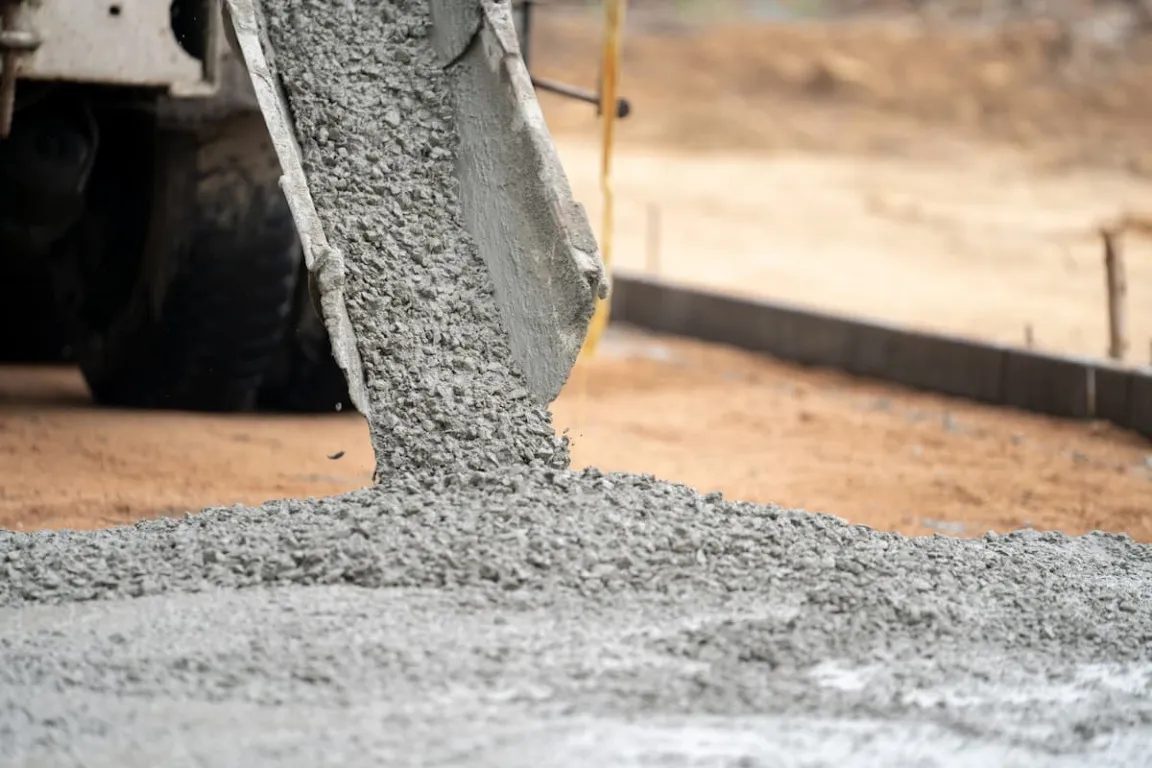
Concrete slump is a parameter used to determine the right consistency of a concrete mix. Understanding the concrete slump value helps ensure building construction avoids problems that could compromise safety.
The consistency of the concrete mix must comply with SNI regulations because it affects its strength and durability. To better understand concrete slump, read this article for definitions, standard values, characteristics, and the effects of an inappropriate slump.
What Is Concrete Slump?
Concrete slump is a parameter used to measure the viscosity and workability of a concrete mix. This test is carried out on fresh concrete that has just been mixed and has not yet dried or hardened.
The accuracy of the slump value affects how easily the concrete can be compacted, which will impact the permeability of the concrete once it hardens.
Properly adjusting the viscosity of fresh concrete will result in a dense structure free from structural problems that could compromise building safety. In addition, the right slump value also helps prevent porous concrete.
What Is the SNI Concrete Slump Value?
The concrete slump value is obtained by testing using an Abrams cone. The Abrams cone is a metal mold shaped like a cone, without a cover or a base.
According to ASTM C-143 standards (equivalent to SNI 1972:2008), this metal mold has a diameter of 20 cm at the bottom and 10 cm at the top, with a height of 30 cm.
The Abrams cone works by pouring fresh concrete mixture in 3 layers, each roughly ⅓ of the cone's height. Each time a layer is added, the mixture is poked with a steel rod 25 times to ensure no air pockets get trapped.
After pouring the three layers, level the top surface of the cone so no concrete mixture spills over. Next comes the main stage of testing the slump value. The cone mold is lifted vertically.
Without a supporting mold, the fresh concrete mixture naturally 'slumps' under gravity. The difference between the height of the Abrams cone and the height of the mixture after it settles is the concrete's slump value.
Several factors determine the slump value of concrete, including the size of the aggregates used and the amount of water added. More water results in a higher slump value. According to SNI, the slump value of concrete ranges from 8 cm to 12 cm, depending on the type of building structural element.
Read also: What Is Concrete Grouting in Construction and the Procedures
Characteristics of Concrete Slump According to Standards
If the test results are in the range of 8 cm to 12 cm, it means the concrete is in ideal condition with the right consistency. The compaction process can also run optimally, resulting in dense and watertight concrete (low permeability).
However, if the slump value is below 8 cm, it means the concrete mix is too dry or too stiff. Fresh concrete tends to be hard and difficult to compact on-site. If not fixed, it risks causing porous concrete.
On the other hand, a slump value above 12 cm is also not good because it means the concrete is too watery. During drying and hardening, excess water evaporates and leaves many open pores, reducing the concrete's strength. The concrete will easily leak and crack because of its high permeability.
Also, based on the magnitude of its value, you can see the characteristics of concrete slump from the shape of its drop.
- True Slump: The concrete mix drops symmetrically and evenly without damaging the shape of its base cone. If fresh concrete “slumps” like this, it means it meets the standard.
- Shear Slump: The top half of the concrete mix splits and slides to one side. This means the mix is not homogeneous and needs adjustment.
- Collapse Slump: The concrete mix completely collapses and spills to all sides, indicating the mix is too watery due to excess water.
Read also: Latest Concrete Technology: Innovations for Modern Construction
What If Concrete Slump Does Not Meet the Standard?
Pouring fresh concrete directly into the formwork without a slump test risks producing a consistency that does not meet the standard.
Skipping the slump test can result in concrete quality that does not match construction specifications. An incorrect consistency level can reduce compressive strength, trigger early cracking, and decrease the concrete's long-term durability.
Also, if the slump value is too low (the mix is too thick and dry), the concrete's workability will drop. As a result, the concrete mix will struggle to fill the spaces around the reinforcement in the formwork, increasing the risk of porous concrete.
On the other hand, if the slump value is too high (too watery), it can trigger segregation and bleeding. Segregation happens when the cement paste is too thin to hold the coarse aggregates, causing the gravel to settle at the bottom of the mold and making the concrete structure uneven.
Bleeding occurs when excess water rises to the concrete surface. As the water evaporates, it leaves behind voids that make the concrete porous, prone to cracking, and highly permeable (easy for water to pass through).
To maintain structural quality and prevent concrete failure, slump testing must be done on every batch of concrete before work begins. However, consistent fresh-concrete quality starts with choosing the right materials. Trust your project to Beton Merah Putih for strong, long-lasting construction results.
Beton Merah Putih offers several flagship products, including Ready-Mix Concrete, Precast Concrete, and Aggregates.
Ready-Mix Concrete is produced with material compositions specially tailored to project specifications and can be used for various types of construction, including industrial, commercial, and infrastructure projects.
Contact us now for a consultation on your project material needs. We are ready to support you in achieving project success with excellent service and high-quality materials.
Read also: Latest Ready Mix Prices for Various Construction Needs