
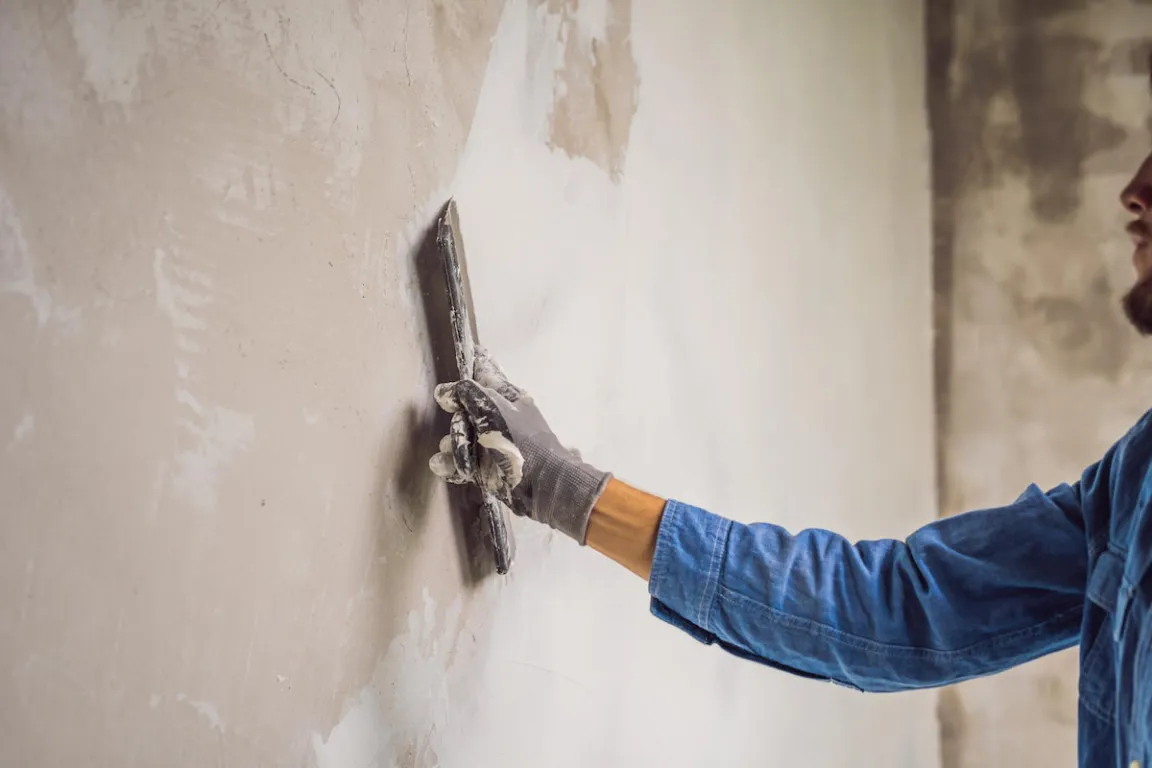
Plastering is a crucial stage in building construction, both for new homes and renovations.
At first glance, the process may seem simple, but it can yield promising results if done correctly.
This can be seen in wall plastering, which is accomplished with simple techniques, but its quality is ultimately determined by the contractor's expertise and the materials used.
To achieve the results you want, determine the cost of plastering and skim coating, along with tips for selecting the right contractor. Check out the details below!
What Are Plastering and Skim Coat?
Plastering and skim coat are two stages of wall work. Plastering is the initial layer, a mixture of cement, sand, and water, used to cover the surface of bricks or blocks.
The purpose is to make the wall flat, sturdy, and free of gaps that could cause cracks.
Once the process is complete and the plaster is dry, the next step is to apply the skim coat. The skim coat is a thin layer of fine cement applied over the plaster to provide a smooth, sleek finish that is ready for painting or wallpapering.
Without plaster, the wall will appear rough, uneven, and prone to becoming brittle. Without a skim coat, even if it has been plastered, the wall will still look rough and unesthetic.
That is why the two are referred to as a single unit.. In the world of construction, this stage is a crucial foundation for enhancing the appearance of walls while maintaining the building's long-term strength.
Plaster and Skim Coat Work Price Range
The price of plaster and skim coat work is generally calculated per square meter (m²). In 2026, the price range for plaster and skim coat work, including materials, is approximately IDR 80,000–IDR 100,000 per square meter, depending on the type of cement, sand quality, and project location.
Meanwhile, if you only use labor without building materials, the plastering labor cost without materials is typically in the range of IDR 50,000–IDR 65,000 per square meter.
In big cities with a high cost of living, labor costs are typically higher than in smaller towns. The range of plastering labor costs usually includes labor costs, but does not necessarily include materials.
Therefore, always make sure in advance whether the contract price offered is for labor only or includes cement and sand.
Factors Affecting the Contract Price of Plastering
Why do contract prices for plastering vary? There are primary factors that influence this, and understanding them is essential to adjusting your budget effectively.
Here are some factors that affect plastering labor costs:
1. Area Size
The larger the area, the lower the price per square meter usually is due to increased work efficiency. Workers do not need to move locations frequently, which makes it more effective.
2. Wall Condition
If the walls are flat and there is minimal damage, the work can be completed more quickly, and the costs will be lower. However, if the walls have many cracks, are uneven, or need additional repairs, the price may be higher.
3. Type of Materials Choice
The quality of cement and sand significantly affects the final result. If you choose premium cement or fine sifted sand, the material costs will be higher, thereby increasing the total cost.
4. Level of Work Difficulty
Work on high walls or in hard-to-reach locations is usually more expensive because it requires additional equipment, such as scaffolding or special ladders.
5. Project Location
Projects in big cities with high wage standards will automatically be more expensive than in small towns or rural areas. The cost of laborer transportation and material logistics also affects the price.
6. Experience of Laborers or Contractors
Experienced laborers usually charge higher rates, but this is worth it for the quality of their work. Experienced laborers or contractors can ensure that your walls are neater, smoother, and more durable.
Read also: Wall Plastering: Purposes and Tips for Application
How to Calculate Plastering Costs
Calculating plastering costs is not complicated if you have already calculated the area of the wall you work on. To calculate it, multiply the wall area by the price per m² offered by the craftsman or contractor.
For example, if the wall area of your house is 150 m² and the contract price offered is Rp50,000 per m², the calculation is:
150 m² × Rp50,000 = Rp7,500,000
This cost is for labor only. If you also want to calculate the material requirements, you need to estimate the amount of cement and sand required. Generally, for every 1 m² of plaster, you need about 5–6 kg of cement and 0.024–0.026 m³ of sand.
Therefore, for 150 m², you will need about 750–900 kg of cement (equivalent to 15–18 bags) and about 3.6–3.9 m³ of sand.
The prices of cement and sand on the market also vary, so you need to update the material price data before making the final calculation.
This will help you estimate the total cost more accurately, including additional expenses such as material transportation and equipment rental, if necessary.
Tips for Choosing Workers or Contractors
Knowing the price of plastering is not enough because the quality of a building also depends on the quality of the workmanship. Therefore, choosing the right workers or contractor is key to ensuring that the final result of the walls meets your expectations.
Here are some tips that you can consider:
1. Check the Work History
The work history of a worker or contractor can help you assess whether the selected worker can produce plaster that is even, smooth, and durable.
Do not hesitate to visit the sites of projects they have worked on so that you can be entirely sure of the quality.
2. Compare Offers
Do not immediately accept the first offer that comes along. At least, compare three offers from different workers or contractors to find out the standard prices in your area.
Thus, you can see if there are any differences in additional services, such as warranties or whether materials are included.
3. Use a Written Contract
To make the work safer, avoid verbal agreements whenever possible. You need to draw up a written contract that specifies the price, scope of work, deadline, and the expected quality of the result. This contract will serve as official evidence to protect you in the event of future disputes.
4. Ensure There Is a Warranty
Professional builders or contractors are usually willing to provide a warranty. For example, if cracks appear on the walls within three months, they will repair them at no additional cost. This warranty also indicates that the builder is confident in the quality of their work.
5. Pay Attention to Communication
Choose a contractor who is communicative, willing to explain the details of the work, and open to your questions. Good communication will make it easier for you to supervise the work and ensure that the results meet your expectations.
Choosing a professional contractor is important, but that is not enough to ensure that the plastering results are truly optimal.
Another factor that is no less important is the quality of the materials used. High-quality materials will make the walls stronger, the surface smoother, and the work more durable.
To achieve sturdy and neat plastering results, you can use Semen Merah Putih, which offers a variety of high-quality cement options, such as Semen Merah Putih Watershield.
Its water-repellent technology is specifically designed to provide triple protection against water seepage from outside, inside, and the ground (capillary water), as well as moisture.
With strict quality control in every production process, Semen Merah Putih Watershield is the right choice for those who want to ensure that the plastering results are not only visually appealing but also strong and durable in the long term.
So, what are you waiting for? Contact us now for more information and consultation on your project needs!
Read also: Understanding Wall Plester Mix, Check the Right Ratio!