
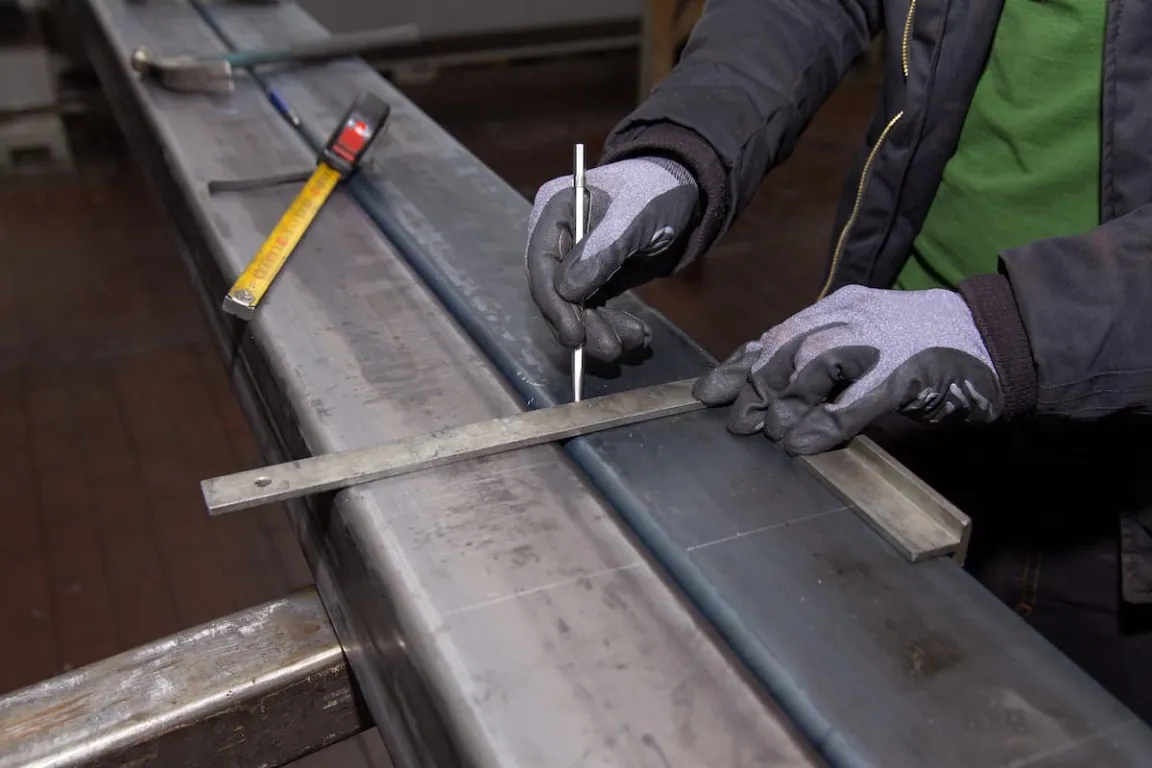
Floor plate iron is a crucial element in house construction, serving to support loads, dampen noise from the upper floors, and maintain the structural strength of the building.
Therefore, understanding how to calculate the iron requirements for floor plates is very important to ensure the amount used is accurate.
A shortage of iron can reduce the floor's sturdiness, while overbuying can unnecessarily increase costs.
If you are still unsure how to calculate it correctly, check out the complete guide below to ensure that your construction remains strong and safe.
What Is a Floor Plate?
A floor plate is a part of a building structure that serves as both a covering and a load-bearing element. This component transfers the load to the columns and beams that do not directly contact the ground.
In general, floor plates are made of concrete or iron with a specified thickness and reinforced with rebar to increase strength and stiffness. Additionally, floor plates also help dampen sound and serve as a route for electrical cable installations.
How to Calculate the Iron Requirements for Floor Plates
To get more accurate results, several steps should be considered before calculating the iron requirements for floor plates.
Each step plays an important role in ensuring the building structure remains strong. Here is how to calculate the iron requirements for floor plates that can be followed:
1. Determine the Frame Area
The first way to calculate the iron requirements for floor plates is to determine the building's frame area.
The larger the house, the more iron will be needed. Considering that each house has different sizes and structures, it is better to note which parts or rooms require floor plates.
Not all areas of the house require plate iron, such as stairs or areas not part of the main structure.
Additionally, ensure the type of iron chosen matches the function of each room to achieve more efficient and sturdy construction.
2. Determine the Depth of the Foundation and Ring
The next step is to determine the depth of the foundation and ring. A strong foundation requires careful calculation to ensure the house structure is sturdy and stable.
Besides plate iron, you also need to pay attention to the use of wire mesh and hollow iron because these two types of iron help strengthen the columns and foundation ring. With the right combination of materials, the house foundation will be stronger and more durable.
Read also: What Is a Concrete Deck Block? Definition & Types
3. Identify Parts of the House that Require Iron Plates
Not all parts of a house need iron plates. This material is used to bear heavy loads, such as in steel shear wall systems for multi-story buildings.
Therefore, first determine which parts truly require iron plates to make material use more efficient.
4. Determine the Reinforcement Size
Concrete reinforcement plays a role in strengthening the building structure, especially in multi-story houses, and generally uses plate iron.
The more or larger the reinforcement installed, the greater the plate iron requirement in the calculation. So, determine the size and quantity of reinforcement accurately to ensure a precise estimate of iron plates.
5. Choose the Right Iron Plate Diameter
Choosing the right plate iron diameter is very important because it affects the quantity and strength of the resulting structure.
The iron diameter should be adjusted in accordance with the design and building requirements to ensure the covered area fits correctly, with no gaps or overlaps.
With careful calculation of the diameter, you can determine the correct size and amount of iron plates needed for the project.
6. Consider for Multi-Storey Houses
For multi-storey houses, the need for a plate iron is certainly higher compared to single-storey houses. Therefore, it is important to understand the building design first so that material requirements can be calculated more accurately.
With careful planning, you can efficiently manage the use of plate iron while also controlling construction costs.
7. Understand the Formula for Calculating Floor Plate Iron Requirements
The final step is to understand the formula for calculating floor plate iron requirements so that the calculations are more precise. The formula that can be used is:
(Floor plate length / Installation spacing) × 2 / Vertical side or flat side
By using this formula, you can estimate the amount of plate iron needed according to the building's area and design, making the results more efficient and accurate.
Read also: Characteristics and Ideal Thickness of Second-Floor Slabs
Example of Iron Requirements for Floor Plates Calculation
After understanding the basic formula, you can start applying it through the following example of calculating iron requirements for floor plates, to make it easier to understand.
This example will help you understand the calculation steps more clearly and find out how much steel is needed to build a floor plate of a certain size:
1. Calculating Horizontal Iron
Iron in the horizontal direction can support loads parallel to the floor surface. For example:
- Floor plate length: 6 meters.
- Distance between irons: 0.2 meters (20 cm).
- Plate width: 3 meters.
Formula:
(6 m / 0.2 m) × 2 / 3 m = 200 meters
This means the estimated total length of iron required in the horizontal direction across the entire plate is 200 meters.
2. Calculating Vertical Iron
Vertical iron functions to support loads that act perpendicular to the floor surface. With the following dimensions:
- Floor plate width: 3 meters.
- Spacing between irons: 0.2 meters.
- Plate length: 6 meters.
Formula:
(3 m / 0.2 m) × 2 / 6 m = 50 meters
So, approximately 50 meters of iron is needed for the vertical direction.
3. Calculating the Total Iron Requirement
After determining the length of iron in both directions, the total requirement can be calculated as follows:
200 meters (horizontal direction) + 50 meters (vertical direction) = 250 meters
If the length of one steel bar is 12 meters, then:
250 / 12 = 21 steel bars.
So, the total iron requirement for the floor plate in the example above is approximately 21 iron bars.
The formula above is a simple approach for an initial estimate. In actual construction calculations, factors such as building load, plate thickness, and technical building standards must also be considered.
Therefore, always consult your calculations with a structural engineer to ensure the specifications used are truly safe and meet the project requirements.
That is a complete explanation of how to calculate the iron requirements for floor plates to ensure construction results are stronger, more efficient, and safer.
As an important element in a building, floor plates require high-quality materials to optimally support loads and last longer.
To support this need, Semen Merah Putih Watershield is here as the best solution. This super-premium multipurpose cement is equipped with water-repellent technology that provides triple protection against water seepage from outside, inside, and from the ground or capillary water.
This advantage makes it ideal for various building applications, such as foundations, concrete slabs, brick laying, plastering, and skim coating.
Semen Merah Putih is committed to delivering products that use advanced technology to achieve high-quality and durable construction results.
Contact us now to get more information about Semen Merah Putih products and discuss your construction needs with the real experts!
Read also: What Is a Waffle Slab? Definition, Function, & Implementation