
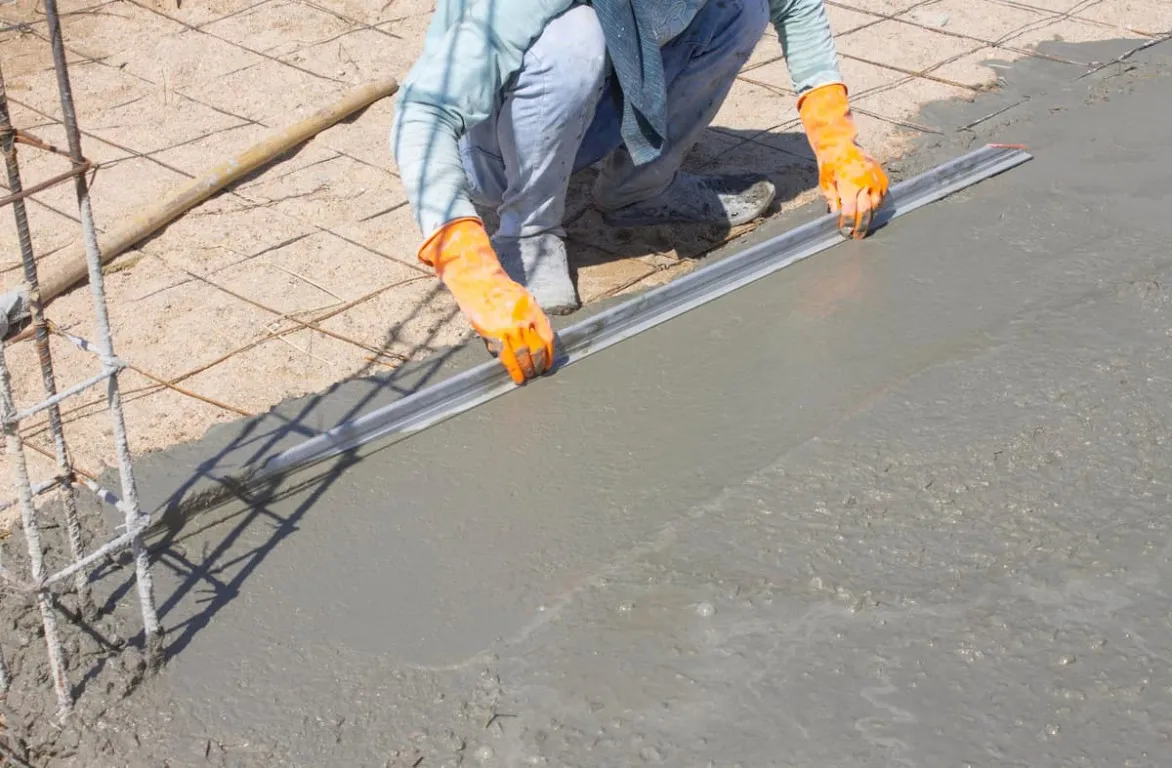
The carport floor is the area of the house used most often, both for parking vehicles and for outdoor activities. However, this area is frequently overlooked in construction planning.
In fact, this part must be able to withstand vehicle weight, withstand weather changes, and be easy to maintain. One efficient, strong, and durable solution for these needs is a concrete rebate.
If you are planning to build or renovate a carport, it is best first to understand what a concrete rebate is and how it is applied. For that reason, take a look at the following explanation of concrete rebates, how they are made, and their advantages for your home's carport area.
What Is a Concrete Rebate?
Concrete rebate is a layer of low to medium-quality concrete used as a base or work floor before installing the main structure. In the context of a carport, a concrete rebate serves as the main floor layer that is reinforced to support vehicle loads and the loads from activities on top.
Meanwhile, the term plastering refers to a fine cement layer applied to the surface of the concrete. Its purpose is to provide a neat, smooth, and easy-to-clean finish. Therefore, a concrete floor rebate for carport plastering is a concrete floor with a strong base and a smooth top.
The concrete rebate layer is usually made with a mixture of cement, sand, gravel, and water in a ratio of 1:2:3. This concrete falls within the K-125 to K-175 grade, which is strong enough to withstand the weight of private vehicles. Plaster finishing is then applied after the concrete hardens to give a clean and aesthetic surface appearance.
Why Is Concrete Rebate Suitable for Carport Floors?
Carport floors must be able to withstand heavy loads, especially if used for parking cars or heavy vehicles. Therefore, the flooring material must be strong and stable. Concrete rebate is an ideal choice because it has several main advantages, including:
1. Strong Load-Bearing Capacity
The concrete rebate mix is designed to withstand vehicle loads without easily cracking. With a thickness of around 8–10 centimeters, this floor can support a family's cars and heavy vehicles.
2. Weather Resistant
A carport is an open area exposed to heat, rain, and temperature changes. Concrete rebate has high resistance to these conditions. Its surface is not easily damaged or develop holes, even when continuously exposed to water.
3. More Cost-Effective Construction
Compared to floors made of natural stone, paving blocks, or outdoor tiles, making a concrete rebate is much more economical. In addition to being easily accessible, the materials are fast to construct, saving time and labor costs.
4. Aesthetic Appearance with Plaster Finishing
The plaster layer on top of the concrete rebate makes the floor surface look neater and smoother. You can add line patterns, square designs, or even a touch of color to enhance its appearance. This finishing not only beautifies the carport but also gives a clean and professional impression that enhances the overall aesthetic value of the house.
5. Easy Maintenance
Concrete floor rebate does not require special maintenance. Just clean them regularly, and occasionally check for small cracks so they can be repaired before spreading. With these various advantages, concrete floor rebate for carport plastering becomes an ideal solution for modern homes that prioritize both function and appearance.
Ideal Composition and Thickness of Concrete Rebate
When making a concrete rebate, the material mix is the key factor to pay attention to. The commonly used composition or ratio is 1 (cement) : 2 (sand) : 3 (gravel). This mixture produces concrete strong enough to withstand the load of private vehicles.
For carport areas, the ideal concrete rebate thickness is 8 to 10 centimeters. If you have larger vehicles, such as SUVs or double-cab trucks, it is recommended to increase the thickness to approximately 12 centimeters.
In addition, ensure a slope of about 1–2% to direct rainwater to the drainage system. A flat floor without a slope will cause water to pool and accelerate damage.
Next, to add strength, you can also use wire mesh or light steel reinforcement in the middle of the concrete. This is optional, but highly recommended for large areas or places frequently crossed by heavy vehicles.
Read also: What Is a Concrete Retarder? Here Is Its Functions and Types
Steps for Making a Concrete Floor Rebate for Carport Plastering
Building a carport floor using a concrete rebate is not complicated, but it must be done carefully to ensure a strong and neat result. Here are the steps you need to pay attention to:
1. Site Preparation
The first step is to level the ground in the carport area and compact its surface. Loose soil can cause the floor to sink later on. After that, add a 5-centimeter thick layer of fill sand as a leveling base.
2. Formwork Construction
Install formwork or molds on the sides of the area to be poured to hold the concrete mixture and prevent it from spreading. At this stage, also adjust the floor slope to match the drainage direction to ensure water flows smoothly.
3. Concrete Pouring
Pour the concrete mixture into the work area, then level it with a screed. Ensure the thickness is even across the entire surface. If the area is relatively large, pouring can be done in stages. During this process, it is important to keep the mixture homogeneous and not too watery, as an overly thin mixture can reduce the strength of the floor structure.
4. Curing and Initial Care Process
After the concrete is poured, allow it to harden naturally. During the first 2–3 days, the concrete surface should be watered regularly to prevent cracks from rapid drying. Avoid direct exposure to sunlight and heavy loads during the curing period to ensure the concrete structure forms properly.
5. Plaster Finishing
Once the concrete has fully hardened, coat its surface with rough concrete or a smooth trowel finish. You can create square or line patterns as decoration, or add a floor paint mixture to make it look more attractive and non-slip.
Estimated Work Costs
From a cost perspective, a concrete rebate is a cost-effective option. For K-125 grade concrete with a thickness of 10 centimeters, the price per square meter ranges from IDR 140,000 to IDR 200,000, depending on the location and material costs. If plaster finishing is added, there is an additional cost of around IDR 30,000 to IDR 50,000 per square meter.
Thus, for a 3x5 meter carport, the total cost could range from IDR 2 million to IDR 3 million, including materials and labor. Given its durability and long lifespan, this option is more cost-effective than alternatives that require more intensive maintenance.
However, the strength of a concrete rebate not only depends on the construction technique but also on the quality of the materials used. Good cement, sand, and gravel will produce a denser carport floor that is less prone to cracking and resistant to weather changes.
For optimal, strong, and neat plastering results, you can use Semen Merah Putih, which offers a variety of high-quality cement options, including Semen Merah Putih Watershield.
Its water-repellent technology is specially designed to provide triple protection against water seepage from outside, inside, and the ground (capillary water), as well as moisture. With strict quality control in every stage of production, Semen Merah Putih Watershield is the right choice for those who want to ensure that plastering results are not only aesthetically pleasing but also strong and durable in the long term.
So, what are you waiting for? Contact us now to get more information and consult on your project needs!
Read also: How Many m² Does a Sack of Plaster Mortar Cover? Find Out!