
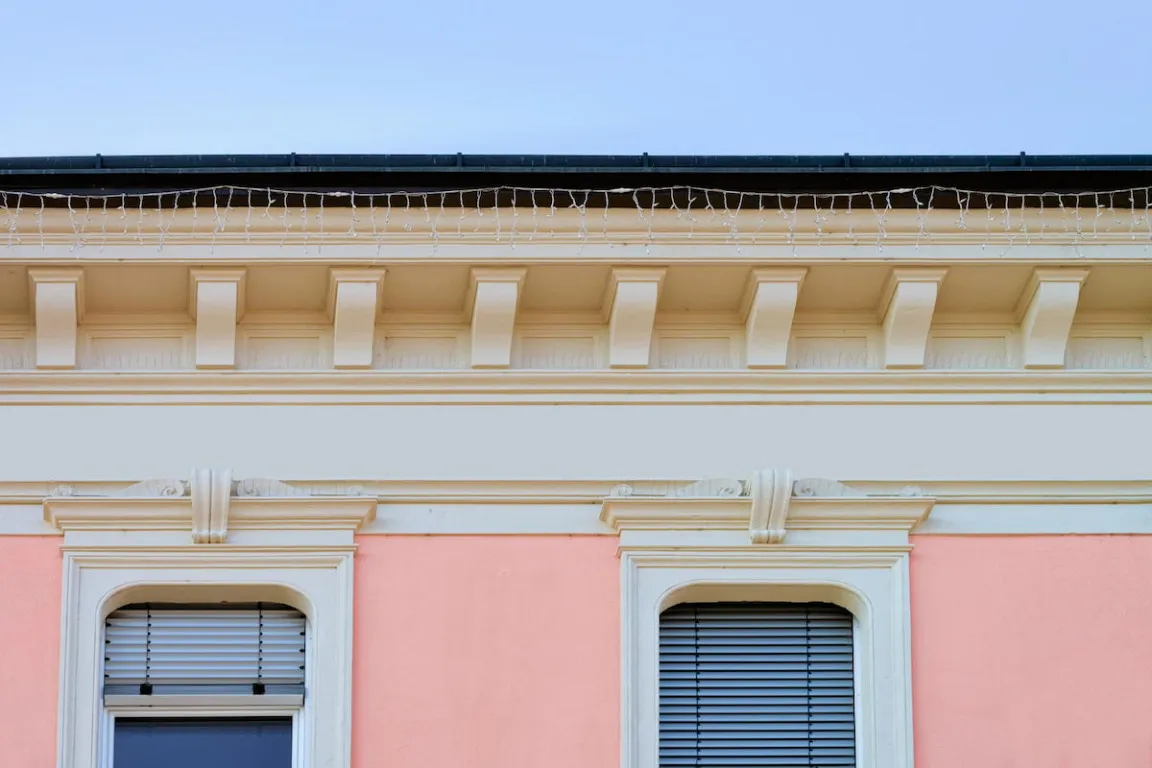
Concrete fascia is widely used on houses or buildings with a modern and simple design. This material is also often chosen during house renovations, as it can enhance the appearance while adding a sense of grandeur and elegance.
In English, a fascia is called “exterior cornice,” which means “crown.” In construction, fascia is a horizontal part that protrudes at the edge of a building's roof, serving as a decorative element that beautifies the house from above.
So, what are the advantages of concrete fascia, and how are they made? Check out the full explanation in this article.
What Is Fascia?
A fascia is a long board installed under the roof or tiles of a house to make the top part of the building look neat. In addition, fascia can also be used at the corners between the walls and ceiling for a tidy appearance, and they can even be used for house fencing.
Types of Fascia
Fascia is available in various types, each with its own advantages and functions. Some commonly used types of fascia are:
1. Concrete Fascia
Concrete fascia is cast using specialized molds to ensure a precise and neat shape. These concrete plank boards are often used in modern-style houses because they can add a luxurious and sturdy impression.
Their advantages include being resistant to extreme weather, not easily decaying, and maintaining a neat appearance. However, concrete fascia still has some drawbacks, as its appearance may not provide a natural feel to the house, and its price is usually higher compared to wooden fascia.
2. Wooden Fascia
Wooden fascia is commonly used in traditional Indonesian houses, especially in Java and Bali. It comes in the form of thin wooden planks, typically 2–3 centimeters wide and about 20 centimeters long.
Wooden fascia is lightweight yet sturdy with a simple appearance, making it suitable for minimalist-style houses. Some types of wood are also fairly durable. However, wooden fascia is prone to rotting, quickly affected by weather changes, and can be attacked by termites.
Read also: 9 Concrete Wall Panel Design Inspirations for Your Home
3. PVC Fascia
PVC fascia, often referred to as vinyl, is made from thermoplastic polymers, a type of plastic that is flexible and durable. This material is commonly used for a range of applications, including pipes, household furniture, and children's toys.
Many people choose PVC fascia because it is lightweight and not easily broken. Besides being affordable, they also have fairly good durability. However, this fascia offers limited color options, which can make it appear monotonous. Its safety for human use also requires further research.
4. GRC Fascia
GRC fascia, or glass-reinforced concrete, is made from glass fibers mixed with cement to produce panels that are strong yet lightweight. This material is often chosen for modern homes for its simple appearance while still conveying a sturdy impression.
In addition to being lightweight, GRC fascia is also resistant to weather changes. However, it is typically more expensive than standard concrete and is supplied in sheet form, so it cannot be customized to specific requirements.
Advantages of Concrete Fascia
Making a concrete fascia takes more time, but the results are worth it and satisfying. Compared to other types of fascia, concrete fascia has several advantages, including:
- Appears strong and gives a luxurious impression.
- Long-lasting, not easily rotting, and durable against heat and rain.
- Flexible design, which can be given a natural touch to resemble wood.
- Reinforces the rafters and battens on the roof structure.
- Makes the roof safer from rats by tightly closing gaps between the fascia and ceiling.
- The roof frame is more durable and less susceptible to decay or rust, unlike wooden fascia, which deteriorates faster.
Read also: 5 Proper Ways of Storing Cement to Maintain Its Quality
How to Make a Concrete Fascia
Concrete fascia can be cast in place or produced using a precast system with molds.
Precast production takes time because it goes through several stages, from formwork and steel reinforcement to concrete placement and finishing, including plastering, profile creation, and painting. Here is a complete guide to making concrete fascia:
- Make a fascia mold from durable materials, such as steel. The mold is divided by shape to simplify work, ensure quality, and estimate the amount of formwork required.
- Coat the inside of the mold with diesel to prevent the concrete from sticking, ensure easy removal, and achieve a smooth surface.
- Carry out the steel reinforcement process carefully, ensuring the number and quality of steel meet specifications. Also, check the fascia connections with the main reinforcement and hooks for lifting the precast fascia. Make sure the distance between the top and bottom embeds matches the thickness of the structural slab.
- Pour the concrete mixture into the mold, after covering the areas not in contact with the concrete with styrofoam, such as the hook and embed areas.
- After a few days, remove the concrete lisplang from the mold.
- Perform quality control (QC) to ensure the fascia is in good condition and its surface is neat.
- Lift the fascia and place it near the installation position on the building. For multi-story buildings, use a crane and adjust the fascia's position with a tackle.
- Weld the joints between the precast fascia and the slab according to the working drawings and markings that have been made.
- To enhance the appearance, apply putty to the surface of the concrete fascia.
That is the explanation regarding fascia and how to properly make concrete fascia. Unlike other types of fascia, concrete fascia is often chosen because it is durable, strong, and makes buildings look neat and solid.
Using the right materials is very important to ensure the strength and durability of the building structure. For stronger and longer-lasting results, make sure to also use quality materials, such as products from Beton Merah Putih, which is a subsidiary of Semen Merah Putih.
There are various product options available, including Ready Mix Concrete and Precast Concrete, to aggregates, specifically designed to support modern construction needs. Whether for residential homes or large-scale projects, Beton Merah Putih products are designed to be stronger and more durable, and to meet quality standards.
Contact us for consultation and detailed product information for your project. Let's realize your dream building with quality products from Semen Merah Putih.