
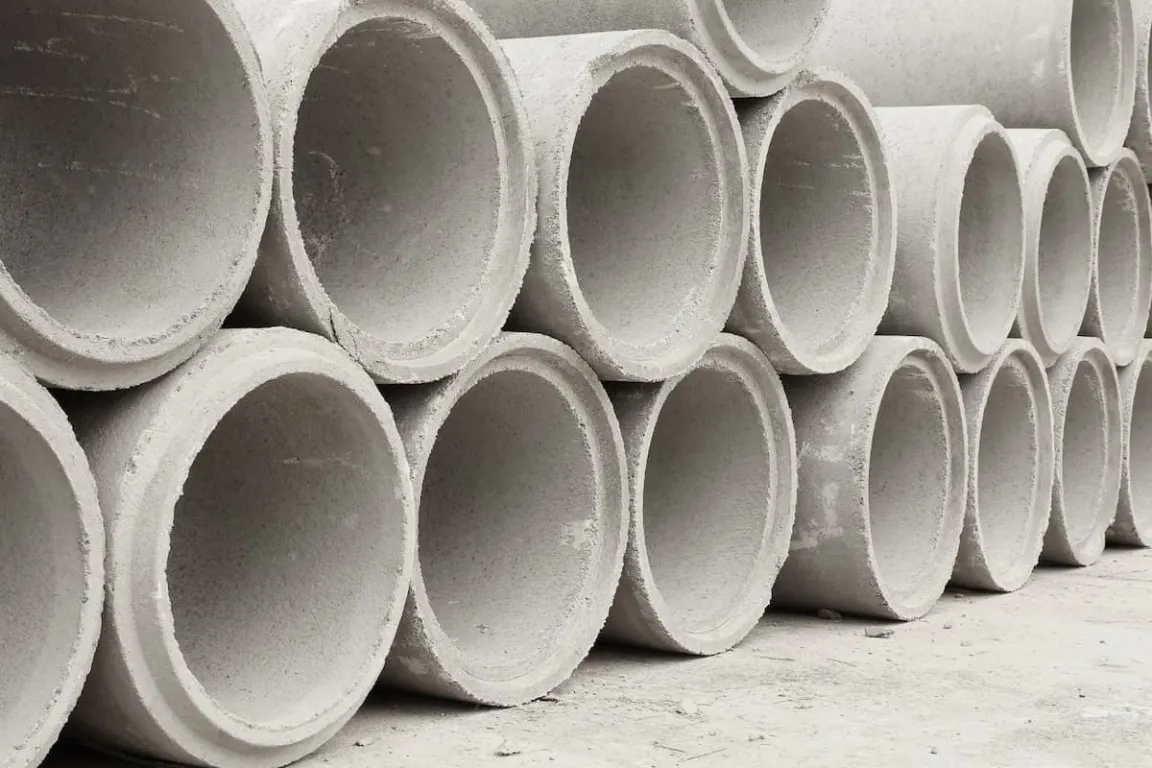
Did you know the various sizes of concrete pipes? When working on a water drainage project, it may be necessary to know the types and sizes of concrete pipes.
This is because concrete pipes are ready-to-use materials that are often used for the construction of irrigation channels in various building projects. However, knowing the size and type of concrete is important to ensure that the construction project runs smoothly.
To find the right size and type for a project, you need to understand what concrete pipes are and their functions beforehand. If you want to learn more, read this article to the end!
What Is Concrete Pipe?
Before learning about the size of concrete pipe, you need to understand what it is. Basically, concrete pipes are a ready-to-use or ready-mix material for infiltration wells, culverts, and water drainage channels. Generally, these are used when building houses and roads.
However, concrete pipes also have various other names, such as culverts and hong. In this case, concrete pipes are called culverts because they are often used for their construction. Meanwhile, Hong is another name because concrete pipes are shaped like pipes, either in a full circle or a half circle.
So, why do concrete pipes resemble pipes? This shape allows concrete pipes to withstand the flow of water entering and exiting from them.
In addition to its shape, this type of ready-mix concrete is made from specific materials with various frames and sizes. Due to its multiple options, you can customize concrete pipes to suit your construction project needs.
Functions of Concrete Pipes
As mentioned above, concrete pipes are designed to facilitate water flow. In this case, concrete pipes form various things, ranging from infiltration wells, culverts, to water irrigation channels. Furthermore, here is an explanation of the three functions of concrete pipes.
- Culverts: Based on their original purpose, concrete pipes are useful for making culverts. This ready-mix concrete allows you to line the walls of the ground more quickly and with stronger materials. No wonder this material is the preferred option over cast concrete or others.
- Water Irrigation Channels: Next, concrete pipes are commonly used to help with water flow. With concrete pipes, projects can be completed faster and more affordably than with other materials. Compared to river stones, using concrete pipes for water irrigation channels is considered superior. This is because this material is better at protecting the water flow.
- Infiltration Wells: Concrete pipes can also be used to replace river stones or cast cement in lining the walls of the ground when constructing infiltration wells. With concrete pipes, it is easier to build infiltration wells and more economically efficient. Not only that, infiltration wells made of concrete pipes are believed to have a longer durability, although this depends on their type.
Read also: Concrete Rebate: Definition, Functions, and Advantages
Benefits of Concrete Pipes
As a material for constructing culverts, water drainage channels, and infiltration wells, concrete pipes offer superior benefits compared to other materials. Here are some of the benefits of concrete pipes.
- They simplify the process of constructing culverts, water drainage channels, and infiltration wells.
- They are a better building material than cast concrete, especially when used with steel frames without sand.
- More affordable than river stones, thus saving project costs.
Concrete Pipe Sizes
Regarding their potential functions, you can classify these products based on their sizes. In this case, concrete pipes are classified based on their diameter. Furthermore, each concrete pipe size indicates a specific diameter, length, thickness, and weight.
Generally, concrete pipes are divided into seven sizes. Here is a list of common concrete pipe sizes.
|
No. |
Diameter (cm) |
Length (cm) |
Thickness (cm) |
Weight (kg) |
|
1 |
20 |
100 |
2.5 |
38 |
|
2 |
30 |
100 |
3 |
56 |
|
3 |
40 |
100 |
4 |
89 |
|
4 |
50 |
100 |
4.5 |
149 |
|
5 |
60 |
100 |
6 |
176 |
|
6 |
80 |
50 |
8 |
116 |
|
7 |
100 |
50 |
8 |
181 |
Types of Concrete Pipes
In addition to the size of concrete pipes, there are various other specifications. In this case, concrete pipe specifications are classified based on shape, material, and frame or reinforcement. Here are the explanations for the types of concrete pipes:
Types of Concrete Pipes Based on Shape
Based on their shape, concrete pipes are classified into two types, namely full circle or round and half circle or split. In this case, full circle or round concrete pipes are used for infiltration wells. Meanwhile, half-circle or split concrete pipes are generally used for water drainage channels and culverts.
However, for large-scale projects, it is recommended to use split concrete pipes when constructing water drainage channels and culverts.
Read also: Concrete Grade: Types and Classification Table
Types of Concrete Pipes Based on Materials
Concrete pipes are also classified based on the materials used. Although all concrete pipes consist of cement, the difference in materials is based on the use of sand as their material.
As mentioned earlier, sandless concrete pipes are believed to be a stronger material. This is because without using sand, there will be no water entering the drainage channel or culvert frame. However, if you are preparing an infiltration well project, concrete pipes with sand are still more recommended.
Types of Concrete Pipes Based on Frame
Based on the frame or reinforcement, concrete pipes are classified into two types: with or without steel frames. Obviously, concrete pipes with frames are considered stronger.
Usually, the ones with steel frames are also called reinforced concrete pipes. These reinforced concrete pipes are commonly used for culverts.
That is all the explanation of concrete pipe sizes, functions, and types. With the information above, you now know what concrete pipes are, as well as the sizes and types that can be considered for your construction project needs.
It is also important to understand that ready-to-use materials, such as concrete pipes, will help to speed up construction projects. Therefore, you should consider using ready-mix concrete when starting a construction project.
If you do need ready-mix concrete or ready-mix, Semen Merah Putih offers Ready Mix Concrete as the solution. Because of the variety of qualities, Ready Mix Concrete by Semen Merah Putih can be used in various construction projects, from commercial and industrial to public infrastructure.
It is important to note that through our subsidiary, Beton Merah Putih, we provide solutions for ready-mix concrete, precast concrete, Value Added Solutions, and aggregates.
We provide high-quality ready-mix concrete that complies with the latest construction standards, as well as efficient and durable precast concrete for various projects. Our Value Added Solutions also include consulting services and innovative product development to support your construction needs. Additionally, we offer high-quality aggregates that are crucial in ensuring the stability and strength of building structures.
Since the production at this subsidiary is focused on concrete, the quality of Ready Mix Concrete and other products is guaranteed, especially since they are manufactured using modern machines. Furthermore, the maintenance is in accordance with the standards because Beton Merah Putih ensures the use of computerized tools.
Are you interested in Ready Mix Concrete produced by Semen Merah Putih? If you would like to learn more about Ready Mix Concrete or our other products, please do not hesitate to contact the Semen Merah Putih Team for a consultation. Semen Merah Putih is always here to help improve the quality and efficiency of your construction projects.
Read also: Get to Know Conventional Concrete, Its Advantages & Disadvantages