
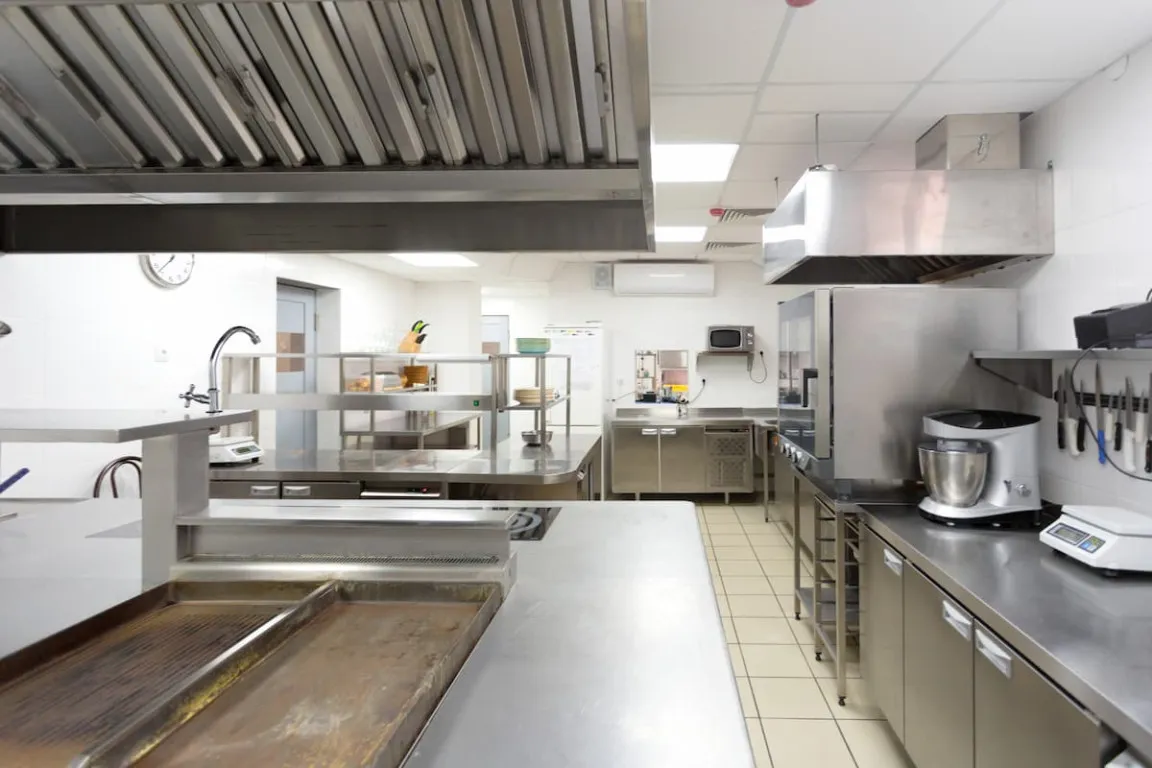
Building a restaurant kitchen is not just about having a neat or modern design. Behind the scenes, there are standards for dimensions and space planning that must be carefully considered from the very start of construction. If the kitchen is too small or does not meet standards, cooking operations may not run optimally and could even hinder productivity.
Therefore, understanding restaurant kitchen size standards during the construction phase is a crucial step that should not be overlooked, especially for those of you who want to create a professional, functional kitchen built to last. Read the explanation about restaurant kitchen standards below.
Restaurant Kitchen Standard Sizes
Building a successful food business is not just about the taste of the food, it is also about how the behind-the-scenes operations run. The kitchen is the heart of every restaurant. If this “heart” is not designed with the right dimensions and standards, the entire service workflow will be disrupted.
Professional restaurant kitchens are typically divided into several work zones so that activities can run smoothly without overlapping. Additionally, each division can focus more on its respective tasks.
Generally, the following are the zones in a restaurant kitchen where sizes need to be considered:
- Storage zone: This area houses the refrigerator, freezer, and shelves or storage bins for ingredients. The size of this space can be adjusted to accommodate the restaurant’s capacity and storage needs.
- Preparation zone: This area is used for cutting, washing, and preparing ingredients. The standard size ranges from 1.05 to 2.10 square meters per workstation.
- Cooking zone: This area should be as comfortable as possible since it serves as the core activity, namely cooking. It houses stoves, pans, ovens, and various other cooking tools that need to be arranged as efficiently as possible. The space should be approximately 1.05–2.10 square meters to facilitate cleaning.
- Cleaning zone: This zone includes the dishwashing area and drying area. You can allocate about 1.05 square meters for this zone.
- Plating zone: This area is used for plating food before it is served to customers. Ideally, this space should be spacious enough to make the plating process more efficient.
Read also: What Is Commercial Building? Definition, Functions, & Types
Example of a Restaurant Kitchen Standards Layout
It is not just the aesthetics of the dining area that are important to consider, the functionality of the kitchen also requires attention. A well-designed kitchen is a key factor in business success. Why is that? Without careful planning, the kitchen will become a cramped, hot, and chaotic space.
A design that adheres to professional standards ensures your staff can work smoothly. This efficiency directly impacts serving speed. Additionally, a well-planned layout minimizes physical fatigue among staff since they don’t have to make unnecessary movements or take extra steps.
Some popular kitchen layouts frequently considered by food business owners are as follows:
- Single-wall: This layout is suitable for restaurants with relatively small kitchens, with a minimum width of 70 cm.
- Corridor: The distance between the two walls must be at least 100 cm. This layout is practical for small teams.
- L-shaped: This layout can accommodate two main work zones, making it more flexible.
- U-shaped: If you are considering a restaurant kitchen with fairly high activity levels and a lot of equipment, this layout is worth trying.
- Island: This layout is typically used for kitchens with several separate zones where chefs require greater mobility.
Read also: 10 Minimalist Kitchen Design Inspirations for Modern Houses
Tips for a Safe Restaurant Kitchen Layout
Did you know that kitchen layout is not just about aesthetics but also about safety? Proper layout is crucial for preventing cross-contamination. To keep your kitchen hygienic, there are two key factors to consider: clear division of work zones and practical workflow. Here are some tips:
1. Separate the Raw Food Zone and the Cooked Food Zone
Problems often arise when raw food accidentally comes into contact with cooked food. To prevent this, you need to physically separate the work areas:
- Raw Food Zone: This is where you prepare meat, chicken, or fish. It is highly recommended that you use equipment such as knives and cutting boards with specific color codes to prevent mix-ups. Ensure this area is located far away from where cooked food is served.
- Cooked Food Zone: This is the “final stop” before dishes reach the customer. The sterility of this area is non-negotiable; ensure no utensils used for raw ingredients end up here.
2. Implementing a One-Way Workflow
An efficient kitchen ideally has a one-way workflow. Imagine a straight line: ingredients enter through the receiving door, go into the pantry, are prepared in the prep area, cooked, and then served, without any processes crossing paths or going back and forth.
- Avoid backflow: With a one-way workflow, your staff will not need to carry raw ingredients through the cooked food area. This automatically reduces the risk of germs “stopping by” your dishes.
- Work faster: Besides being safer, this system makes your team’s workflow much smoother and faster.
3. Standard Procedures for Managing Raw Ingredients
Keeping the kitchen clean is not just about layout. You also need to pay attention to how food ingredients are handled from the moment they arrive. This is crucial for preventing bacterial growth. Here are some tips for managing raw ingredients:
Set Storage Temperatures Correctly
Bacteria are highly sensitive to temperature. If you store ingredients incorrectly, bacteria can multiply exponentially in a short time.
- Refrigerator and freezer: Ensure your refrigerator is always set to below 4°C and your freezer to below -18°C. One more tip: don’t pack items too tightly so cold air can circulate freely.
- The raw-bottom principle: Always place raw meat or fish on the bottom shelf. The goal is simple but vital, which is to prevent liquid from the raw ingredients from dripping and contaminating other foods below.
Disciplined Labeling and Stock Rotation
All the ingredients you store, especially those that have been opened from their packaging, must have a clear "identity."
- Attach labels: Don't forget to write down when the ingredients were received, when the packaging was opened, and when the expiration date is.
- FIFO Method (First In, First Out): Always use the ingredients that were received first. With this rotation system, you can ensure the freshness of your dishes while avoiding losses from ingredients going bad.
4. Choose Food-Grade Equipment
Tables and cooking utensils that come into direct contact with food should be made from materials that are safe and easy to clean.
- Stainless steel work table: It is highly recommended to use this material because its surface is non-porous and does not absorb liquids or bacteria. Avoid using wooden tables in the main kitchen because wood has pores that are very difficult to clean completely.
- Certified cooking utensils: Make sure your pots, spatulas, and plastic containers are labeled as food-safe. Investing in quality tools is a form of care for your customers' health.
Read also: 10 Minimalist Kitchen Designs: Modern Interior Solutions!
The Importance of Choosing Building Materials for Restaurant Kitchens
Building a restaurant kitchen that meets standards involves more than just the layout and stainless steel equipment. The main foundation that is often overlooked lies in the selection of building materials, especially for walls and floors.
A restaurant kitchen is an area with high humidity, daily exposure to steam, and a high risk of water spills. If you choose the wrong building materials at the construction stage, the risk of structural damage, such as leaky walls, mold growth, and easily detached tiles (popping), will threaten your business.
Read also: Here Are 7 Open Kitchen Design Inspirations for Your House
Sturdy and Hygienic Kitchen Solutions with Semen Merah Putih Watershield
To address these challenges, using Semen Merah Putih Watershield is a smart choice for those of you who are building or renovating a restaurant kitchen.
The Water Repellent technology in Semen Merah Putih Watershield provides Triple Protection for the building, guarding against seepage from three sources (outside, inside, and from the ground), making the building strong, more durable, and low-maintenance.
With Semen Merah Putih Watershield, construction results are smoother and less prone to cracking, with wide coverage, as well as protection from water seepage, humidity, and corrosion.
Contact us now to get more information about Semen Merah Putih products and find the best construction solutions for your project!
Read also: 8 Concrete Kitchen Countertops Designs for a Neater Look