
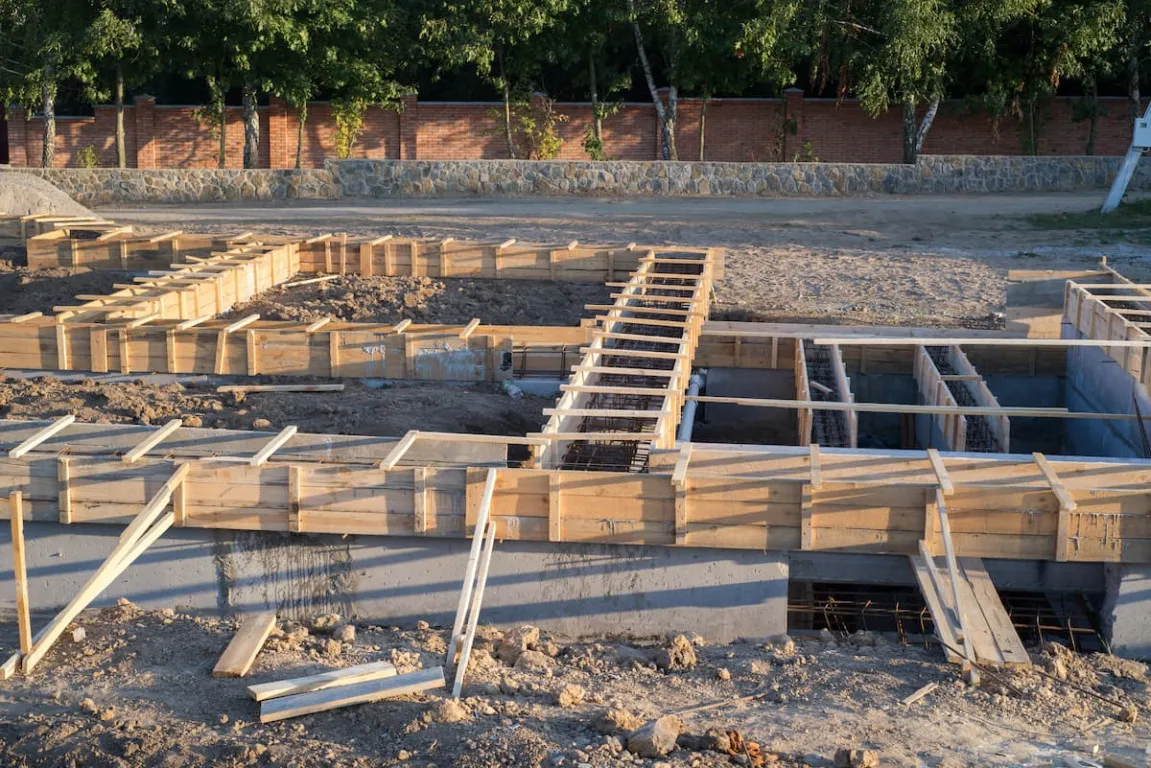
The foundation is the most basic part of a home construction, used to bear the building's load. The strength and durability of a house are significantly influenced by the type of foundation used, as selecting the wrong foundation can lead to problems such as soil subsidence, wall cracks, and structural damage.
Therefore, let's first get to know the types of home foundations so you can choose the one that best suits the soil conditions, building needs, and long-term plans for the house.
Shallow Foundation
Shallow foundations are generally used for buildings with light to medium loads and for relatively stable soil conditions. Here are the types of shallow foundations you need to know before building a house:
1. Pad Foundation (Foot Plate)
A pad or foot plate foundation is a type of foundation in the form of a reinforced concrete slab placed directly under the building's column. Its main function is to distribute the column's load over a wider area of soil so that the pressure on the soil is more evenly spread.
Pad foundations are often used for one- to two-story houses because they can provide good structural stability. Additionally, a pad foundation allows for a neater structural plan since it is directly connected to the concrete column.
2. Mat Home Foundation
Mat foundation is a foundation that resembles a weave, with the arrangement of its concrete reinforcement intersecting and spreading throughout the building area. The main function of this foundation is to distribute the building's load widely to the ground, so that the pressure is not concentrated in one spot.
Mat foundation design is usually applied to soil with low bearing capacity, even when the building load is relatively light. With a more even load distribution, this type of foundation can reduce the risk of uneven soil movement.
3. Path/Lane Foundation (Strip Foundation)
A strip or path foundation is a type of foundation that runs along the building's walls. The load from the walls is transferred directly to the ground beneath, making it suitable for houses with brick wall-dominated structures.
This type of house foundation is quite efficient for homes with a simple design because it does not require a large amount of material, the construction process is relatively quick, and it still provides structural stability to the building in the long term.
Read also: Choosing the Right Foundation for a Two-Story House
4. Raft Home Foundations
A raft foundation is a large concrete slab that covers almost the entire building area. The building's load will be evenly distributed across the entire underlying soil surface. This type of foundation is often used on soil with low bearing capacity, but the building requires good stability. Designing a house foundation like this can reduce the risk of uneven soil settlement.
5. Strauss Pile Home Foundations
Strauss piles are often considered a combination of shallow and deep foundations. The construction process involves manual drilling to a certain depth, followed by reinforcement with rebar and concrete.
This type of foundation is widely used in areas with limited access to heavy equipment. Its advantage lies in the flexibility of depth and its relatively lower cost compared to conventional deep foundations.
6. Concrete Slab Foundation (Raft Foundation)
A concrete slab foundation, or raft foundation, uses a single thick concrete slab as the base of a building. The entire load of the building is transferred through this slab to the ground beneath it. This type of foundation is widely used on soft soil or soil with a high settlement potential.
With an integrated slab system, the building's pressure can be distributed more evenly across the entire ground area. Additionally, this foundation can help minimize the risk of structural cracks caused by differential settlement between building parts.
Read also: Concrete Slab Waterproofing: Definition, Types, and Benefits
7. Staddle Stone Foundation
Staddle stone foundations are traditional foundations usually used in wooden houses or light buildings. They are shaped like stone or concrete blocks placed at certain points to support the pillars.
The main function of this foundation is to protect the wooden structure from ground moisture. To this day, staddle stone foundations are still used in traditional houses and buildings with traditional architectural concepts. This foundation is quite easy to install and can help maintain airflow under the building.
8. Well Foundation
Well foundations are made by digging soil in a cylindrical or square shape to a certain depth, then filled with reinforced concrete. This type of foundation is suitable for buildings with moderate loads on relatively hard soil at lower depths. Well foundations can provide better support than ordinary shallow foundations, even without the need for heavy equipment during construction.
Deep Foundation
Deep foundations are used when the hard soil layer is deep or when the building has a heavy load. Here are the types of deep foundations you need to know:
1. Bored Pile Foundation
Bored pile foundations are constructed by drilling into the soil with specialized equipment until a predetermined depth is reached. After that, the borehole is filled with reinforcement and concrete. This method makes foundation work easier in narrow areas and densely populated environments, thanks to its minimal vibration.
Bored piles are often used in multi-story buildings or structures that require stronger foundations. Additionally, this foundation is also applied to buildings in urban areas with limited space.
2. Pier Foundation
Piers are foundations consisting of short columns that support the main structure of a building. This type of foundation transfers the building's load to deeper soil layers. Piers are often used in buildings that require a certain elevation from the ground surface, such as houses in flood-prone areas.
Additionally, pier foundations help reduce the risk of damage from water accumulation or surface ground movement, as the building structure does not come into direct contact with the base soil.
3. Pile Foundation
Pile foundations use long poles driven into the ground until they reach a hard soil layer. These poles can be made of concrete, steel, or wood, depending on the needs and environmental conditions.
Pile foundations are widely used in multi-story buildings and areas with soft soil. Their ability to transfer loads to deeper soil layers makes this type of foundation very suitable for structures that require high load-bearing capacity.
Choosing the right foundation for a house provides a strong base for the building, but a house's durability is not solely determined by the foundation type. The quality of the building materials used also plays an important role in maintaining the structural strength in the long term.
For that reason, you need to use Semen Merah Putih Watershield, specifically designed to make buildings more durable and sturdy. With water-repellent technology, this cement provides double protection against water seepage from the outside, inside, and the ground (capillary water), as well as moisture.
Such protection makes building structures more resistant to extreme weather and the risk of water damage. By choosing Semen Merah Putih Watershield, you can not only build a strong foundation but also provide comprehensive protection for long-term comfort and durability of your home.
Contact us now for more information and guidance on your material needs for building your dream home!
Read also: Types of Building Foundations for Sturdy High-Rise Structures