
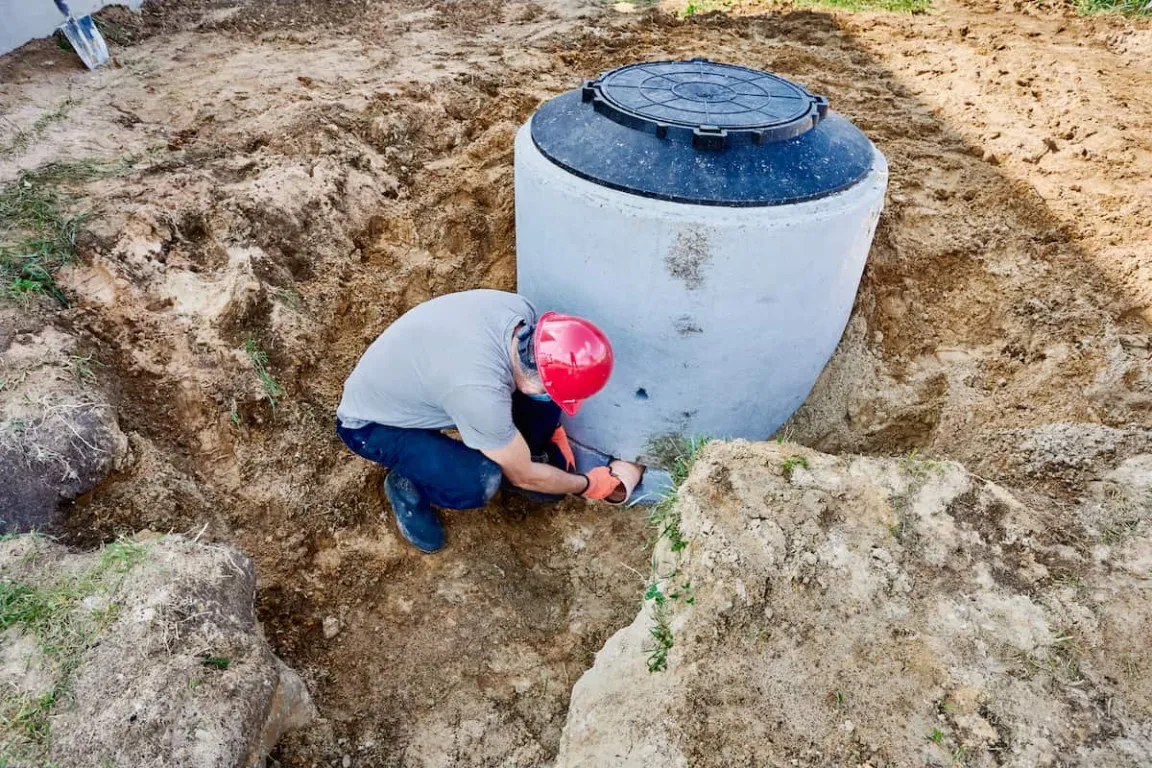
A septic tank is part of a house's sanitation system, which collects and treats household wastewater. Therefore, it is important to ensure septic tanks are properly sized so wastewater treatment is optimal and does not pollute the environment.
So, if you want to build a septic tank, what is the ideal and safe size for a house? Read the full explanation below to determine the septic tank size that best suits your household needs.
What Is a Septic Tank?
A septic tank is a container designed to collect and treat household wastewater, mainly from toilets, before directing it to an absorption system. To prevent environmental and groundwater contamination, septic tanks must be watertight and properly maintained.
Inside the tank, solid waste settles and decomposes biologically, while liquid waste is discharged.
Indonesians generally use two types of septic tanks: reinforced concrete and fiberglass.
Reinforced concrete septic tanks are strong and durable, while fiberglass tanks are lighter and therefore easier to install than concrete or reinforced concrete septic tanks.
Ideal Septic Tank Size and Depth Standards According to SNI
According to National Standard of Indonesia (SNI) 2398:2017, a septic tank size must be based on the number of people living in the house and the type of wastewater treatment system used. For rectangular tanks, the length-to-width ratio should range between 2:1 and 3:1, with a minimum length of 1.5 meters, a width of 0.75 meters, and a height of 1.5 meters.
Meanwhile, the ideal depth of a septic tank ranges from 1.5 to 1.8 meters to support wastewater treatment and facilitate maintenance. Before building a septic tank, understand that the tank’s capacity depends not only on the building’s dimensions but also on how many people use it.
Also, carefully consider septic tank placement to ensure the wastewater treatment system works properly and doesn't pollute the environment. Here are some other factors to consider:
1. Septic Tank Size Appropriate for the Household Members
The septic tank’s capacity must match the number of residents in a building. A tank that is too small risks filling up quickly. Therefore, an appropriately sized septic tank is needed to support optimal wastewater decomposition.
Here are the dimensions of rectangular septic tanks based on the number of residents for a combined system:
|
Number of Occupants |
Lenght |
Width |
Height |
|
5 people |
1.6 m |
0.8 m |
1.6 m |
|
10 people |
2.1 m |
1.0 m |
1.8 m |
|
15 people |
2.5 m |
1.3 m |
1.8 m |
|
20 people |
2.8 m |
1.4 m |
2.0 m |
|
25 people |
3.2 m |
1.5 m |
2.0 m |
|
50 people |
4.4 m |
2.2 m |
2.0 m |
For separate systems designed specifically to treat fecal matter and urine, tank sizes may vary. The septic tank sizes for separate systems based on the number of residents are shown in the following table:
|
Numbers of Residents |
Lenght |
Width |
Height |
|
10 people |
1.6 m |
0.8 m |
1.3 m |
|
15 people |
1.8 m |
1.0 m |
1.4 m |
|
20 people |
2.1 m |
1.0 m |
1.4 m |
|
25 people |
2.4 m |
1.2 m |
1.6 m |
|
50 people |
3.2 m |
1.6 m |
1.7 m |
Read also: How to Build Septic System Properly and Based on Standard
2. Septic Tank Distances to Consider
Besides dimensions, you must also consider tank placement to prevent environmental pollution. Ideally, the septic tank should be at least 10 meters from a clean water well, and at least 5 meters from a rainwater infiltration well. Meanwhile, keep wastewater infiltration wells, upflow filters, and sanitation gardens at least 1.5 meters away.
How to Calculate Septic Tank Size Requirements
To determine the capacity of a septic tank, consider several factors, from the number of residents in the house to daily water usage. Here are the details:
- Number of household residents: A bioseptic tank with a capacity of 1,000–1,500 liters suits a household of 5–10 people.
- House area: For houses with a maximum area of 1,500 square feet, the EBT-100 tank (1,000 liters) can be used. For houses with an area of approximately 2,500 square feet, consider the EBT-150 tank with a capacity of 1,500 liters.
- Clean water usage: On average, each person uses 200 liters of clean water per day. Use this figure when determining tank capacity based on the number of residents.
In addition to capacity, the bioseptic tank's physical dimensions must also be considered. The width ranges from 1.16 to 1.2 meters, the height is approximately 1.3 to 1.67 meters, and the lid diameter is 0.43 meters. Within these specifications, available capacities range from 1,000 to 1,500 liters.
Read also: The Ideal Inspection Chamber Size and Tips for Choosing It
Requirements When Constructing a Septic Tank
In addition to determining the appropriate size, several requirements must be considered when constructing a septic tank, namely:
- Tank material: You can use concrete, reinforced concrete, fiberglass, or plastic.
- Tank shape: It can be rectangular, square, or round.
- Watertight: The tank must be watertight to prevent leaks that could contaminate groundwater.
- Manhole: This is necessary to facilitate inspection and cleaning of the tank.
- Ventilation: This ensures proper air circulation inside the tank.
- Inlet and outlet pipes: These channel wastewater into the tank and transfer the treated effluent to the next stage.
By meeting these requirements and following applicable size standards, a septic tank can function properly and help prevent groundwater contamination.
Beyond ideal size, materials and construction quality are also crucial to minimize leak risk. To ensure your wastewater treatment system resists water and moisture, use building materials that provide extra protection from the start of construction.
For the best solution, rely on Semen Merah Putih Watershield. This super-premium multipurpose cement features water-repellent technology that provides triple protection, shielding structures from water seepage from the outside, inside, or underground.
Compared to regular cement, this product makes structures stronger, more durable, and low-maintenance, making it suitable for a wide range of applications, from foundations, concrete slabs, cast-in-place concrete, and masonry to plastering and rendering.
Looking for the best material solutions for your residential project? Contact us today for a consultation and more information! Our team is ready to support the successful construction of your house with our top-quality products and services
Read also: Concrete Groundwater Tanks: A Clean Water Supply Solution