
Sand is one of the most essential materials in building construction projects, whether for foundation structures, bricklaying, wall plastering, or installing ceramic tiles and granite.
However, that doesn't mean any type of sand can be used in building construction projects. The type and characteristics of sand must match its intended use to ensure the building is as sturdy as possible.
This article will discuss the characteristics of sand suitable for building projects, the different types of sand, and their respective functions. Read on to the end!
Characteristics of Sand for Building Projects
The type of sand must be tailored to the needs of building construction. Therefore, consider some general characteristics and traits to ensure the sand is suitable for use in a construction project.
Here are some characteristics of high-quality sand suitable for use as a construction material:
1. Low Silt Content
If the sand has a high silt content, this means it is contaminated with clay particles and is unsuitable for construction. This clay contamination reduces the cement’s bonding strength and makes the structure brittle.
2. Free of Salt and Natural Particles
Salt is commonly found in sand sourced from coastal areas. This type of sand is also unsuitable because it accelerates rebar corrosion and reduces the structure's long-term durability.
Also avoid sand contaminated with natural particles such as plant roots and leaves. If used without cleaning, these particles can interfere with the concrete’s setting and hardening and affect its strength and durability.
3. Coarse Grain Texture
Sand with the appropriate gradation can help produce concrete or mortar mixes with good workability and density. Therefore, it is recommended to select sand based on its grain coarseness, gradation test results, and applicable material requirements
Good Types of Sand for Construction
Many types of sand are commonly used in building construction projects. Each type of sand has different characteristics and functions, depending on the specific needs.
Distinguishing and selecting the right type of sand is a crucial foundational step. Using the wrong type of sand can result in suboptimal cement and concrete mixtures, reducing the building's structural strength.
Here are some types of sand commonly used in construction projects:
1. Fill Sand
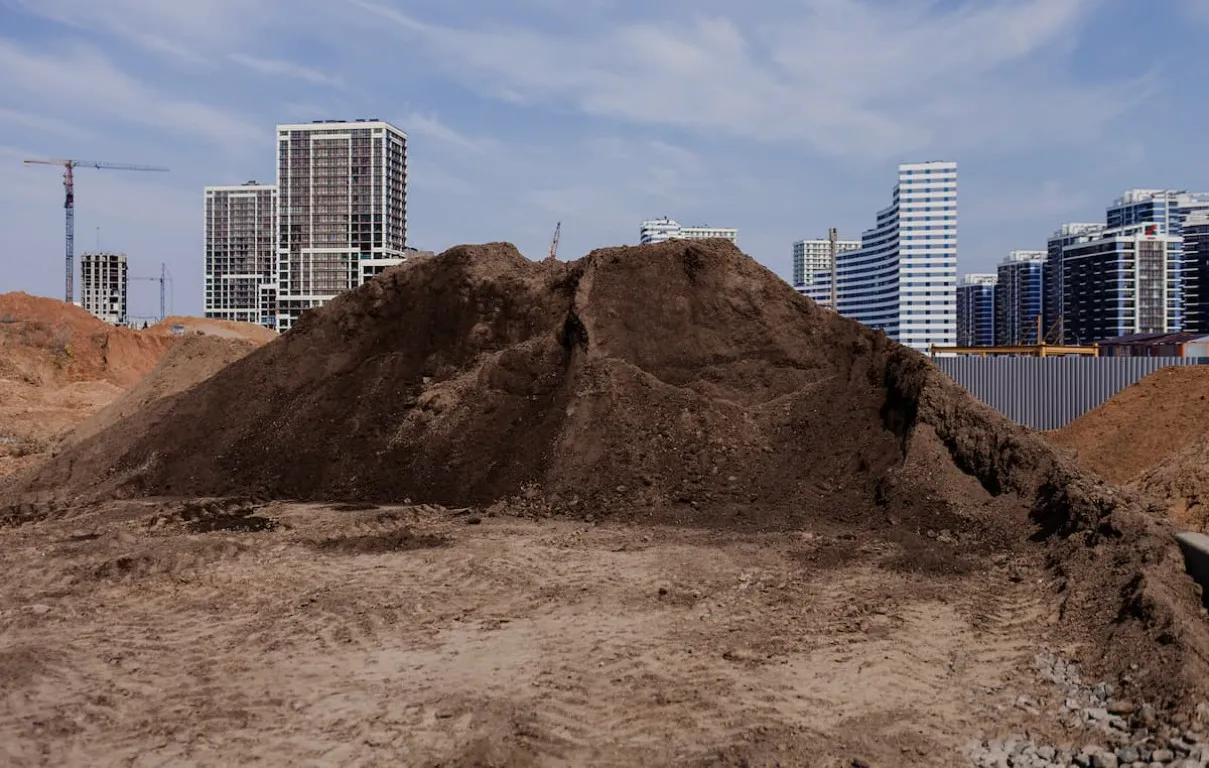
Fill sand is typically obtained from the residue of excavated sand screening or sieving, so its grain size is not uniform and it still contains a small amount of soil. It is typically dark in color, ranging from brown to blackish-gray.
This type of sand is indeed of standard quality because it is used only for backfilling. Fill sand is usually purchased in large quantities to level and stabilize the ground surface beneath building foundations or paving blocks.
2. Mundu Sand
This type of sand is characterized by its brownish color and comes in two textures: fine-sieve and coarse-sieve. Mundu sand is widely available at hardware stores and is used in construction projects.
Mundu sand is well-suited for construction, particularly as a component in plaster mixes (fine-sieve) and concrete mixes (coarse-sieve).
3. Concrete Sand
As the name suggests, this type of sand is used as a component in concrete mixes. It has a coarse, angular texture, giving it high bonding strength and compressive strength to support heavy loads. Concrete sand is commonly used in large-scale projects such as buildings and highways.
4. Masonry Sand
Masonry sand has fine particles and is generally light brown or light gray. It is dense and clumps easily, making it suitable for use in wall plaster and as a brick adhesive.
This type of sand is ideal for plastering because it clumps easily, creating a mixture that is pliable, flexible, workable, and easy to apply.
Read also: Minimalist House Renovation Tips
5. Rangkas White Sand (Finishing Sand)
Rangkas white sand is easy to identify by its pure white color, or white with a hint of light gray. Its grains are fairly large, with a very fine, soft texture similar to flour.
This type of sand is ideal for making plaster and installing ceramic tiles. Interestingly, Rangkas sand comes from a specific region: Rangkasbitung in Banten Province.
6. River Sand
If you need high-quality sand for construction, especially for foundations, river sand is the ideal choice. Sourced from hard riverbed bedrock, this sand has medium-sized grains and a smooth, clean texture.
River sand has high cohesion and is versatile, making it suitable for concrete mixes, plastering, and bricklaying.
7. Red Sand (Jebrod Sand)
Red sand has coarse, sharp particles, so it is often used for building foundations and structures that require high load-bearing capacity.
As the name suggests, this sand has a distinctive red color, ranging from brick red to reddish orange and reddish brown.
8. Black Sand
Black sand is often used in large-scale projects, such as pool construction, high-rise building construction, and infrastructure projects like highways and bridges. Its dense texture makes it ideal for concrete mixes.
9. Bangka Sand
Like Rangkas sand, which is sourced from Rangkasbitung, “Bangka sand” also comes from its region of origin, Bangka Belitung. This type of sand comes in off-white, white, and light brown hues and is commonly used as an aggregate in concrete, plaster, and castings.
10. Tayan Sand
Tayan sand has a very fine texture and low silt content, so it does not need to be re-sieved before use. This type of sand is often used as the main ingredient in plaster and skim coat for finishing, ensuring that wall surfaces are smooth, even, and ready for painting.
That concludes the information on some recommended types of sand for construction you can consider. Matching the type of sand to its function is a crucial foundational step.
Why is this so? Because choosing the wrong type of sand can negatively affect the final result, from a fragile structure and plaster that cracks easily to walls that erode easily in the weather.
To ensure your building stands strong and lasts a long time, use the right type of sand and combine it with high-quality cement like Semen Merah Putih Watershield.
Semen Merah Putih Watershield features water-repellent technology that protects buildings from three sources of seepage at once: outside, inside, and from the ground. This triple protection helps strengthen buildings and reduces future maintenance needs.
Semen Merah Putih Watershield can be used for a wide range of applications, from foundations, concrete slabs, cast-in-place concrete, bricklaying, and plastering to finishing. Contact us for a consultation on your construction project needs!
Read also: How to Fix Hairline Wall Cracks Using Cement Mixture