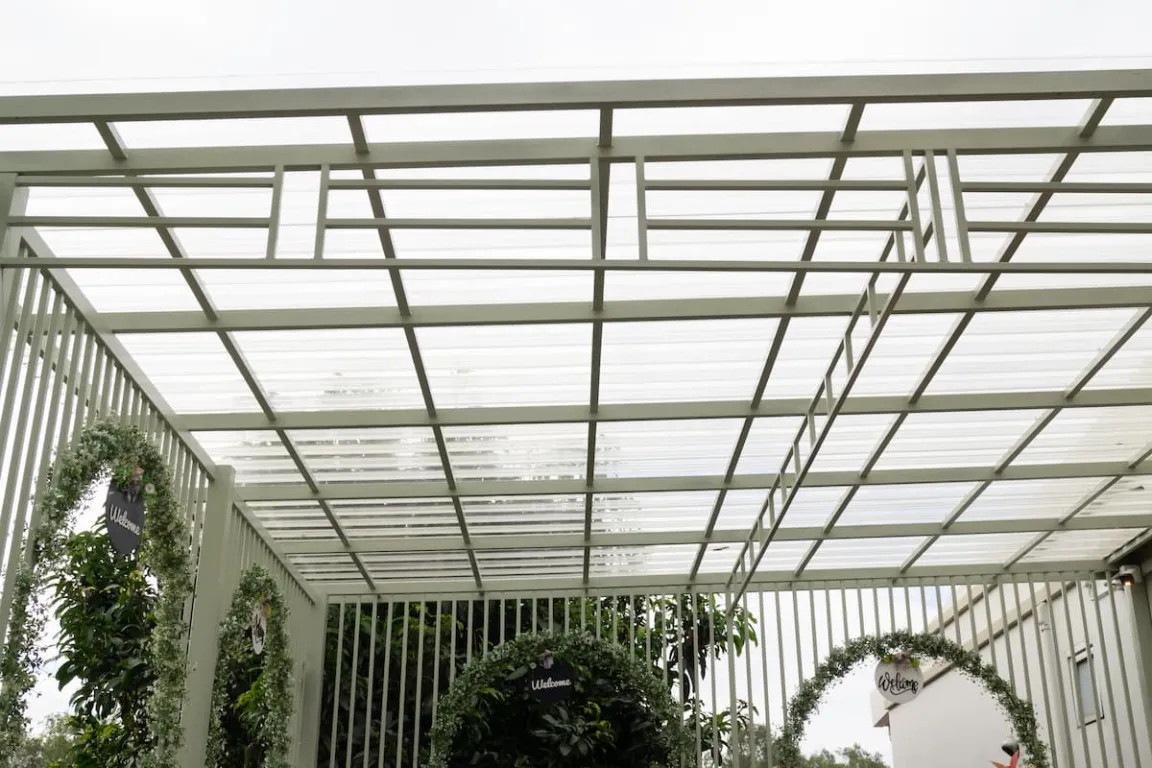
Polycarbonate is becoming increasingly popular as an alternative to glass in various building projects, such as open kitchen roofs, canopies, skylights, and greenhouses. In Indonesia, it is most commonly used for open-air roofs and house canopies.
Polycarbonate is widely chosen because it looks transparent and lets sunlight into a room, like glass. To learn more about its advantages, types, and uses, read the following explanation.
What Is Polycarbonate?
Polycarbonate is a thermoplastic polymer known for its strength, transparency, and resistance to temperature changes. Unlike most plastics, which become brittle when exposed to heat, polycarbonate retains its strength even when used over long periods in fluctuating temperatures.
Polycarbonate is often considered a safer alternative to glass because it is lighter and offers significantly better impact resistance. Additionally, this material typically comes with a built-in ultraviolet (UV) protective coating, preventing it from yellowing or becoming fragile even with frequent exposure to sunlight and rain.
Polycarbonate sheets used for roofs and canopies are generally available in a variety of sizes. Compared to glass, polycarbonate sheets are also relatively more affordable.
This material is also considered more environmentally friendly because its production process requires less energy than glass manufacturing, resulting in lower emissions.
Polycarbonate sheets are available in several textures, namely flat, corrugated, and hollow, as explained below.
- Flat Polycarbonate. These polycarbonate sheets are flat, solid, and without cavities, making them very clear and similar to glass. Due to their elegant appearance, this type is often used as a skylight material.
- Corrugated Polycarbonate. It has a corrugated shape, similar to corrugated metal, and is typically thinner. This type is also one of the most economical options, making it suitable for warehouse roofs.
- Hollow Polycarbonate. This type is the most popular and is often used for house canopies. Its ridged structure helps insulate against the sun’s heat while reducing rain noise.
Read also: 4 House Balcony Renovation Tips
Advantages and Disadvantages of Polycarbonate Roofing
As explained above, polycarbonate roofing offers heat and impact resistance. However, it also offers other benefits worth considering, along with a few disadvantages.
1. Lightweight and Easy to Install
Generally, polycarbonate is lightweight, whether it is corrugated, rigid, or flat.
This makes the delivery and installation process easier, faster, and more efficient. Its lightweight nature also reduces the load on the building’s structure.
2. UV Protection Without Blocking Light
Polycarbonate roofing typically includes a special coating that reduces exposure to UV radiation. It also offers fairly good thermal insulation.
As a result, natural light can still enter the room without causing excessive heat, unlike with ordinary glass.
3. Long-Term Warranty
Many polycarbonate roofing manufacturers offer product warranties of up to 10–15 years. This material is also known for its excellent durability against sun exposure, weather changes, and daily wear and tear, allowing it to last a long time.
4. Cost Savings on Building Framing
Since it is lightweight, the framing structure supporting a polycarbonate roof does not need to be overly large or thick. This helps reduce the amount of framing material needed, making construction costs more efficient.
Read also: How to Maintain Concrete Floors to Keep Them Clean and Shiny
5. Prone to Scratches
Although it can withstand impacts, the polycarbonate surface is relatively prone to scratches. This means that while the material does not shatter easily upon impact, friction from rough objects can still leave marks on its surface. Therefore, avoid cleaning polycarbonate roofs with stiff-bristled brushes or cleaning tools containing sand.
6. Potential for Discoloration and Yellowing
Prolonged exposure to sunlight can cause polycarbonate to turn yellowish, especially in clear varieties that lack a high-quality UV-protective coating.
7. Potential for Mold and Dirt Inside the Cavities
If you use polycarbonate cavities, seal each end tightly with sealant to prevent rainwater and dust from entering. If water becomes trapped inside the cavity, mold can grow, reducing the roof’s clarity and aesthetic appeal.
8. Can Expand and Contract
Like other plastics, polycarbonate expands when exposed to heat and contracts when temperatures drop. If you don't account for this during installation, polycarbonate sheets risk warping or even cracking.
Applications of Polycarbonate Roofing
Polycarbonate is a versatile material suitable for various building components. Both corrugated and hollow polycarbonate roofing sheets are popular for laundry areas or patios because they let in natural light, keeping the space bright while preventing damp conditions.
For indoor applications, such as skylights, flat polycarbonate is recommended because of its clear, glass-like appearance. For house canopies, choose polycarbonate with an appropriate thickness, an anti-UV coating, and moderate transparency to block the sun’s heat effectively.
Beyond roofs and canopies, polycarbonate is also widely used for room partitions, fence cladding, and even greenhouse materials because it evenly diffuses sunlight, supporting plant growth.
That concludes our overview of polycarbonate roofing. Building an aesthetically pleasing, functional house goes beyond choosing the right roofing or canopy material. To ensure all elements of the building are sturdy inside and out, rely on Semen Merah Putih Watershield for your high-quality cement needs.
Semen Merah Putih Watershield is a super-premium, multipurpose cement that offers various advantages over ordinary cement, making it suitable for a wide range of construction applications, including foundations, concrete slabs, casting, bricklaying, plastering, and skim coating.
Semen Merah Putih Watershield features water-repellent technology that protects buildings from the outside, the inside, and the ground, ensuring a sturdy, durable, low-maintenance structure.
If you are planning a construction project but are still unsure about your material choices, contact us now for a consultation. We are ready to help you bring your dream project to life with high-quality products and the best service.
Read also: House Exterior Renovation Tips, Guide, & Design Inspirations