
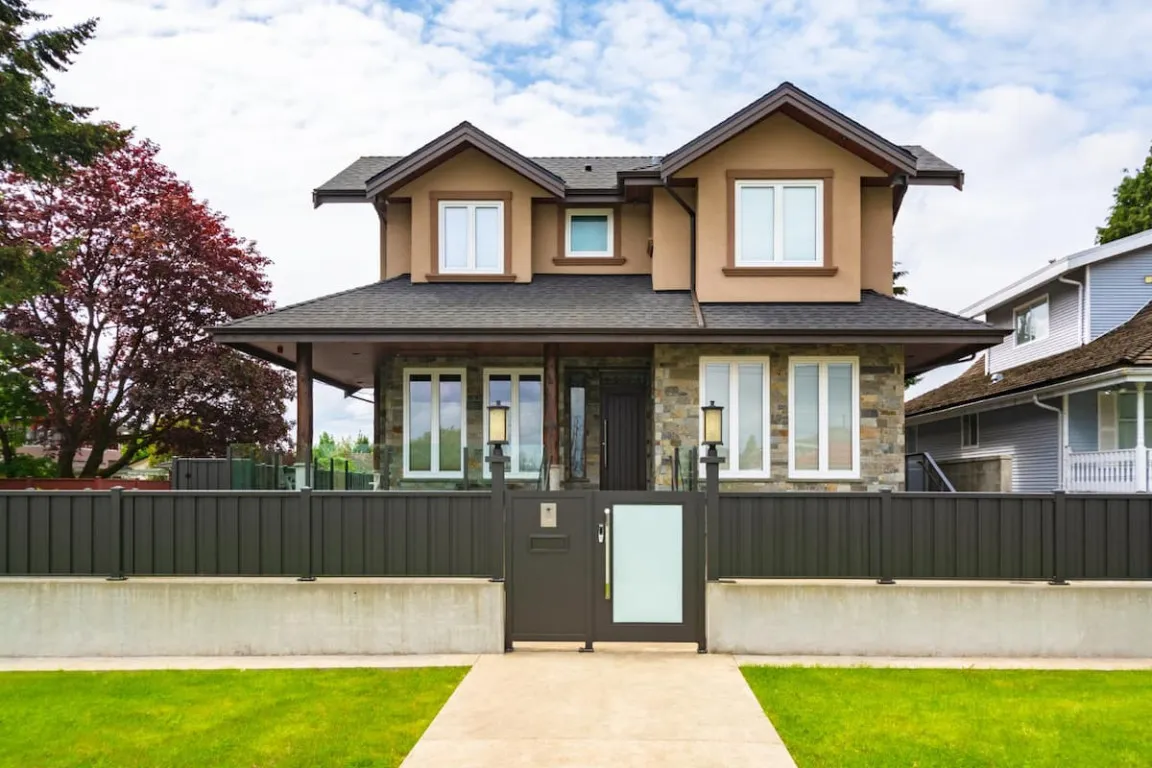
Maximizing air circulation and natural light in your house is not just about adding more vents. You also need to understand and apply the ideal house height so that your house feels more comfortable and has a maintained aesthetic.
Determining the height of a house shoul be done with careful consideration. In fact, the government has set strict rules regarding building heights in order to maintain structural safety and create environmental harmony.
To get a better understanding of the concept of ideal house height, so you can apply it correctly, check out the full explanation below.
Ideal House Height
In general, the rules for ideal house height can be categorized based on the number of floors in the house. Here are the standards for 1-story and 2-story houses that you need to know:
1. 1-Story House
Generally, the total wall height for a 1-story house is around 5–6 meters, with an interior ceiling height of around 3 meters.
For a 1-story house, especially one with a limited number of rooms, it is not recommended to use high ceilings, as this will make cleaning the ceiling more difficult. Therefore, to create a spacious feel in the room, use a ceiling height of 3 meters. This size is suitable for living rooms and bedrooms measuring 15 square meters.
2. Two-Story House
The total wall height for a two-story house is 8–9 meters, with a ceiling height of approximately 3 meters on the first floor and approximately 2.8–3 meters on the second floor.
Since a 2-story house automatically requires more vertical space, you must pay more attention to safety, security, and comfort factors. In addition, do not forget to consider energy efficiency as well.
Read also: Minimalist 2-Story Houses: 10 Trendy Design & Aesthetic Ideas
Ideal Height Guidelines for Various Parts of the House
In addition to understanding the ideal total height of a house, let's also understand the ideal heights for various parts of the house. Below are guidelines for the ideal heights for fences, ceilings, and roofs:
1. Ideal Height for House Fence
In fact, there are several guidelines for determining the height of a house fence, based on the size of the front of the house, the surrounding environment, the need to show certain parts of the house, or other factors. Here is the complete guide:
- Height of a type 36 house fence or the one that wants to show off the facade: 0.9–1.2 meters.
- Height of a house fence on the side of a busy road: 1.8–2 meters.
- Height of a house fence to increase security: 1.7–2.5 meters.
- Height of a house fence with a fairly spacious front: more than 1.5 meters.
- Height of a fence separating house plots: 1–1.2 meters.
- Height of a fence to maintain privacy: 1.5–2 meters.
2. Ideal Height for Ceiling
In fact, architectural experts have established standard guidelines regarding the ideal ceiling height for a house, taking into account the local climate.
They opined that houses located in tropical regions require ceilings with a height of 2.8–4 meters. This is due to the hot temperatures in these areas. When the temperature rises, the difference between the floor and ceiling temperatures can reach 4 ℃.
Meanwhile, houses in colder regions should ideally have ceilings with a height of around 2.4–2.5 meters. This allows the ceiling to capture heat more effectively, thereby supporting the maintenance of a stable temperature.
In addition to climate considerations, the ideal ceiling height for a house can also be adjusted to the needs of the room. The following is a guide to ceiling heights for each room in the house:
- Living room or family room: 3 meters.
- Bathroom: 2.4 meters.
- Bedroom: 2.1–2.4 meters.
- Kitchen: 2.5–3 meters.
3. Ideal Height for Roof
As with determining ceiling height, determining the height of the roof must also take climate into consideration. For houses in tropical areas, the ideal roof height ranges from 3 to 4 meters. Conversely, for houses in cold climates, you can use a lower roof.
In addition to climate considerations, you also need to consider the function of the room. If a room will be used as a gathering area, it is best to design the roof with a minimum height of 3 meters to maximize air supply. As for rooms that will be used as private areas, you can use a lower roof, which is around 2.5 meters.
Another important consideration is the structure of the building. The height of the roof of a two-story house is certainly different from that of a one-story house. This is because the higher the roof, the more stairs that need to be built, so the strength of the building structure must be increased.
In general, for multi-story houses, you can design a roof with a maximum height of 3 meters.
Read also: 4 House Roof Renovation Tips
The Importance of Determining the Ideal House Height
It is important to understand that the height of a house will affect many things, both in terms of comfort, functionality, and beauty. Here is the explanation:
1. Enhancing Air Circulation
The most important thing that underlies the importance of determining the right house height is the need for fresh and healthy air.
With the right height, air circulation will run smoothly so that the house will not be stuffy and damp. This certainly supports the health of the residents. In addition, if you can easily reach the upper area, you will not have difficulty installing additional ventilation or windows.
2. Reducing External Disturbances
Applying the ideal house height will greatly help you reduce external disturbances, such as noise from vehicles or people passing by your house. This way, the atmosphere inside the house can stay calm and comfortable.
3. Creating a Sense of Spaciousness
Even in a limited space, some people may want to create a sense of spaciousness in their house. This is because it makes the residents feel more comfortable when they are inside.
If creating a sense of spaciousness is the goal, then you should avoid building walls that are too high or too low, as this will create an unbalanced, unaesthetic, and disharmonious impression. Walls of the appropriate height will help you display decorations or highlight certain interior designs.
How to Calculate the Height of House Walls
In practice, there is a formula to help you calculate the height of house walls accurately so that the results are more proportional. Here is the formula you can use:
House wall height = (House length + House width) : 2
For example, in a room measuring 5 x 7 meters, the ideal wall height can be determined by the following calculation:
Height of house wall = (House length + House width) : 2
= (5 + 7): 2
= 6 meters
That concludes the explanation about the ideal house height that you can use as a guide when designing your future home structure. In reality, determining the house height is not a complicated matter. But, if it's ignored, it can have a significant impact on user comfort and even endanger the safety of the house in the long term.
In addition to determining the right size, make sure your construction project always uses high-quality materials, especially when choosing cement. For your cement needs, always trust the superior products from Semen Merah Putih, namely Semen Merah Putih Watershield.
Semen Merah Putih Watershield is a super-premium multi-purpose cement completed with water-repellent technology. This technology enables Semen Merah Putih Watershield to provide triple protection, namely protection against water seepage from outside, inside, and soil or capillary water.
This product is ideal for all structural and non-structural applications, from plastering, rendering, bricklaying, slab casting, to column casting, and offers various advantages over ordinary cement.
To support the strength of building structures, always rely on Semen Merah Putih Watershield as the solution. If you need complete information about our products or want to consult to find the right product, do not hesitate to contact us!
Read also: Examples of a House Building Budget Plan (RAB) and Steps to Create It