
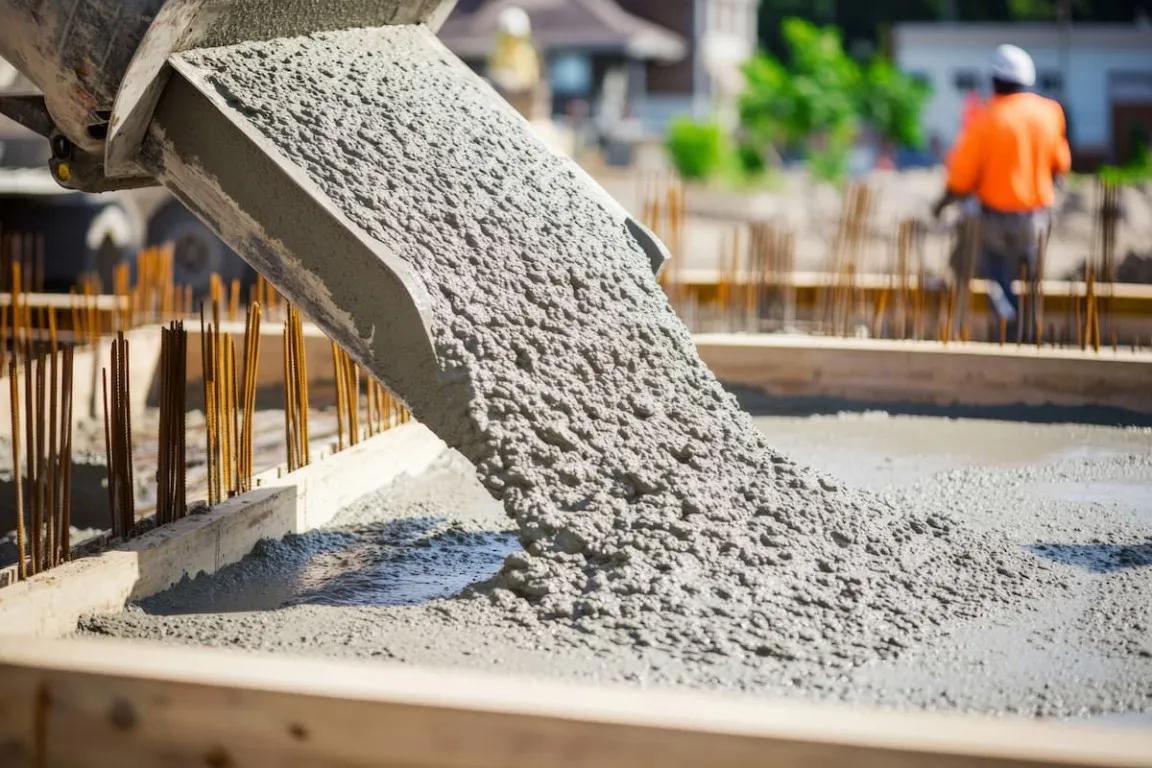
In construction, concrete density determines a building's safety and strength. Misunderstanding the concrete specific gravity can lead to errors in structural calculations. Therefore, you need to understand the concept of concrete specific gravity before choosing concrete for construction needs.
Many projects run into trouble because they overlook the calculation of concrete specific gravity. In fact, concrete’s specific gravity greatly affects the strength of a building's structure and the efficiency of materials. Read the following explanation to ensure you make the right important decisions.
What Is the Concrete Specific Gravity?
The concrete specific gravity is the ratio of the concrete's weight to its volume. The commonly used unit is kilograms per cubic meter (kg/m³). The specific gravity of concrete, or concrete density, describes how dense the concrete is.
Concrete specific gravity serves as a main reference in calculating structural loads, determining the dimensions of building elements, and selecting the appropriate type of concrete. Accurate calculations help minimize the risk of design errors that can compromise building safety.
The Importance of Knowing the Concrete Specific Gravity for Construction
Knowing the concrete specific gravity is very important because this value serves as the basis for calculating the load on building structures. Incorrect concrete specific gravity calculations can result in structural dimensions that are insufficiently strong, posing risks to the building's safety and durability.
Additionally, the concrete's specific gravity helps determine the most suitable type of concrete for the construction's function, whether for foundations, beams, columns, or slabs. A proper understanding makes planning more efficient, safer, and in accordance with applicable technical standards.
Factors That Affect the Concrete Specific Gravity
The concrete specific gravity is not determined by a single factor, but is influenced by various technical aspects in its production process. The factors that affect it include:
- Concrete composition: Concrete is composed of cement, fine aggregates, coarse aggregates, and water. The proportions of the ingredients will determine the density of the resulting concrete. The denser the composition, the higher the concrete's specific gravity.
- Type of aggregate: The type of aggregate used greatly affects the concrete's density value. Natural aggregates, such as crushed stone, are generally heavier than lightweight aggregates. The choice of aggregate should be adjusted to the needs of the building structure.
- Aggregate density: Aggregates with high density will increase the overall density of concrete. Conversely, porous aggregates produce lightweight concrete. This factor directly affects the load on the building structure.
- Water content: The amount of water in a concrete mix affects its density. Excess water can create voids after the concrete dries. These voids can reduce the weight and strength of the concrete structure.
- Mixing conditions: Uneven mixing can lead to an imbalance in material distribution. This results in different concrete densities in various parts. These conditions can affect the concrete's density values.
- Casting technique: Good casting techniques help reduce air voids in the concrete. Vibrator compaction can increase concrete density. Optimal density will produce concrete that meets standards.
- Environmental conditions: Temperature and humidity in the surrounding environment affect concrete hardening. Extreme conditions can cause water to evaporate too quickly. This affects the concrete's density.
Read also: How to Build a Concrete Wall for Optimal Durability, Take Notes!
Concrete Specific Gravity Measurement Method
The concrete specific gravity needs to be measured accurately so that building structure calculations can be carried out precisely. This measurement process can be performed using several methods, depending on the type of concrete and the testing purpose. Here are various methods for measuring the specific gravity or density of concrete commonly used in construction.
1. Archimedes' Method
The Archimedes method uses the principle of buoyancy to determine the volume of concrete. This is done by immersing a concrete sample in water until its entire surface is submerged. The difference in water volume is used to calculate the concrete's density.
The Archimedes method is advantageous because of its relatively high accuracy. Generally, testing using this method is carried out on hardened concrete in the laboratory. However, the process requires precision to avoid errors in reading the volume.
2. Balloon Scale Method
This method uses a balloon and a scale to determine concrete density. The measurement process starts by weighing a balloon filled with air, then weighing the balloon again after it is filled with concrete. The difference in weight is used to calculate the concrete density.
The calculation results show the concrete's weight-to-volume ratio. Using this method, the concrete density can be determined relative to the same volume of water.
3. Ultrasonic Method
The ultrasonic method measures concrete density by sending high-frequency sound waves into the concrete, then recording the travel time and reflections with a measuring device. The wave-speed data are then used to estimate the concrete density.
This method is nondestructive, so it does not damage the concrete structure being tested, and it is widely used to assess concrete quality directly at construction sites.
4. Cone and Cylinder Method
As the name suggests, the cone and cylinder method uses special tools in the form of a cone and a cylinder to determine the density of concrete. The process is carried out by pouring concrete into the cylinder until it hardens, then placing the cone on top of the cylinder and weighing it.
To find out the concrete density value, you can calculate the difference in weight between the cone and cylinder, with only the cone as the basis for the calculation.
Read also: Get to Know Conventional Concrete, Its Advantages & Disadvantages
Concrete Specific Gravity Table
This table compares the gravity of normal concrete, specific gravity, and reinforced concrete as a reference in planning and calculating building structures.
|
Material |
Concrete Specific Gravity (kg/m³) |
|
Normal Concrete |
2200–2500 (kg/m³) |
|
Lightweight Concrete |
1600–2000 (kg/m³) |
|
Reinforced Concrete |
2400 (kg/m³) |
|
Porous Concrete |
300–1850 (kg/m³) |
|
Fire-Resistant Concrete |
1000–2200 (kg/m³) |
Formulas and Methods for Calculating Concrete Specific Gravity
Concrete specific gravity can be calculated using several formulas, depending on the available data and the calculation's purpose. Here are the commonly used formulas along with their explanations:
1. Concrete Specific Gravity = Concrete Mass / Concrete Volume
This formula is the most basic way to calculate concrete specific gravity. The mass of the concrete is obtained from weighing a concrete sample. The concrete volume is calculated based on the mold size or the concrete's actual volume.
2. Concrete Specific Gravity = Total Concrete Weight / Total Concrete Volume
This formula calculates concrete density based on its constituent materials. The total concrete weight includes cement, water, aggregates, and other additives. This approach is commonly used to obtain a comprehensive and practical value of concrete density.
That concludes the information on concrete specific gravity and the calculation methods used in construction. A proper understanding of concrete's specific gravity is very important because it is directly related to structural planning and building safety.
Therefore, make sure you always consider the concrete density when choosing the type of concrete for a construction project. Choosing the right concrete will help create a more efficient, strong, and durable structure.
To support your construction needs, use high-quality concrete from Beton Merah Putih, a subsidiary of Semen Merah Putih. There are various options you can choose from, such as Ready Mix Concrete and Precast Concrete, with specifications that meet technical standards.
With high-quality concrete from Beton Merah Putih, you can ensure solid, reliable construction results. Contact us to get more information about your chosen products and to consult your construction needs!
Read also: Concrete in Construction: Learn the Functions and Types!