
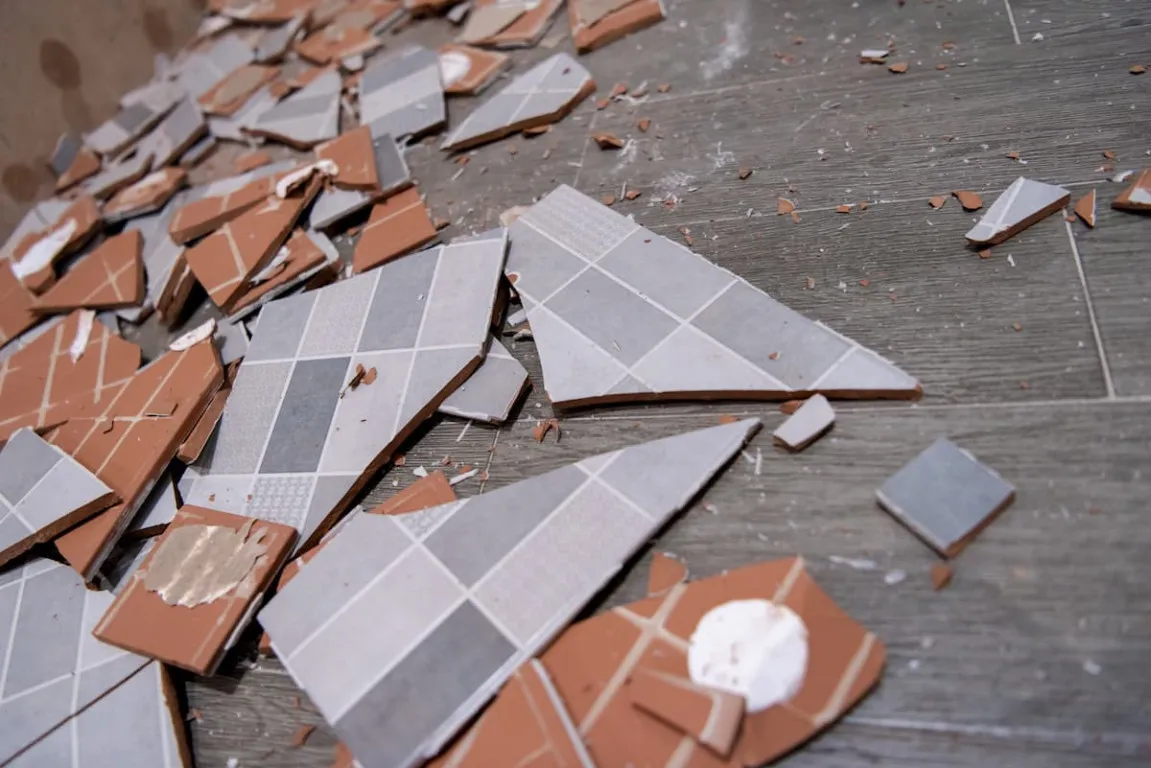
A condition where floor tiles suddenly lift, crack, or make a loud popping sound can certainly cause panic. This problem not only affects the appearance of the house but also may be dangerous, as uneven flooring and broken tile pieces can increase the risk of injury.
If it occurs, you do not need to worry about replacing the entire floor tiles. You still can fix it efficiently without a full replacement. To better understand, you can explore the causes and learn how to fix them in the following article.
Causes of Cracked Floor Tiles
You may wonder, why do floor tiles suddenly pop or crack when they look fine? In reality, tiles do not literally “explode” like objects affected by a blast.
This term is used because tiles can suddenly lift, crack, or make a loud sound due to pressure from underneath or along the sides of tiles. Below are some factors that can cause exploding floor tiles.
1. Uneven Tile Installation
The most common cause is uneven tile installation. When tiles are installed, the underside should attach perfectly to the mortar or adhesive. If there are hollow spaces underneath, those areas become more vulnerable when pressure builds up.
These empty gaps usually cause the tiles to sound hollow when tapped. At first, it may not be noticeable, but over time, from daily activities, temperature changes, or moisture can create pressure that causes the tiles to lift or crack.
2. Poor Adhesion or Cement Mortar
Tiles require strong adhesion to remain securely attached to the floor surface. If the cement and sand mixture is not properly balanced, too dry, too wet, or not applied evenly, the tiles may lose their adhesion strength.
Weak mortar makes tiles more likely to shift. When there is pressure from other sides, tiles can be pushed upward. This can cause the floor surface to bulge before cracking.
3. Insufficient Grout Gaps between Tiles
Grout lines not only enhance the appearance of the floor. Small gaps between tiles also help to provide space when tiles naturally expand. If tiles are installed too closely without adequate grout spacing, each tile can begin pressing against the others.
When the temperature rises or humidity levels change, tiles can expand slightly. Without enough space to move, pressure between tiles can become bigger. As a result, several tiles may suddenly lift at the same time and look like they are exploding.
4. Extreme Temperature Changes
Tiles can also react to changes in temperature. In areas frequently exposed to direct sun, such as patios, balconies, or rooms with large windows, the floor surface can expand quickly.
At night, when the temperature lowers, the tiles return to contract. These changes can lead to pressure on the floor, especially if the tiles are not properly installed. Over time, this pressure may cause the tiles to crack or lift from the floor.
5. Moisture from Beneath the Floor
Moisture rising from beneath the floor can be a cause of exploding tiles. Capillary water from beneath the floor may seep into the structure and weaken the bond between tiles and the underlying surface.
This problem often occurs in the ground-floor areas, when the house is located in humid environments, or buildings with poor moisture protection systems. If moisture continues to build up, the adhesive layer can gradually be damaged, causing the tiles to lose their grip.
6. Building Structure Movement
The building may experience structural movement over time. This may happen due to soil settlement, vibrations from heavy vehicles near the house, or changes in the building’s load distribution. These movements are often not visible, but they can significantly affect the flooring.
Even a slight shift in the structure beneath the floor can place pressure on tiles. As a result, small cracks, broken grout, and lifted tiles may begin to appear in certain areas.
7. Poor Quality of Tile and Supporting Materials
Tile quality also affects durability. Low-quality of tiles are more prone to cracking, especially when installed in areas that often support heavy loads.
In addition to tiles, supporting materials such as cement, sand, and adhesive also play an important role. If the materials used are not suitable based on requirements, the result of the installation may not be strong enough. Tiles may look neat at first, but problems can develop after a period of use.
8. Areas Frequently Exposed to Water
Bathroom, kitchen, washing area, and patio flooring tiles are at high risk of being exposed to water. If water seeps into the grout lines or absorbs beneath the tiles, the adhesive bond can gradually weaken over time.
This problem can worsen if the grout is already cracked or not properly sealed. Water that keeps seeping into the underlying layer is humid, causing the tiles to become hollow, lift, or crack.
Read also: 10 Latest Minimalist & Aesthetic Garage Ceramic Inspirations!
How to Fix Cracked Floor Tiles
Cracked tiles should be handled carefully, but that does not mean the entire floor needs to be replaced. As long as the damage is still limited to a few areas, you can repair the affected sections. The following are several steps to fix cracked tiles without a full replacement.
1. Check the Damaged Tile Area
The initial step is to assess how extensive the damage is. Check for tiles that are lifted, cracked tiles, or those that sound hollow when tapped. You can gently tap using a tool handle to detect the section that is not perfectly bonded to the floor underneath.
2. Remove the Lifted Tiles
To avoid a full floor replacement, remove only the damaged tiles or those with no longer securely attached. Use tools carefully to prevent the surrounding tiles from cracking.
If some tiles are still fine and reusable, clean the underside of the old mortar. However, if the tiles are cracked, or the shape is changed, it is better to replace them with new tiles with the same size and type.
3. Clean the Floor Base Surface
After removing the tiles, clean the underlying surface of any leftover cement, dust, sand, or other debris. The floor base should be smooth and clean to bond the new adhesive properly.
Avoid reinstalling tiles on a surface that is still weak or damp. If there are cracks, holes, or uneven sections on the floor base, repair them first for stronger and more durable results.
4. Ensure the Area is Completely Dry
If the cracked tiles occur due to moisture, the affected floor area should be completely dried first. Installing new tiles on a wet surface can only lead to the same problems.
You also need to check whether there is a source of water in the area. For example, leaking pipes, seeping from the bathroom, or rainwater entering from outside the house. If the source of moisture is not addressed, any tile repair will likely be only a temporary fix.
5. Use Proper Adhesive or Mortar
To ensure the tiles bond securely, use a proper adhesive or mortar that is suitable for the type of flooring tiles and installation area. For areas that are frequently exposed to water or moisture, choose materials with strong adhesion and resistance to humidity.
6. Provide Adequate Grout Spacing
When reinstalling the tiles, make sure to leave adequate grout spacing between tiles. This gap helps to reduce pressure when the tiles expand. Use the appropriate grout and fill neatly to seal the spaces between tiles. Pepper grout helps prevent water from seeping underneath the floor, especially in areas that are frequently exposed to water.
7. Repair Cracked Grout around the Affected Area
Cracked tiles are often accompanied by damaged grout. Instead of replacing only the tiles, make sure to check the condition of the surrounding grout. If the grout appears cracked, hollow, or easily chipped, remove it first and reapply new grout. This step helps maintain the floor’s durability and reduces the risk of water seeping underneath the floor tiles.
8. Avoid Heavy Loads after Repairs
After reinstalling the tiles, allow some time for the mortar or adhesive to dry completely. Avoid stepping on the repaired area immediately or putting heavy objects on top of it. By giving the tiles sufficient time to set properly, they can bond more securely, and the results can be more durable.
That is the explanation of the causes of cracked tiles. If the damage has not spread extensively, you can fix this problem without a full replacement by inspecting the affected area, removing damaged tiles, cleaning the floor base, ensuring the surface is completely dry, and reinstalling with proper materials.
This issue highlights how important the selection of the right materials is when building or renovating your house. Not only tiles, but also cement, as a main material that supports the structure and maintains the building’s durability.
For better building protection, you can use Semen Merah Putih Watershield. This product features water repellent technology, which provides double protection against water seepage from external, internal, or capillary water sources.
With its various advantages, Semen Merah Putih Watershield can help reduce water moisture that may weaken the building structure. If you would like to build a strong, comfortable, and protected house against water seepage risk, contact us now to find the most suitable materials for your construction needs!
Read also: Terrazzo Flooring: Advantages, Facts, and Design Ideas