
Innovation in the construction industry has advanced to the point of producing recycled building materials. This innovation has emerged due to the rapid expansion of infrastructure and residential construction projects.
Construction activities for large infrastructure projects can also exploit natural resources when they fail to use environmentally friendly building materials. For this reason, recycled building materials are increasingly being used.
Recycled materials are used in many applications, from foundations and wall construction to decorative elements. To learn more about recycled building materials, read the article below.
Understanding Recycled Building Materials
Construction projects, particularly large-scale infrastructure projects, are among the largest contributors to waste, which can trigger various environmental risks, ranging from water and soil pollution to air pollution.
As a solution, an innovation in eco-friendly construction materials has emerged in the form of recycled building materials. These materials are produced through a waste-sorting process and mixed with other materials as needed.
Using environmentally friendly materials is a concrete step toward a sustainable construction industry. Not only does it reduce waste volume, but recycled building materials can also serve as an affordable alternative.
In addition to benefiting the environment, recycled building materials also offer economic and social benefits.
The use of recycled building materials can improve cost efficiency. Additionally, reusing materials from demolition is way more affordable than purchasing new raw materials.
From a social perspective, using recycled building materials can create new job opportunities for local communities, from waste collection and sorting to factory production.
Types of Recycled Building Materials
Generally, environmentally friendly construction materials fall into two categories: reused materials and recycled materials.
Reuse materials, such as wood, bamboo, and bricks, can be used directly without altering their physical form. Meanwhile, recycled materials, such as concrete, steel, and paving blocks, must be crushed, separated, and reprocessed.
Here are several types of recycled building materials:
1. Recycled Concrete
Concrete is the most widely used material in the construction industry. However, its production requires significant energy, resulting in high carbon emissions.
Since concrete cannot be returned to a liquid state, recycling involves crushing concrete from old buildings and reprocessing it into ready-to-use material.
Recycling unused concrete waste effectively reduces carbon emissions and minimizes the accumulation of construction waste. Generally, recycled concrete is sourced from sidewalks, foundations, or road barriers and is reprocessed into new concrete aggregate.
2. Recycled Steel
Steel is one of the most commonly recycled materials because recycling does not compromise its quality. Recycled steel does not compromise the structural framework and columns of a building.
This is because recycled steel has the same strength as new steel, making it safe for large infrastructure projects such as bridges, railways, ports, and airports.
Recycling steel also uses less energy than producing it from raw materials, saving costs and reducing emissions.
Read also: What Is the Ideal Size for A House Door? Check Here!
3. Reclaimed Wood
Reclaimed wood comes from old buildings and is processed and reused in new construction. Although it is a recycled material, it offers long-lasting durability and unique aesthetic value.
Reclaimed wood is typically sourced from the remains of ships, barns, and disused railroad ties. Interestingly, reclaimed wood yields two types of products from wood waste: reused lumber and wood chips.
Wood flour is made from irregularly shaped wood that cannot be processed into boards. Then, the wood flour can be mixed into concrete to produce lightweight concrete.
Meanwhile, wood waste that is still in good condition and can be processed into boards is generally used for structural framing, such as flooring, or for storage purposes, such as cabinets.
4. Paving Blocks Made from Plastic
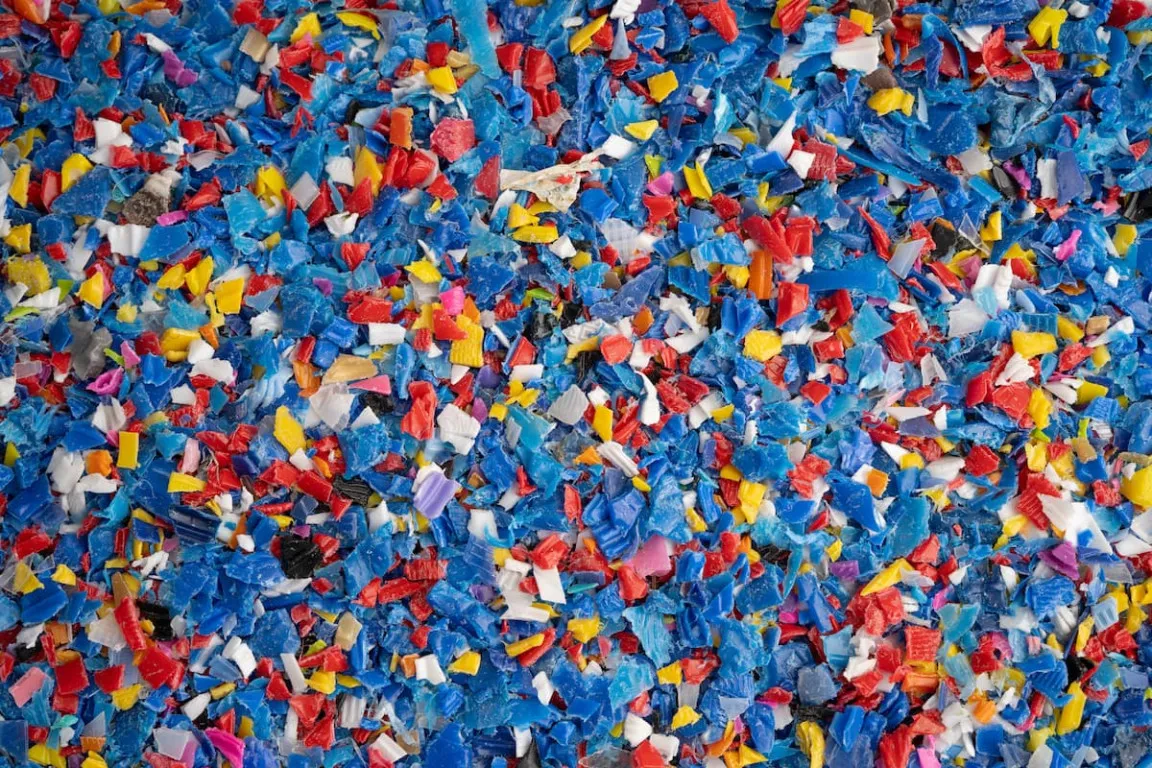
Plastic waste is one of the most abundant and commonly found types of waste. To address this issue, the construction industry is working to repurpose it into recycled building materials with practical value.
One such innovation involves processing shredded plastic mixed with sand and other reinforcing materials to produce paving blocks. As a result, this recycled material has proven highly durable and ready for use for many years.
5. Recycled Glass
Glass is one of the most sustainable materials because it can be recycled indefinitely without losing its quality. In the construction industry, glass waste from old buildings or used glass bottles can be processed into various other building materials.
Glass waste is coarsely crushed and can be processed into terrazzo flooring, which has a unique character. Glass can also be ground into a fine, sand-like consistency and used to make glass wool (a sound and heat insulator) or as an asphalt mixture.
Read also: 10 Easy Ways to Create A Soundproof Room in Your House
Challenges to Consider
Although recycled building materials offer many advantages and attractive visual characteristics, it cannot be denied that they also have drawbacks and challenges that must be anticipated, such as:
- Quality Consistency. While some recycled materials can maintain their quality, inconsistencies in the quality of the recycled materials used can potentially lower the quality of the finished product. The mixture composition also affects the outcome.
- Recycling Process Costs. Although recycled materials potentially reduce long-term production costs, this cost efficiency depends on the recycling process itself. The process can be costly, especially during cleaning and processing.
- Raw Material Availability. Unlike new materials, waste isn't available in stores, so sustainable construction may require collaboration with specialized waste collectors.
These are some recycled building materials worth considering. The availability and complexity of recycling building materials remain significant challenges in the construction industry. However, sustainable construction doesn't have to start with purely recycled materials.
As a homeowner, you can help protect the planet by extending your building’s lifespan and minimizing the need for future renovations.
You can do this by choosing a super-premium material with multiple advantages, such as Semen Merah Putih Watershield.
Its water-repellent technology protects your building from the outside, inside, and below. As a result, the building becomes more durable, stays free from moisture, and requires minimal future maintenance.
Semen Merah Putih Watershield can be used in a variety of applications, from foundations, concrete slabs, cast-in-place concrete, brickwork, plastering, and even finishing, to keep your building sturdy, dry, and long-lasting.
So, discuss your project needs and discover the best construction solutions with us. Contact us now, and let us support your house plans with the best service.
Read also: How to Save Money to Buy a House Based on Your Salary